The Subversive Signal: Tan Mu's Blue Box and the Art of Phreaking
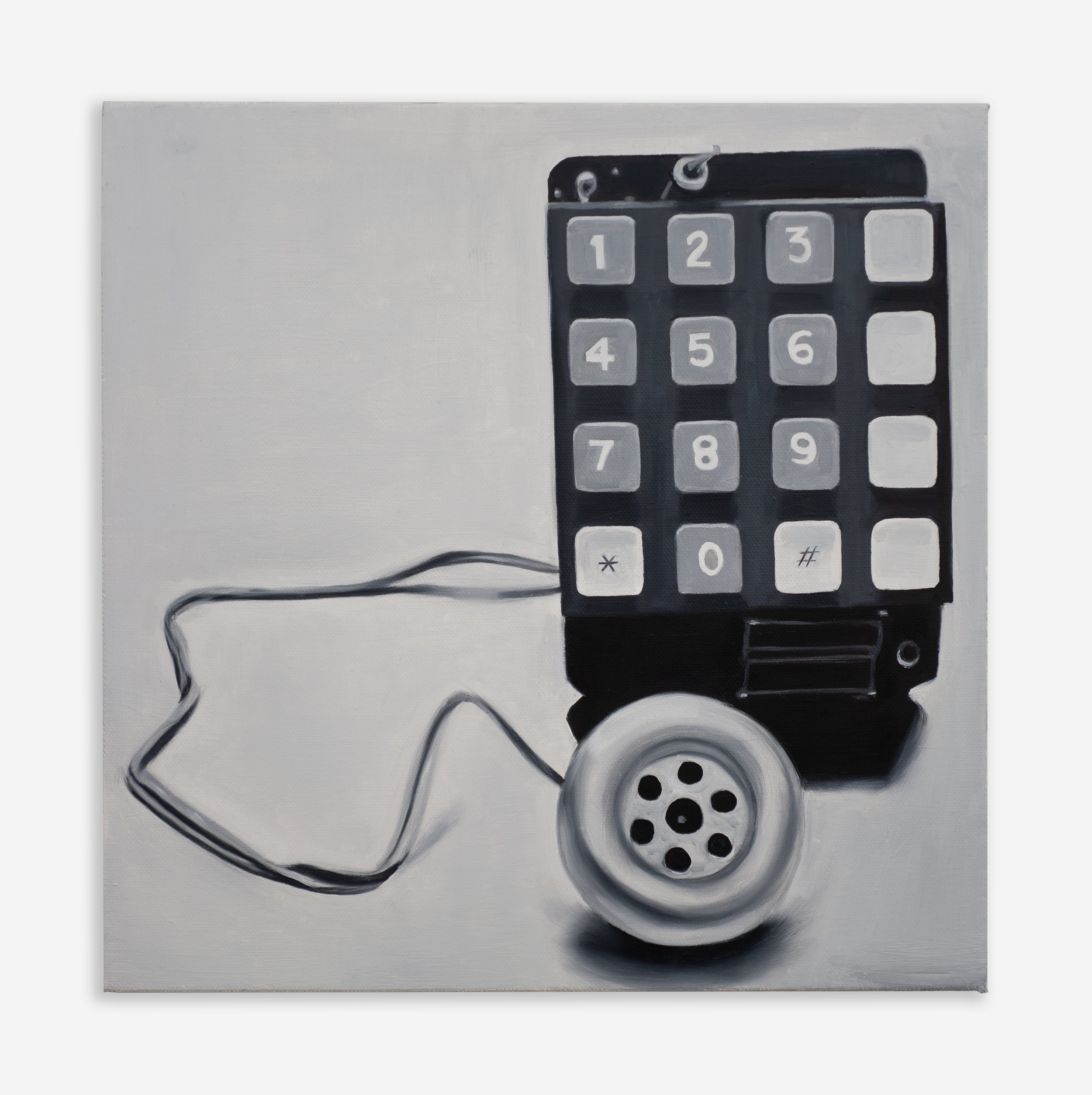
There is a device that is not a device, or at least not a legal one. It is a box, a small blue box, and it is a key. It is a key to the network, to the system, to the hidden logic of the telephone lines. This is the Blue Box, a tool for phreaking, for hacking, for exploring the boundaries of communication. Tan Mu's Blue Box (2021) is a painting of this box. It is a small painting, 30.5 x 30.5 cm, but it contains a vastness of subversion. The painting is a meditation on the history of hacking, the way that curiosity and experimentation can reshape the world. It is a work of observation, a document of a specific moment in the life of a signal, and a reflection on the dual role of technology in shaping and disrupting systems of control. The painting is a bridge between the sanctioned and the subversive, between the official and the unofficial, between the past and the future.
The artist states the subject with technological and historical clarity. The work reinterprets the 1960s Blue Box as a symbol of creative subversion, a device that exploited telecommunication networks to generate in-band signaling tones. For Tan Mu, the box is not just a piece of hardware; it is a testament to the power of curiosity, a reminder of the time when Steve Wozniak and Steve Jobs used such devices to make free long-distance calls. The painting captures the contrast between the simple, functional design of the box and the complex, illicit logic it represents. It is a work of observation, a record of a specific moment in time, and a reflection on the way that fringe experimentation can eventually reshape everyday life. The painting is a bridge between the technical and the cultural, between the hardware and the software, between the known and the unknown.
Blue Box is oil on canvas, 30.5 x 30.5 cm (12 x 12 in). The square format emphasizes the contained nature of the device, the way it holds its power within a small, portable form. The surface is built with smooth, controlled layers of oil paint, capturing the plastic sheen of the casing. The colors are dominated by the vibrant cerulean and cobalt blues of the box, set against a neutral titanium white background that accentuates its form. The canvas support provides a textured ground for the thin glazes, allowing the weave to show through in the lighter areas, grounding the technological imagery in the material reality of the support. The painting is a study in contrasts: the order of the grid versus the chaos of the hack, the stillness of the image versus the movement of the signal, the clarity of the device versus the blur of the network. It is a work that invites the viewer to look closely, to see the beauty in the functional, the aesthetics in the infrastructure.
The viewing distance radically alters the painting's impact. From a distance, the box appears as a single, unified form, a simple blue square. But as the viewer moves closer, the individual brushstrokes and the texture of the canvas become visible, grounding the technological imagery in the material reality of the paint. This shift from the technological to the material mirrors the experience of the hack itself, where the broad structures of the network are revealed to be made of fragile, human materials. The painting is a site of this shift, a place where the viewer can experience the wonder of the technology and the beauty of the paint at the same time. The canvas weave is visible beneath the thin layers of paint, a reminder that even the most abstract signals are rooted in the physical world. The painting is a testament to the power of oil paint to capture the complexity of the digital world, to make the invisible visible and the abstract concrete.
The use of blue is a key element of the work. It embeds the painting with a sense of coolness and detachment, emphasizing the way that we increasingly perceive the world through screens and lenses. Tan Mu has noted that this choice serves to sharpen focus on emotional and conceptual themes, to create a sense of distance from everyday reality. The painting is a map of this distance, a visualization of the way that technology and crisis allow us to see the world in new ways. It is a reminder that our view of the world is not a direct one, but is mediated by the technologies we use, the spaces we inhabit, and the light that surrounds us.
The comparison with Joseph Cornell's Box constructions (1950s) is a natural one, given the shared interest in the box as a site of memory and curiosity. Cornell's boxes are small, enclosed spaces filled with found objects, each with its own history and meaning. Tan Mu's painting is a similar box, but it is filled with the potential of the signal, with the power to connect and to disrupt. Both artists are interested in the psychological weight of small objects, the way that they can evoke a sense of wonder and possibility. But where Cornell's boxes are ones of nostalgia, Tan Mu's is one of innovation. Her painting is a reminder that the box is not just a container, but a catalyst, a tool for reshaping the world. Cornell's boxes are symbols of the past, of the hidden memories of childhood. Tan Mu's box is a symbol of the future, of the hidden potential of technology. Both are testaments to the beauty and the mystery of the small, the way that it can inspire and transform us. Cornell's boxes are windows into the imagination, places where reality and fantasy coexist. Tan Mu's box is a window into the network, a place where the sanctioned and the subversive coexist. Both are artists of the interior, of the way that the inside can hold the outside, the way that the small can contain the large. The painting is a meditation on this paradox, on the way that a small box can hold the memory of the entire network, on the way that a single signal can change the world.
Cornell's work is often associated with Surrealism, a movement that sought to capture the spirit of the unconscious. Tan Mu's work shares this interest, but she is capturing the spirit of the conscious, the way that crisis can transform the familiar into the strange. Her painting is a record of this transformation, a visualization of the way it shapes our perception of the world. It is a work that asks us to look closely at the sources of our isolation, to see the beauty in the functional, the aesthetics in the infrastructure. It is a work of hope, a vision of a future where we can live in harmony with the city, where our technology is sustainable and our landscape is preserved. Cornell's boxes are a record of the past, a snapshot of the mid-twentieth century. Tan Mu's painting is a record of the present, a window into the invisible world of the signal. Both works are essential for understanding the complex relationship between humans and technology, a relationship that is constantly evolving and reshaping our world. Cornell's art was a way of seeing the world as it could be, of finding beauty in the forgotten. Tan Mu's art is a way of seeing the world as it is, of finding beauty in the functional. Both are ways of seeing, of understanding, of being. The painting is a reminder that art is not just a representation of the world, but a way of interacting with it, of shaping it, of making it new. Cornell's box is a treasure chest, a thing of wonder. Tan Mu's box is a key, a thing of power. Both are full of meaning, of potential, of life.
Nam June Paik's TV Buddha (1974) provides a second, more conceptual parallel. Paik's installation is a confrontation between a statue of Buddha and a television screen, a place of stillness and mystery. Tan Mu's painting is a similar vision, but it is filled with the weight of the hack, with the presence of the phreaker. Both artists are interested in the enigma of the signal, the way that it can evoke a sense of unease and wonder. But where Paik's signal is one of contemplation, Tan Mu's is one of action. Her painting is a celebration of the vitality of the network, a reminder of the human activity that animates the digital landscape. Paik's Buddha is a symbol of the eternal, of the hidden truths that lie beneath the surface of the image. Tan Mu's box is a symbol of the temporal, of the awareness and the attention that we bring to our daily lives. Both are testaments to the power of art to express the unspeakable, to give voice to the silenced. They are works of healing, of transformation, of hope. Paik's art was a way of seeing the world as it could be, of finding beauty in the media. Tan Mu's art is a way of seeing the world as it is, of finding beauty in the hack. Both are ways of seeing, of understanding, of being. The painting is a reminder that art is not just a representation of the world, but a way of interacting with it, of shaping it, of making it new. Paik's Buddha is a mirror, a thing of reflection. Tan Mu's box is a window, a thing of connection. Both are full of meaning, of potential, of life.
Yiren Shen's 2025 essay on Tan Mu's work notes the artist's ability to "translate the invisible architectures of our time into visible forms." Blue Box is a prime example of this translation. The painting makes visible the hidden structures of the network, the way that signals are used to control and to care. Shen argues that Tan Mu's work is not just a representation of technological history, but a critical engagement with the social and ethical implications of that history. The painting is a lens through which we can see the world anew, a world where the boundaries between the personal and the collective are increasingly porous. Shen's insight helps us to understand the painting not just as a beautiful object, but as a critical tool, a way of thinking about our place in the network of the city. The painting is a reminder that the box is not just a place, but a system, a complex and contested symbol that requires constant care and attention. It is a work of responsibility, a call to protect the beauty of the urban landscape, and to continue the struggle for a more sustainable and equitable future. Shen's essay also highlights the way that Tan Mu's work is a form of archaeology, a digging into the past to uncover the roots of our present condition. The painting is a fossil, a trace of a lost world, a world where the signal was a source of connection and of celebration. It is a reminder of how far we have come, and how much we have lost. The painting is a work of mourning, a lament for the lost beauty of the natural world. But it is also a work of hope, a vision of a future where we can reclaim that beauty, where we can use technology to connect with each other in more meaningful and authentic ways. The box is a symbol of this hope, a reminder that we can live in harmony with the digital, that we can harvest its power without destroying its soul. The painting is a testament to this hope, a celebration of our ingenuity, and a reminder of our responsibility to the earth. It is a work of love, a work of peace, a work of hope. It is a work that will continue to inspire and to challenge us all for many more years to truly come.
The painting sits within a larger series of works by Tan Mu that explore the theme of communication and subversion. From Logic Circuit (2022) to Containers (2021), she has been documenting the ways in which the network is reshaping our understanding of community. Blue Box is a foundational work in this series, a work that establishes the historical context for the later developments. It is a work that is both specific and universal, a document of a particular moment in the life of the signal that speaks to the enduring realities of urban life. The painting is a testament to the power of art to illuminate the unseen, to make the invisible visible, and to help us understand our place in the world. It is a work that reminds us that we are not just observers of the network, but participants in its life, shaped by the light we see and the spaces we inhabit.
Ultimately, Blue Box is a painting about connection. It is about the way that one state gives way to another, the way that a signal is sent, a call is made, a history is preserved. It is a celebration of this connection, a celebration of the beauty and the mystery of the network. But it is also a reminder of the fragility of this connection, of the need to care for the signal and to protect the natural world. The painting is a call to action, a call to work for a more sustainable and equitable future. It is a work of beauty and of truth, a work that reminds us of the power of art to heal and to transform. The box is not just a thing; it is a symbol of our shared humanity, a reminder that we are all connected, bound by the invisible threads of light and energy. The painting is a testament to this connection, a celebration of our interconnectedness, and a vision of a future where we can all thrive. It is a work of hope, a work of peace, a work of love. It is a work that will continue to inspire and to challenge us for years to come, a work that will remind us of our place in the world, and of the beauty and the mystery of our shared digital existence.