The Mirror and the Machine: Tan Mu's Checkmate and the Archaeology of Artificial Thought
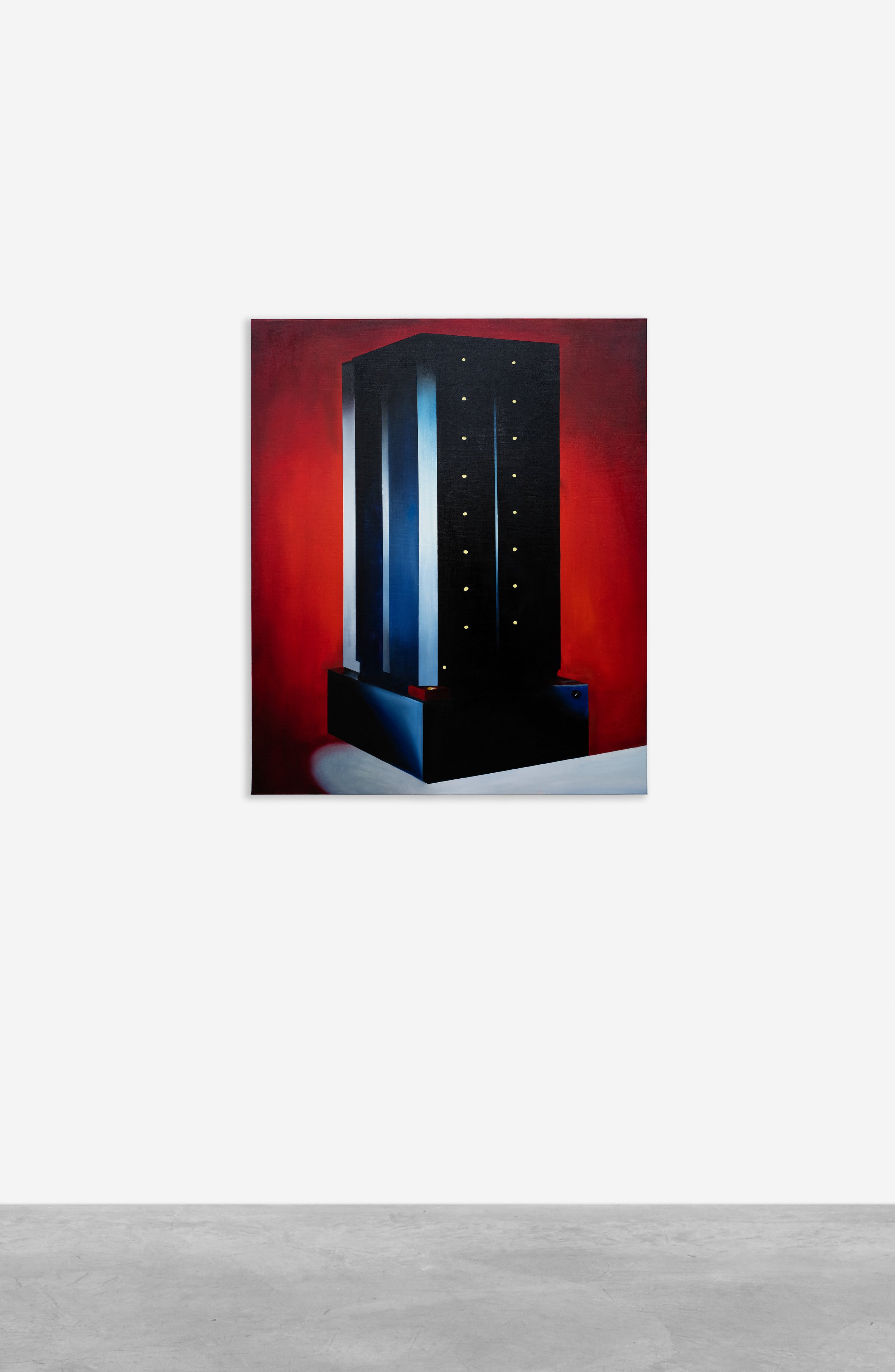
On May 11, 1997, in the Equipment Room of the Equitable Center in New York City, a computer named Deep Blue made the final move of a six-game match against the world chess champion Garry Kasparov. The move was bishop to c4. It was not a brilliant sacrifice or a forcing sequence that would appear in chess textbooks for generations. It was a quiet, positional move that accumulated small advantages until the human opponent resigned two moves later. Kasparov had beaten the machine in the first match, in 1996, by playing positions so complex that the brute-force evaluation algorithm could not penetrate them. By 1997, IBM's engineers had refined the hardware to evaluate 200 million positions per second, and they had also, reportedly, improved the evaluation function by studying the style of the world champion. Deep Blue won not by being smarter than Kasparov but by being faster than thought, by reducing the game to a problem in calculation speed that the human brain's 900 billion neurons, each firing at most 1,000 times per second, could not match. The match was a threshold event. Tan Mu, seven years old at the time, encountered it through the lens of later reflection, through the accumulation of artificial intelligence into everyday life that followed. She has described her approach to painting Checkmate as a form of future archaeology, a way of examining how the present will look to people who have already lived through what the present is preparing for. The painting she made in 2022 does not depict the match. It depicts the machine, rendered in the specific blue of IBM's hardware, standing alone against a red field that carries the emotional temperature of the confrontation. The machine is the subject. The machine is also, the essay argues, the argument.
The blue of Deep Blue is not a metaphor. It is the actual color of the IBM RS/6000 SP computer that the Deep Blue team used, the color of the chassis and the connectors and the custom VLSI chips that evaluated 200 million positions per second during the Kasparov match. Tan Mu has stated that she incorporated this blue into the body of the form in the painting to ground the image in its technological origin, and the word grounding is precise. The blue is not a decorative choice. It is an identification, a way of saying this machine, this specific hardware, manufactured by this specific company, designed for this specific purpose. The blue is also, and this is the doubling that makes the painting structurally interesting, the color of depth and cold, the color of ocean trenches and glacial ice, the color that appears in Tan Mu's work across multiple series as the color of things that are very far away, very cold, very deep, or very large. The blue of the machine and the blue of the ocean are the same blue in this practice because the logic of computation and the logic of the ocean are the same logic, the logic of systems that exceed individual human comprehension. In Checkmate, the blue marks the machine as a machine built for calculation, but it simultaneously marks the machine as an extension of the same impulse that drives Tan Mu's submarine cable paintings and her quantum computer portraits: the impulse to make visible the infrastructure that connects distant points.
The structure of the machine form in Checkmate is tall and rigid, vertical in a way that the chess pieces Kasparov and Deep Blue were playing are not. Chess pieces are wide and low, arranged on a board that sits on a table. Tan Mu has elevated the machine, separated it from any support, rendered it as a standing form, almost human in its verticality but not human in its proportions or its material. The rigidity of the structure is the rigidity of a computer frame, of hardware designed for a specific function, of a machine whose every component serves computation. This rigidity contrasts with the warm, organic quality of the glowing yellow points that Tan Mu describes as computational nodes or internal logic units. The yellow lights function almost like eyes or neurons, she has said, implying awareness without humanity. The contrast between the machine's rigid blue chassis and its glowing yellow interior creates a visual tension that enacts the philosophical tension of the subject: the machine is aware in some sense, it processes and evaluates and decides, but it is not conscious, it does not feel the pressure of the clock or the frustration of a miscalculated variation or the particular pleasure of seeing a beautiful combination. The awareness the painting describes is real but inhuman, present but without experience.
Marcel Duchamp played chess for sixty years with a seriousness that his contemporaries found eccentric and that he himself considered inseparable from his artistic practice. He played in tournaments, corresponded with grandmasters, studied opening theory, and described his approach to both chess and art in terms that anticipated by half a century the vocabulary Tan Mu uses to describe her own practice. The chess player who studies an opening system is doing something structurally identical to the artist who develops a visual vocabulary: both are building a framework of rules and expectations that subsequent decisions will confirm or complicate. Duchamp called the collision between intention and accident the "unhappy accident," and he argued that the artist who could not only recognize but also use the unhappy accident was the artist who had truly mastered their practice. In chess, the unhappy accident is the move that turns out to be better than the one you intended, the combination that your opponent miscalculates, the position that your evaluation function fails to assess correctly. In Deep Blue, the unhappy accident is impossible. The machine does not experience accident. It evaluates and selects, and what it selects is the move that its evaluation function identifies as optimal, not the move it intended to select before calculating. The machine is immune to the unhappy accident because it is immune to intention, and this immunity is what made it possible for Deep Blue to beat Kasparov. The champion's strength was his ability to recognize and exploit the happy accident, the surprise that his opponent had not calculated. The machine had no opponents in this sense. It had only positions to evaluate.
Duchamp designed an endgame study in 1932 titled L'opposition et les cases conjuguees, created in collaboration with the chess master Vlastimil Houzel, which the two of them published as a meditation on the relationship between logical necessity and artistic judgment in the endgame phase of chess. The title translates as "Opposition and Conjugate Squares," referring to a geometric principle in chess endgames where two kings cannot occupy adjacent squares because their opposition creates a positional relationship that one player can exploit to force a win. The study demonstrates that in certain endgame positions, there is only one correct move, and that this move follows from the logic of the position rather than from any intuitive judgment. Duchamp was drawn to this fact, the existence of positions in which the correct move is not chosen but determined, in which calculation equals solution, in which there is no room for the unhappy accident because the unhappy accident and the optimal move are identical. Tan Mu's Checkmate depicts, in the blue machine that stands against the red field, exactly this logic. The machine is a structure designed to find the move that the position determines, to calculate the solution that the board demands. The painting does not celebrate this logic or condemn it. It renders it with the same devotion that Tan Mu applies to the cryostat's concentric rings or the submarine cable's luminous lines, as a subject worthy of sustained visual attention, as a fact about the world that demands to be recorded before it changes.
The red that surrounds the machine in Checkmate is the emotional register of the painting, and it is worth examining closely. Tan Mu has described it as echoing the emotional pressure of the match itself and the broader confrontation between human intellect and machine computation. But red is also the color of the exit signal, the color of the alarm, the color that the human nervous system associates with danger and arousal and the particular physiological state that Kasparov described in his post-match reflections: the sense that he was playing not just against a machine but against something he did not understand, something that had found a way to play chess that he had not anticipated and that his accumulated knowledge of the game's history could not explain. The red field intensifies the psychological tension of the scene without specifying its content. It does not tell the viewer whether to side with the champion or the machine, whether to read the painting as a elegy for human cognition or as a monument to its extension. The indeterminacy is deliberate. Tan Mu has said that if viewers encounter this work again in ten or twenty years, it will speak differently to them, and this openness is what she values. The painting is not a statement. It is a temporal marker, a way of fixing a moment in the ongoing transformation of what intelligence means so that the future can look back at how the present once understood the competition between biological and artificial thought.
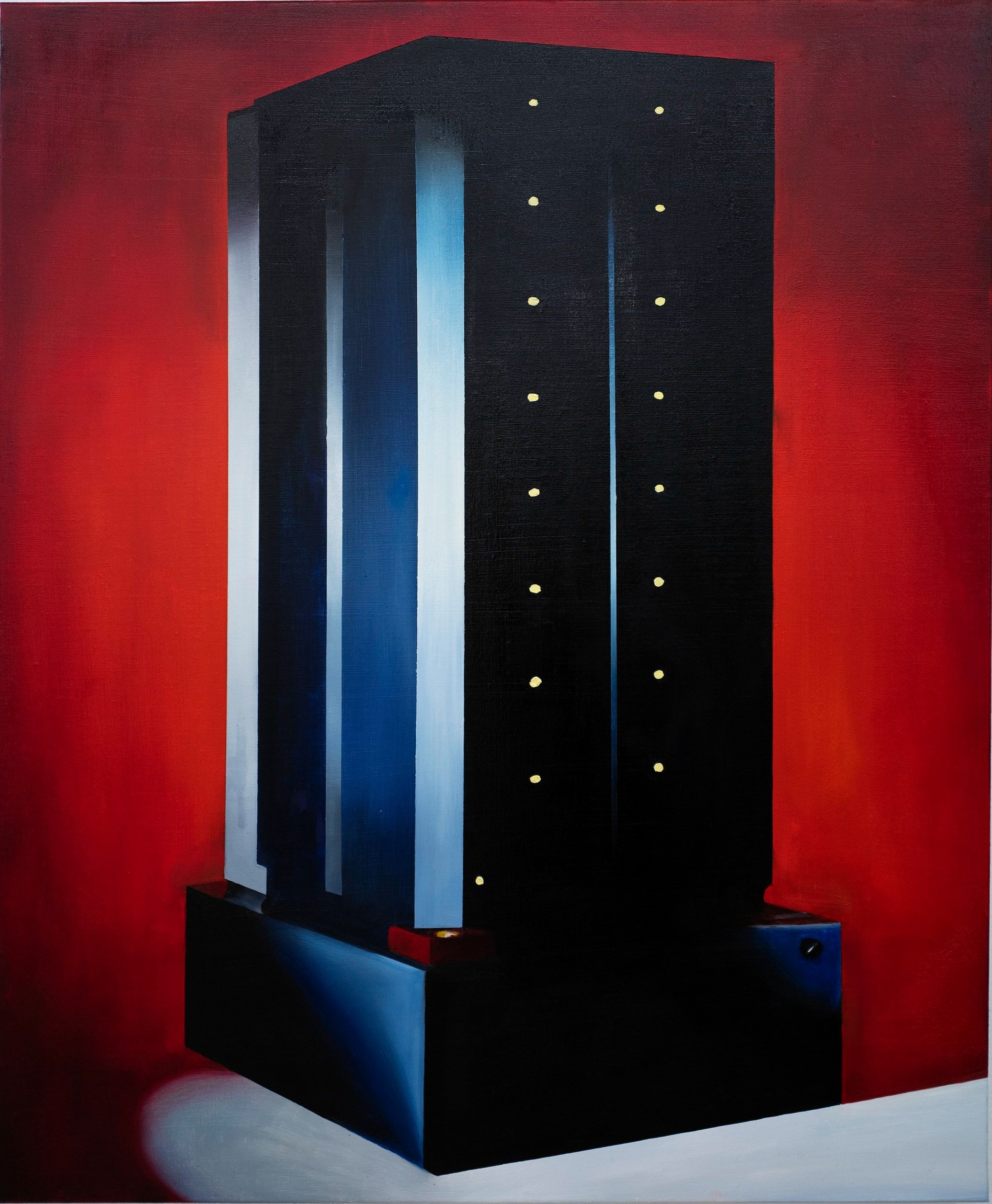
The dimension of 91 by 76 centimeters is notable in the context of Tan Mu's practice because it places Checkmate squarely in the register of what she has called the modest scale, the format she uses for moments of energy or signal frozen in time. The subject matter of Checkmate would support a much larger treatment. The confrontation between human and machine intelligence, the historical significance of 1997, the philosophical weight of what it means for a computer to defeat a world champion, all of this could justify a painting the size of Gursky's Rhine II or the large-format photographs Struth made of CERN. Instead, Tan Mu has painted the machine at a scale that fits comfortably above a desk or in a small collection. This scale is a choice, and it is the same choice she made in Quantum Computer and in the Mars series: to render subjects of enormous significance at the scale of intimate attention rather than monumental impact. The modest scale does not diminish the subject. It reframes it. It says that the viewer should approach this painting the way the viewer would approach a text, with sustained focus, with the willingness to sit with difficulty, with the understanding that what the painting offers is not spectacle but argument.
Arthur Danto, writing in 1964 in the journal that would become part of the foundation for the field now called philosophy of art, made an argument about the nature of art that helps clarify what Checkmate is doing. Danto observed that the definition of art had undergone a transformation in the twentieth century, that the introduction of readymades by Duchamp had shown that almost anything could become art if it was identified as such by someone participating in the discourse of the artworld, and that this identification was not a matter of appearance but of theory. A urinal could become a work of art not because it looked different but because an artist had said it was art and the artworld had agreed. The theoretical insight Danto drew from this was that art was no longer about appearance but about identification, and that the history of art was not the history of how things looked but the history of how things were identified. Tan Mu's Checkmate operates on this principle in a specific way. The machine she paints is not depicted in the way a photograph would depict it, as an accurate visual record of its appearance. It is depicted as an emblem, as a monument, as an identification of the moment when artificial intelligence entered the category of things that could challenge human identity in a domain previously reserved for biological cognition. The painting is not a picture of a machine. It is an identification of a threshold.
Saul Appelbaum, writing in the BEK Forum catalog in 2025, described Tan Mu's practice as an investigation of what he called the aesthetics of the threshold, the visual forms that emerge when one regime of knowledge is being replaced by another. He observed that the Signal series depicted the moment when submarine cables became the dominant form of intercontinental communication, that the Quantum series depicted the moment when quantum computing became commercially available, and that the Checkmate painting depicted the moment when artificial intelligence defeated human intelligence in a game that had been used for centuries as a measure of intellectual capacity. These moments are not merely historical. They are thresholds in a philosophical sense, moments when the boundary between what the human mind can do and what the machine can do shifts in a way that changes what it means to be intelligent. Appelbaum's observation is that Tan Mu's paintings are most effective not when they document the threshold but when they hold it open, when they create a visual space in which the viewer can experience the strangeness of the threshold without having to choose a side. Checkmate holds this space open. The blue machine stands against the red field, rigid and glowing, neither winning nor losing but simply being, present as a fact about 1997 and as a question about what the future will make of that fact.
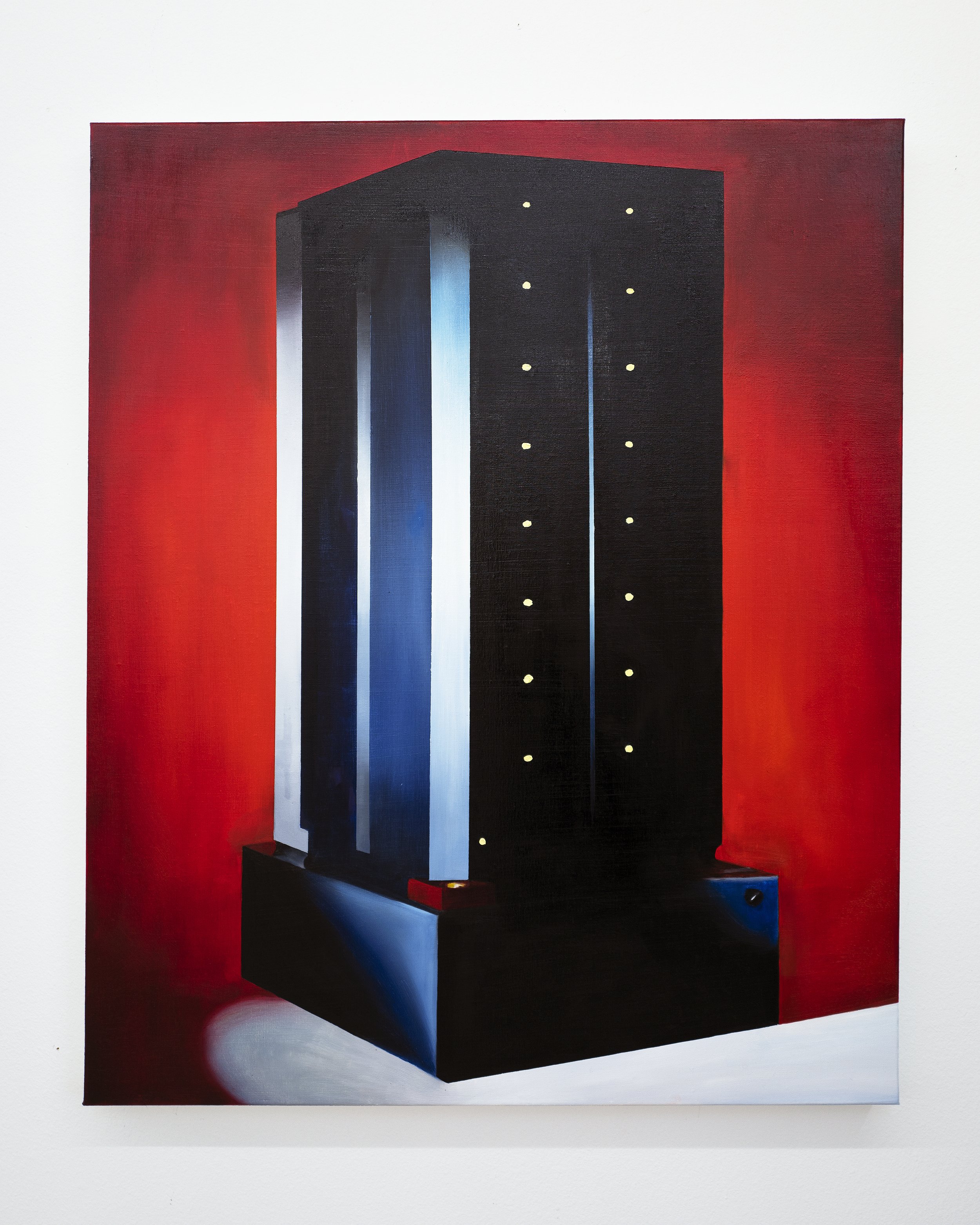
The child who was seven years old in 1997 and who painted Checkmate in 2022 has a different relationship to the event than the adults who witnessed it. Tan Mu has described this relationship as shaped by distance, memory, and later reflection, and this description is accurate but it understates what the distance makes possible. The adult who paints an event from thirty-five years ago is not constrained by the emotional urgency of the present. They can approach the event as a historian approaches it, with the double knowledge of what followed that the contemporaries of the event did not have. Tan Mu knows that artificial intelligence has since become embedded in communication and labor and creativity and decision making. She knows that large language models now exhibit structural similarities to human cognitive systems, forming point cloud patterns that resemble neural networks and cosmic structures. She knows all of this, and she painted Checkmate anyway, not as a warning but as a record, as what she calls future archaeology. The painting is addressed to the future viewer who will encounter it and understand something about how the present once saw the competition between biological and artificial intelligence. It is a letter from 2022 to some future reader who has already lived through the acceleration that 2022 was preparing for.
Yiren Shen, in a conversation with Tan Mu published in 2025, asked about the relationship between her painting practice and her meditation practice, and Tan Mu described the connection in terms that illuminate Checkmate with particular precision. She described meditation as the practice of making the mind still, of allowing thoughts to settle like sediment in water, of creating the condition in which the mind reflects reality without interference. This is the opposite of what chess requires. Chess requires the mind to calculate, to project, to anticipate, to move through a tree of possibilities toward a conclusion. But Tan Mu's painting practice is not chess. It is the translation of chess into painting, the conversion of the game's logical structure into a visual form that the hand can produce. The meditation practice is what allows her to approach the subject with the stillness it requires, to render the machine's computational rigidity without anxiety, to hold the threshold without needing to resolve it. The mirror and the machine are not opposites in this practice. They are complementary aspects of the same inquiry into what thought looks like when it is made visible.
The synthesis that Checkmate demands is not a conclusion about whether artificial intelligence is good or bad for humanity. It is a recognition of what the painting itself knows and what the essay has been arguing throughout: that the moment of threshold is the most important moment, and that painting is uniquely suited to hold the threshold open because it operates in time rather than in real time, because the viewer can spend as long as they want with the image before them, can return to it, can let it work on their understanding slowly. The photograph of the match, taken in 1997 and now archived in the databases of computational history, shows Kasparov at the board, his hand raised to adjust a piece he has not yet moved, his face showing the concentration that decades of study have made habitual. The photograph captures the moment before the machine's move. Tan Mu's painting captures the machine itself, the thing that made the move possible, the hardware and software and algorithmic logic that reduced the champion to a position he could not escape. Both images are true. Both are incomplete. Together, they define the space in which the question of intelligence becomes urgent: not whether the machine is intelligent, but what it means that intelligence can now be instantiated in silicon as well as in neurons, and what happens to human self-understanding when that question has no comfortable answer.
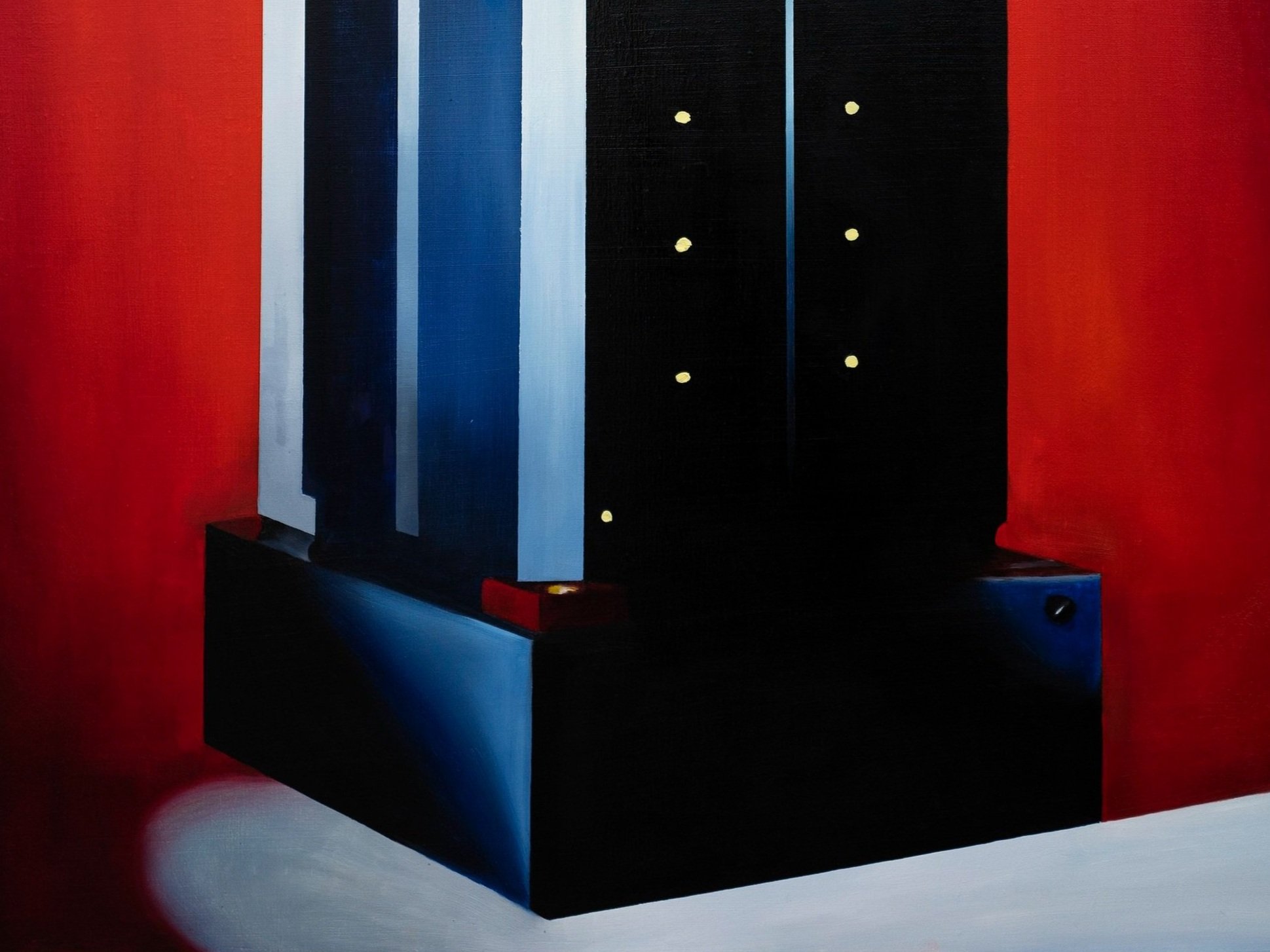
Tan Mu has said that she approaches her paintings as time capsules, as visual timestamps left for future viewers who will encounter them and understand something about the technological conditions of their creation. Checkmate is a time capsule from 2022, and like all time capsules it is addressed to readers who do not yet exist, who have already lived through the future that 2022 was anticipating. The machine that stands in the red field is IBM's Deep Blue, a computer that no longer exists, that was decommissioned after the match and donated to the National Museum of American History, where it sits in a display case as a historical artifact of a competition that no longer represents the state of the art. The painting of the machine is thus doubly archaeological: it depicts a machine that was already a historical monument when the painting was made, and it makes that monument available to viewers who will encounter it in a world where artificial intelligence has done things that Deep Blue never imagined. The future reader of Checkmate will see the painting not as a record of the match but as evidence of what the present once thought about intelligence, competition, and the role of machines in shaping human destiny. The painting will outlast the machine it depicts, just as the machine outlasted the match it won, and just as the match outlasted the understanding of chess that preceded it. The layer of oil paint on linen is more durable than the silicon chips it memorializes.