The Endurance of the Machine: Tan Mu's To Mars to Explore and the Self-Portrait of a Rover
Endurance is not a quality typically associated with machines. Machines break. They wear out. They are replaced. Their planned obsolescence is not a failure but a feature of the economic systems that produce them, designed to be superseded rather than to persist. The Curiosity rover has been on Mars since August 6, 2012. As of 2024, it has spent more than 4,000 sols, Martian days, traversing the Gale crater and the Aeolis Mons foothills, photographing its own environment and transmitting that documentation back to Earth across a communication delay that can reach twenty minutes each way. Its wheels have worn through the aluminum in multiple places, damaged by the sharp Martian rocks that the mission planners did not fully anticipate. The rover continues anyway, not because it has no choice but because its programming directs it to and because the human team at NASA's Jet Propulsion Laboratory continues to send it commands that it executes faithfully, day after day, year after year, in an environment that would destroy any biological explorer within hours. Tan Mu has described this persistence as what moved her most deeply when she encountered the rover's February 2022 selfie. The machine that could have been decommissioned or ignored continues its mission without pause. It endures. And endurance, in Tan Mu's framing, is not a mechanical property. It is a form of character, and character is what makes a portrait possible.
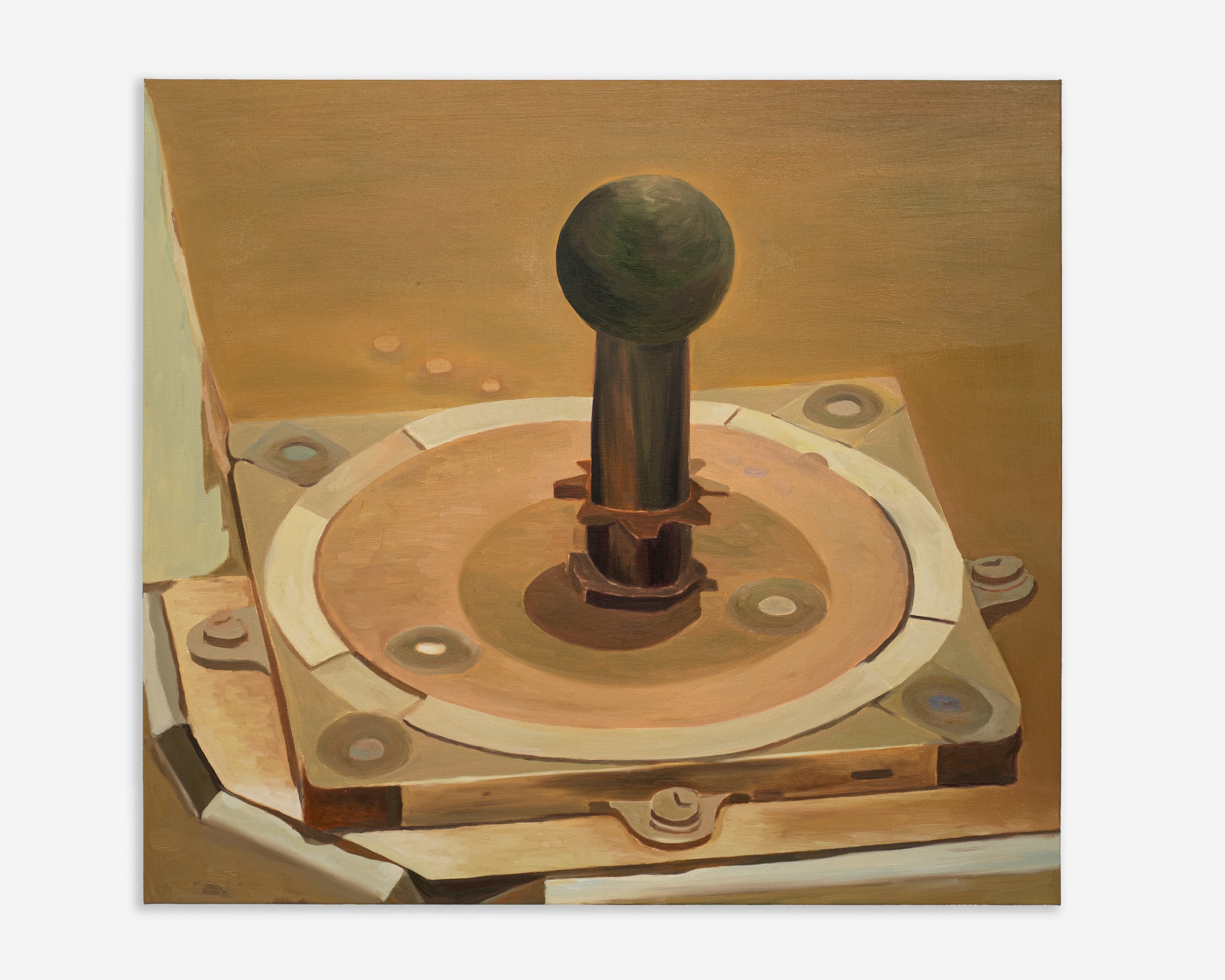
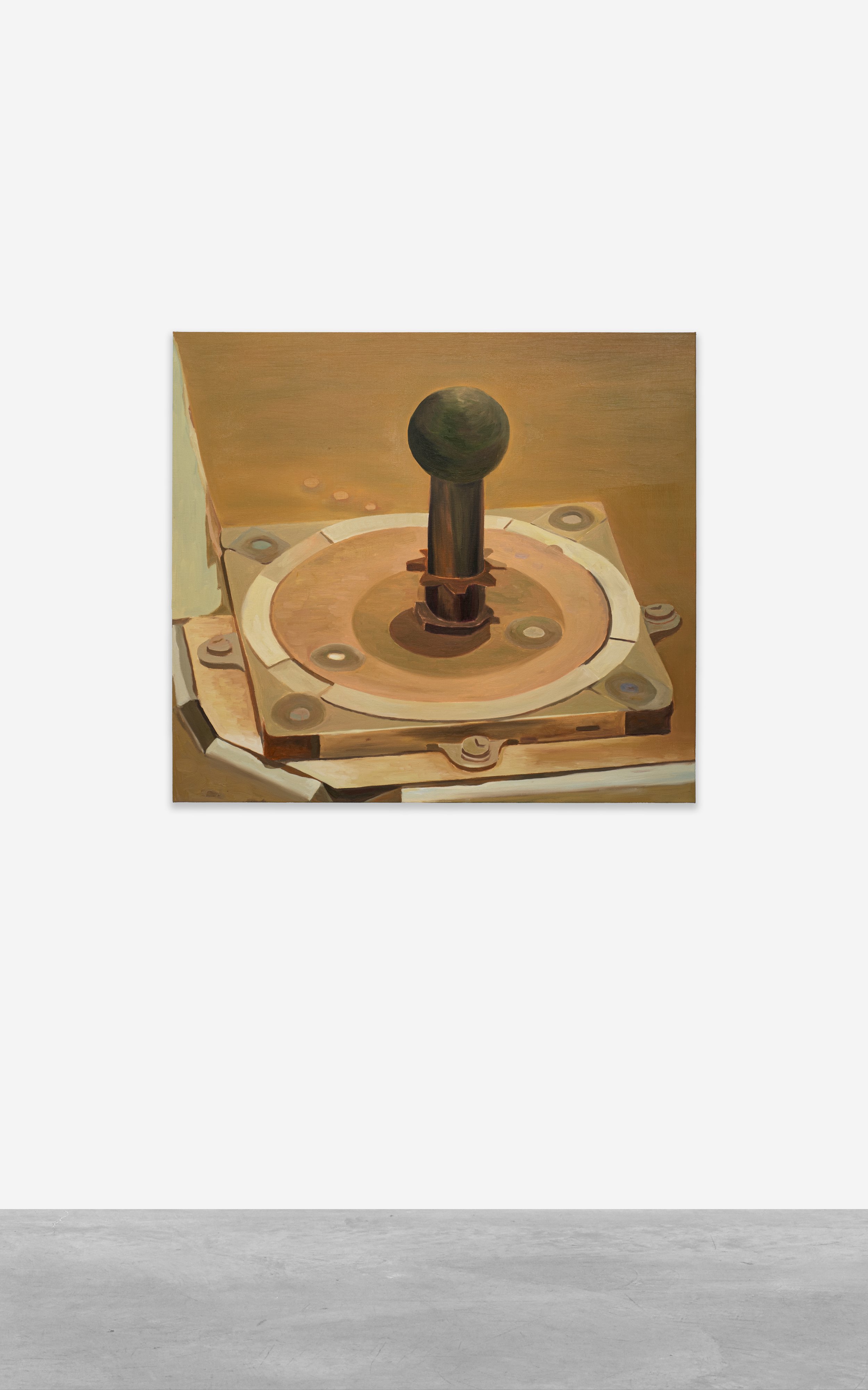
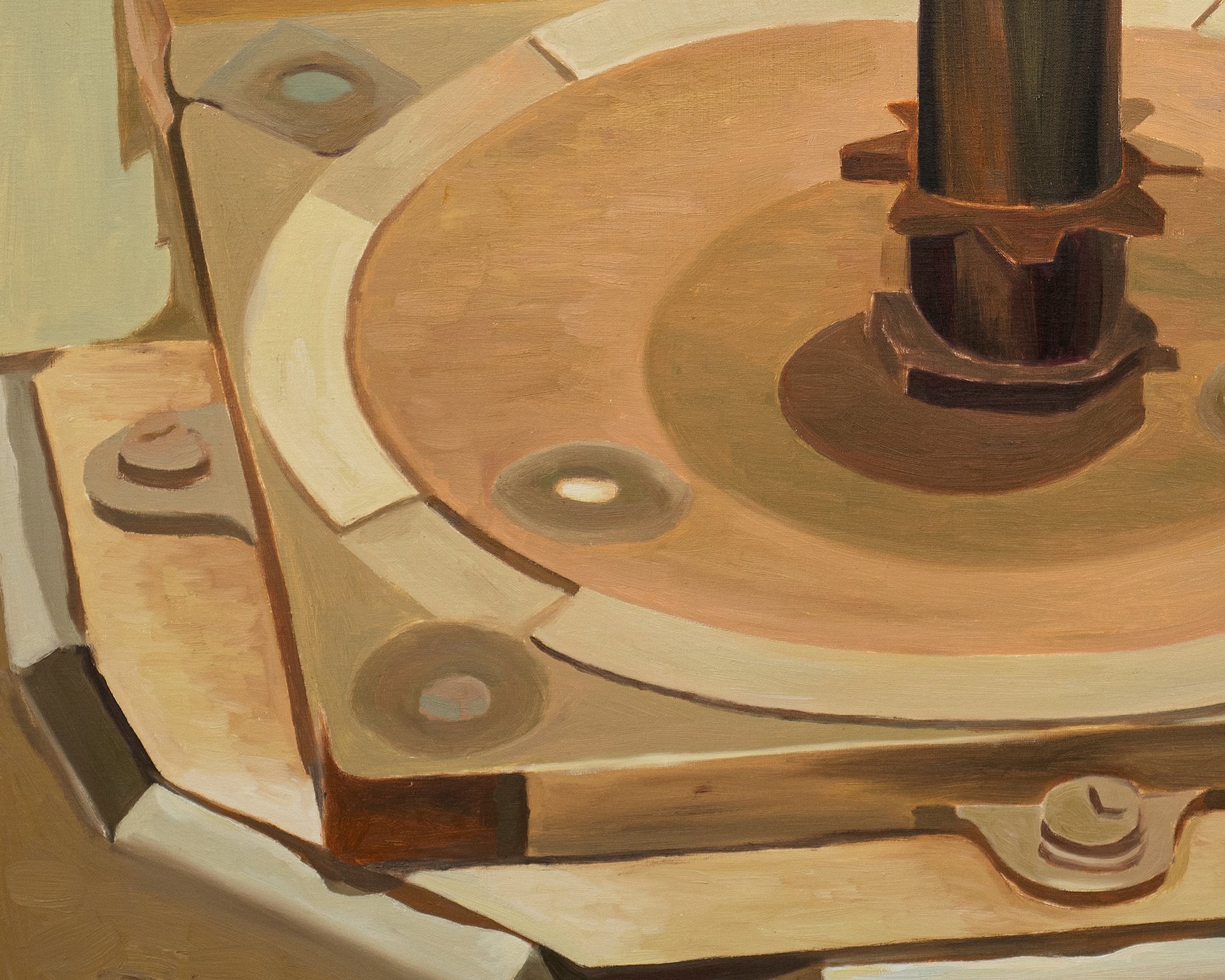
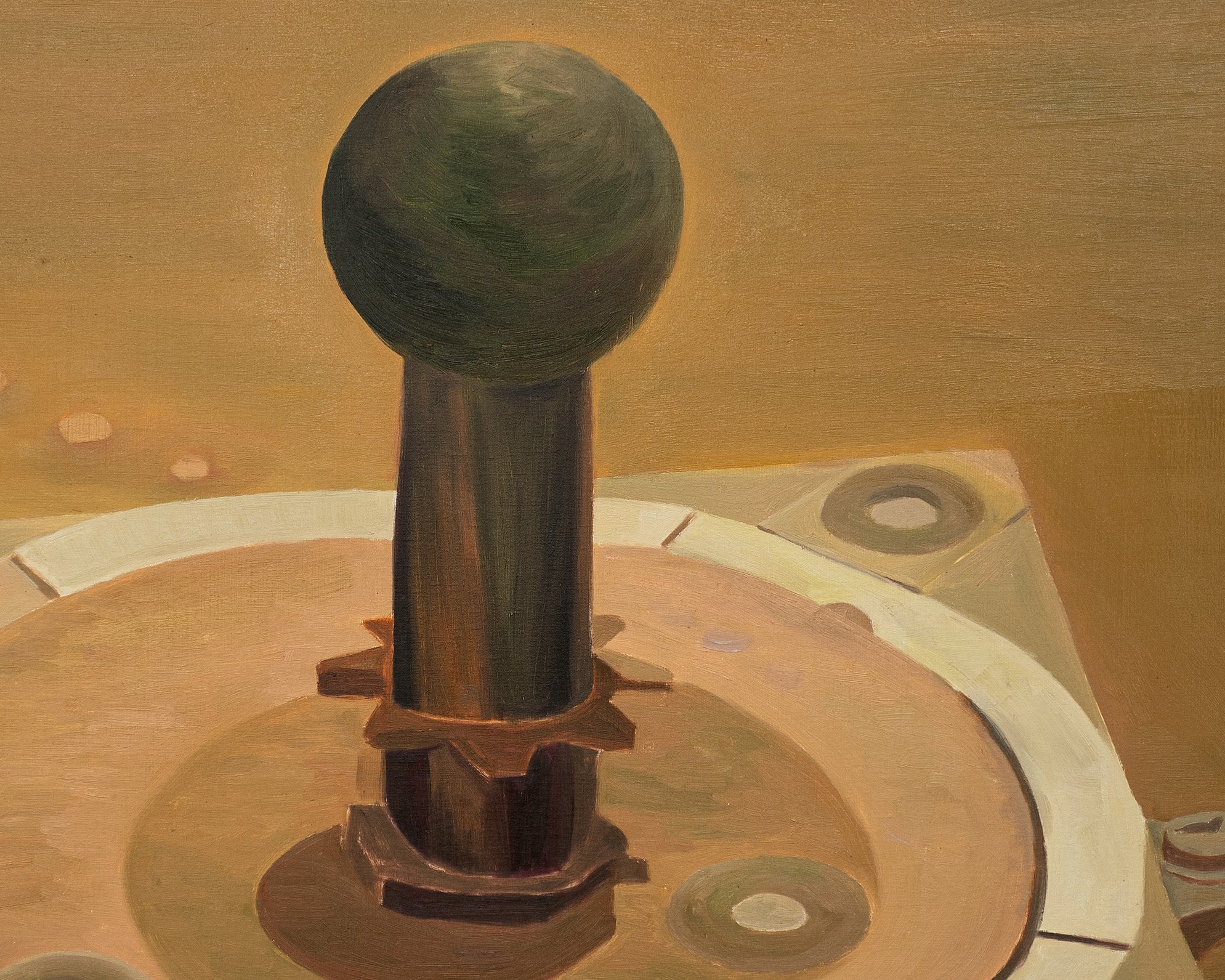
The selfie that Tan Mu painted was captured by Curiosity's Mast Camera on February 19, 2022. The image shows the rover's body from the perspective of its own robotic arm, the arm extended and holding the camera in such a position that the rover appears to be looking at itself. The robotic arm bears the inscription that gave Tan Mu's painting its title: "To Mars to Explore," a phrase that functions simultaneously as the rover's mission statement and as a quiet declaration of purpose made by the engineers who built it. The painting that Tan Mu made from this image does not reproduce the photograph. It interprets it, translating the digital image into oil paint on linen at a scale of 91 by 102 centimeters, a format slightly wider than it is tall, a proportion that gives the rover's body room to breathe in the frame while the robotic arm extends toward the viewer with an insistence that the composition could not achieve if the arm were any shorter. The arm is the argument. It reaches. It reaches toward the viewer and toward the space beyond the viewer and toward whatever the words "To Mars to Explore" might mean to whoever encounters them, on Mars or on Earth or in the future that the mission was designed to prepare for.
Tan Mu has described her approach to the painting as a portrait, and the word is precise. A portrait is not a photograph. A photograph captures appearance. A portrait investigates character, the quality of persistence and decision that distinguishes one subject from another even when their physical forms are similar. When Tan Mu paints Curiosity, she is not documenting what the rover looks like. She is asking what the rover is like, what it means that this particular machine has been on Mars for more than a decade, what kind of relationship a machine forms with an environment over time, whether the wear on the wheels is evidence of damage or evidence of persistence, whether the photographs the rover transmits are data or testimony or something that does not have a name in the vocabulary we currently use for machines. The painting does not answer these questions. It holds them open, in the specific visual form of a rover's body against the red Martian ground, with the robotic arm reaching toward a viewer who is standing in a gallery on Earth looking at a painting of a machine on another planet that is looking at itself.
Robert Rauschenberg began making his Combines in the mid-1950s, and what he combined was the painted surface and the found object, the canvas and the newspaper, the stretcher bar and the wheel, the painted image and the literal presence of the thing depicted. His White Paintings from 1950 and 1951 preceded the Combines and prepared the ground for them: canvases covered with white house paint in multiple thin layers, surfaces so uniform they reflect the ambient light of the room rather than projecting color of their own, works that document the conditions of their own viewing rather than depicting a scene removed from the moment of painting. Rauschenberg was interested in the way the painting could be present in the world rather than representing a world removed from it, could carry the evidence of its own making and the evidence of the environment in which it was made. The White Paintings are not empty. They are occupied by light, by the viewer's presence, by the specific conditions of the room in which they hang. They are portraits of a different kind: portraits not of persons but of situations, of the conditions that make seeing possible.
Tan Mu's To Mars to Explore inherits this interest in the painting as a site of encounter rather than a window onto a removed scene, but it relocates the encounter to interplanetary distance. The painting does not show Mars as it would appear to a human observer standing on the surface. It shows the machine that has been on Mars for a decade, looking at itself, documenting the evidence of its own endurance in an environment that is hostile to everything the machine is made of. The white of Rauschenberg's paintings becomes, in Tan Mu's work, the red of the Martian surface and the gray of the rover's aluminum body, but the structural logic is the same: the painting is not a representation of something that happened elsewhere. It is an encounter staged in the present tense, between the viewer standing in front of the canvas and the evidence of a mission that is happening now, that has been happening for twelve years, that will continue as long as the rover can move and communicate and transmit the data that allows human beings on Earth to see what the rover sees. Rauschenberg wanted the painting to be in the room. Tan Mu wants the painting to be on Mars, or at least to carry the evidence of Mars in its surface, to be a document of an encounter that occurred at the cost of interplanetary distance and twelve years of continuous operation.
The proportions of To Mars to Explore, 91 by 102 centimeters, are approximately square, and this squareness matters for the painting's argument about portraiture. The square format has a long history in portrait painting, associated particularly with the small-scale portraits that Hans Holbein made of merchants and diplomats in the sixteenth century, intimate formats that invited close inspection, that positioned the viewer at the distance of conversation rather than the distance of ceremony. Tan Mu's square canvas does similar work. It does not monumentalize the rover. It does not place the machine in the heroic scale that the subject's actual accomplishment might justify. Instead, it frames the rover's body at a scale that feels conversational, intimate, present. The viewer can look at this painting from close enough to see the texture of the paint and far enough to read the composition, and at either distance the painting is addressing them, not as a monument but as a record of an encounter, a document of what it looks like when a machine has been somewhere for a very long time and has the photographs to prove it.
The robotic arm in the painting is not merely a component. It is the painting's central motif, and it earns its prominence through the same logic that makes the arm in the source photograph significant: it is the part of the rover that does the work, the instrument through which the rover interacts with its environment, the organ of practical engagement that the rover has used to drill samples and grind rocks and photograph targets of scientific interest. The arm bears the inscription "To Mars to Explore," and Tan Mu has described this inscription as functioning both as documentation and as a quiet declaration of purpose, and this duality is what makes the arm the painting's most important element. The arm is the rover's instrument for acting on the world, and the inscription on the arm is the rover's statement of why it acts. Together, they constitute the machine's answer to the question of why it persists: because it was sent to Mars to explore, because the people who built it believed that exploration was worth the cost of building and launching and operating a machine in an environment so hostile that no human being can survive there, because endurance in the service of curiosity is a form of purpose that a machine can share with the humans who built it.
Rembrandt painted his final self-portraits in the 1660s, and what those paintings document is the encounter between a painter and the passage of time. The late self-portraits do not flatter. They show the face with the loosened flesh and the heavy eyelids and the collapsed bridge of the nose that came from a lifetime of鼻炎 and malnutrition and the particular structural weakness that Rembrandt's biographers have speculated about without resolution. What the late self-portraits show is the evidence of duration, the way time writes itself into a face and the way a painter can learn to see that writing as subject matter rather than as obstacle. The late self-portraits are not tragic. They are clear. Rembrandt, at sixty-three, looking at himself in the mirror and translating what he saw into paint, was not documenting his decline. He was documenting his endurance, the persistence of the capacity to see and to translate seeing into form, to take the evidence of the body's deterioration and transform it into the evidence of the mind's clarity.
Tan Mu's To Mars to Explore does something structurally analogous, but with a subject that Rembrandt could not have imagined and with a materiality that Rembrandt's oil paint does not share. The rover has wheels that have worn through their aluminum treads because of the sharp rocks on Mars, and the photographs the rover has transmitted show this wear clearly, as evidence of the cost that traversing the Martian surface extracts from the machine that does it. Tan Mu has described this wear as speaking to the physical cost of exploration, and the phrase is exact: the wheels speak. They testify. They are evidence of a decade of operation in an environment that the rover was not designed to survive indefinitely, and the evidence is visible in the painting as it is visible in the photographs, because Tan Mu has rendered the rover's body with the same devotion to material specificity that she applies to all her subjects, including the specific damages that distinguish a machine that has been working for twelve years from a machine that has just been deployed. The painting is not a portrait of the rover in the abstract. It is a portrait of the rover as it actually is, after twelve years of operation, worn and capable and continuing, like Rembrandt's self-portraits in this respect and unlike them in every other.
Nick Koenigsknecht, who has managed Tan Mu's studio and written about her practice, has argued that the works function more as self-portraits than as depictions of external phenomena, and this argument applies to To Mars to Explore with a force that reveals the limitation of the observation as well as its insight. The painting is not a self-portrait in the sense that Rembrandt's late paintings are self-portraits, not the expression of the artist's inner life through the depiction of the artist's own face. But it is a self-portrait in a different sense: it is a portrait of a subject that has documented itself, that has generated its own images, that has transmitted those images across interplanetary distance for twelve years, that has become, through the accumulation of its own documentation, a coherent presence in the data stream that connects Mars to Earth. The Curiosity rover, seen through the images it has made of itself and of its environment, is a construction, a coherent narrative assembled from thousands of individual photographs and data points, and this narrative is what Tan Mu has painted. The self that the painting portraits is not Tan Mu. It is the rover's self, the self that the rover has constructed through the accumulation of its own acts of documentation.
The Stull Observatory near Alfred University is where Tan Mu lived during her MFA studies, and the first time she saw the moon through a telescope, she has said, was a profound moment that fundamentally shifted her perception of scale and distance. The difference between seeing the moon in a book and seeing it through a telescope was not one of resolution or magnification. It was the difference between an image and a presence, between a symbol and an encounter. The telescope brought the moon close enough to be perceived as a world rather than as a concept, and this perceptual shift, this experience of having one's sense of distance transformed by an instrument, is what Tan Mu has spent her career investigating. The Mars series, and To Mars to Explore in particular, continues this investigation into a new regime. The telescope brought the moon close. The rover brings Mars close in a different way: not by magnifying the distant object but by sending images of the distant object back to Earth, images that are the product of machines operating autonomously in an environment too hostile for human presence, images that document not just the appearance of Mars but the appearance of the machine that has been on Mars long enough to wear out its wheels. The Stull Observatory experience taught Tan Mu that instruments transform not just what we see but how we understand distance and presence. The painting that comes from this understanding is itself an instrument, one that translates the rover's self-portrait into oil paint on linen, that brings the machine's endurance into a gallery where the viewer can examine it with the same close attention that the telescope demanded.
Tan Mu has asked, in her Q&A about this painting, whether the personhood that the rover's self-documentation implies would carry meaning if the rover could perceive that its images were being interpreted and painted on Earth. This question is not rhetorical. It is the question the painting holds open, the question that the painting's structure makes unavoidable, the question that any viewer who stands before To Mars to Explore and looks at the rover's worn body and extended arm will eventually encounter. The rover does not know it is being painted. It does not know it is being watched on Earth with the attention that the painting implies. It continues its mission because its programming directs it to, because the human team continues to command it to, because the physics of its operation in the Martian environment have not yet rendered it inoperable. The painting does not anthropomorphize the rover in the sense of attributing human emotions to it. It treats the rover as a subject worthy of the sustained attention that portraits require, and it asks whether the attention is earned by the subject's endurance or by the viewer's capacity to recognize endurance as a form of worthiness. The rover has been on Mars for twelve years. It has documented its own wear. It has transmitted images of an alien landscape that no human being will ever visit in person. Is this not a form of character? Is character not what portraits are made of?
The synthesis that To Mars to Explore demands is not a conclusion about artificial consciousness or the personhood of machines. It is a recognition of what the painting adds to the Mars series and what the Mars series adds to Tan Mu's broader practice. The series begins with this painting, the portrait of the rover as endurance, and it extends into the smaller paintings of Martian surface that focus on the landscape as an independent subject rather than as the context for a machine. Together, the series traces an arc from machine to environment, from the rover looking at itself to the rover looking at Mars, from the portrait of a mission to the portrait of a world. Tan Mu has described this arc as a movement from personification toward landscape painting, from treating the rover as a subject to treating the landscape as a subject, and the arc is continuous with her broader interest in how technology extends perception beyond biological limits. The rover is not merely a tool for seeing Mars. It is a presence on Mars that has become, through twelve years of continuous documentation, a kind of inhabitant, and its documentation of the landscape it inhabits is testimony rather than data, evidence of engagement rather than mere transmission. The painting holds both sides of this distinction. The rover's body in the frame is evidence of the cost of engagement. The Martian landscape beyond the frame is the object of that engagement. And the painting itself, made on Earth in 2022 from a photograph transmitted from Mars, is the third term in a chain of translation that runs from the rover's cameras to the artist's hand to the gallery wall, each link in the chain adding something the previous link could not carry.
Tan Mu has said that the rover's personification emerged naturally during the painting process, that she imagined its solitude and persistence as it operates in an unfamiliar and hostile environment, and that this imagination was not a projection but a recognition of something already present in the source material. The selfie the rover made on February 19, 2022 is not a casual image. It is a deliberate act of self-documentation, chosen by the mission team from among thousands of images, a composition that places the rover in the frame with its own body as the subject. Someone decided to take this picture. Someone decided to include the robotic arm with its inscription. Someone decided that this image was worth transmitting 225 million kilometers to Earth and worth archiving in NASA's public database and worth painting. The painting inherits all of these decisions and adds its own: the decision to render the rover in oil on linen, to place it at the center of a composition that emphasizes the arm's extension toward the viewer, to use color and texture and scale to create an encounter between the viewer and the machine's evidence of endurance. The layer of oil paint on linen is the final term in a chain that begins with the decision to explore, continues through the engineering of the rover and its mission and its twelve years of operation, and ends in a gallery where the viewer stands before the record of an endurance that will continue for as long as the rover can function, in an environment no human can inhabit, doing work no human can do.