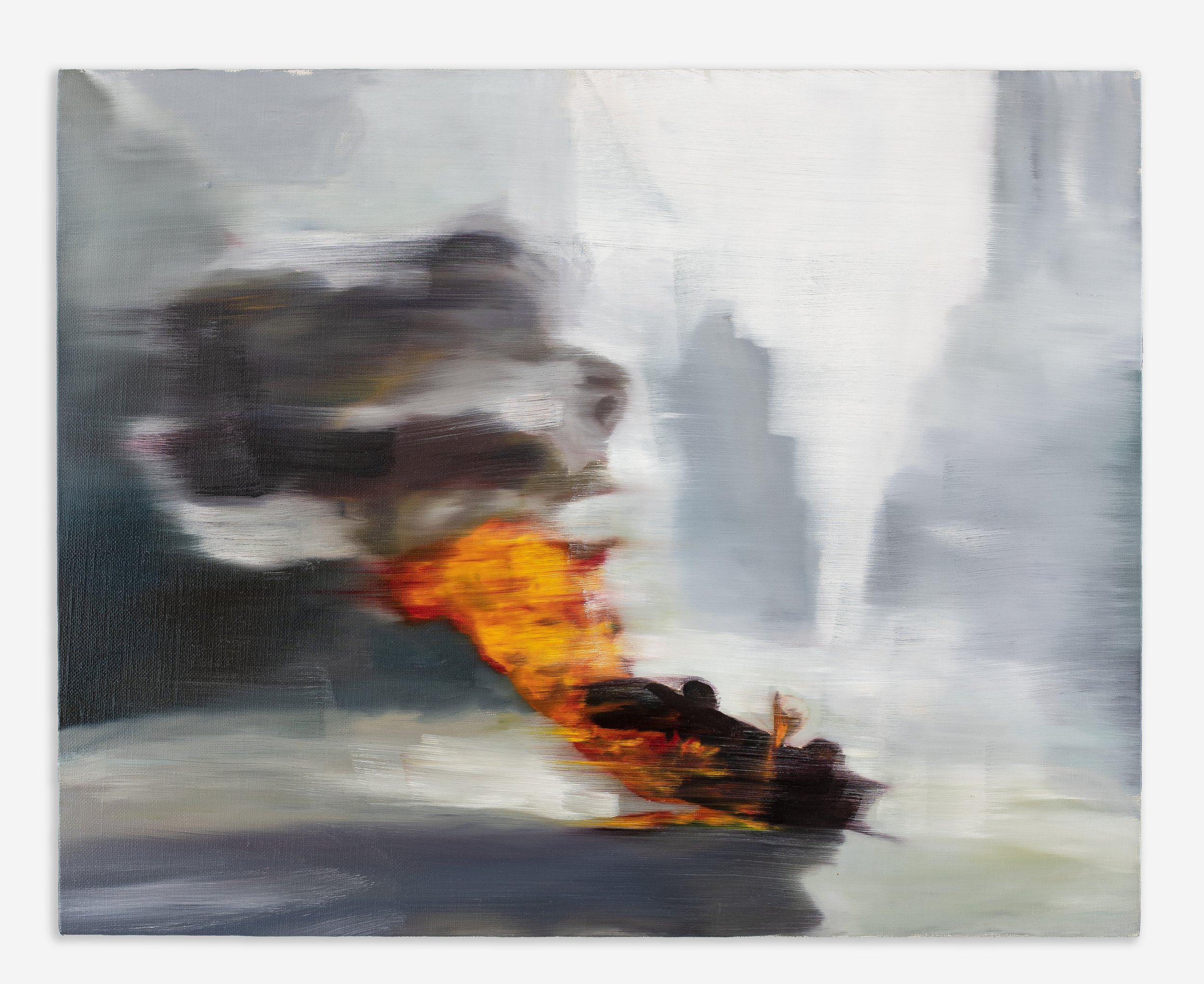
The Phone Before the Fire: Tan Mu's Minneapolis and the Instinct to Record
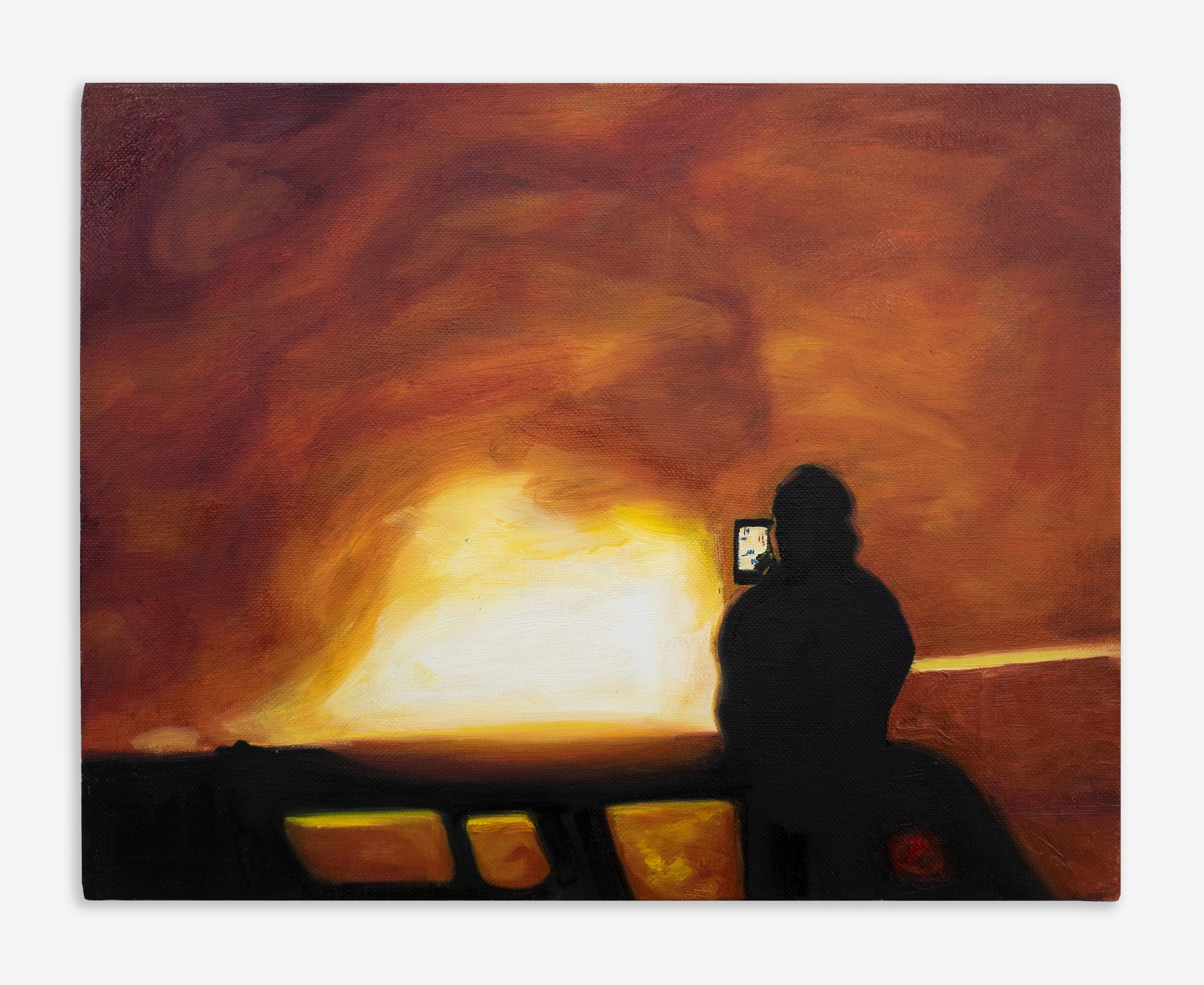
A fire burns and the first response is not to extinguish it but to photograph it. This is not a failure of courage or a collapse of civic responsibility, it is a transformation of instinct, a shift in the reflex that governs what a human being does when confronted with an event that demands attention, and the shift is from the body to the device, from the hand that would reach for water or a blanket or a fire extinguisher to the hand that reaches for the phone, and the phone is not an alternative to action, it is a form of action, the action of making the event visible to people who are not present, the action of transforming the event from a local occurrence into a global datum, the action of converting fire into data, and the conversion is instantaneous, because the phone records the fire as video and the video is uploaded to a platform and the platform distributes the video to anyone who is watching, and the watching is not passive, it is participatory, because the viewer who watches the fire on their phone can share it and comment on it and add it to the stream of other fires and other events that constitute the news, and the news is not a separate category from reality, it is reality, or at least it is the reality that most people experience, the reality that arrives through the screen and that constitutes the public sphere in the twenty-first century, and the transformation of the event into the recording and the recording into the news and the news into the reality is the circuit that Tan Mu has traced in Minneapolis (2020), a painting of a person in a car holding a phone toward a burning scene, a painting of the moment when the instinct to record replaces the instinct to act, when the camera becomes the first responder, when the phone arrives at the fire before the fire truck does, and the painting does not judge this transformation, it records it, in the same way that the phone records the fire, as a fact about the present, as a fact about the way that human beings respond to crisis in the era of the smartphone and the social media platform and the twenty-four-hour news cycle and the pandemic lockdown that confined people to their homes and drove them into the streets and into their screens and into the strange double existence of watching the world through a device while the world burned outside the window.
Minneapolis is oil on linen, 27.9 x 35.6 cm (11 x 14 in). The format is small, intimate, the size of a notebook page or a photograph that you might carry in your wallet, and the intimacy of the format is at odds with the violence of the subject, because the painting depicts a scene of civil unrest, a burning object in the background and a figure in the foreground who is leaning out of a car window and holding a phone toward the fire, and the figure is rendered as a dark silhouette against a glowing, blurred background of amber and orange and red, the colors of fire and streetlight and the sodium vapor lamps that illuminate American cities at night, and the background is not a detailed rendering of a specific location but an atmospheric wash of warm color that suggests heat and light and chaos without specifying what is burning or where the fire is or who is present beyond the single figure with the phone, and the blurring of the background is a visual strategy that Tan Mu has described as a way to suggest "motion, instability, and the multiple layers of mediation that an image undergoes," because the image that the phone is recording is already a mediated image, it is already a representation of an event that has been filtered through the camera and the screen and the platform, and the painting of this image is a further mediation, a mediation of a mediation, a painting of a recording of an event, and the layers of mediation are what the blurring registers, the way that the original event becomes less distinct each time it passes through a new medium, the way that the fire that is burning in the street is not the same as the fire that appears on the phone screen and is not the same as the fire that appears on the canvas, and each version of the fire is a translation, and each translation loses something and gains something, and the painting is a record of what is gained and what is lost when an event becomes an image and an image becomes a painting.
Andy Warhol's Birmingham Race Riot (1964) is a silkscreen painting based on a photograph by Charles Moore that was published in Life magazine on May 17, 1963, and the photograph shows police dogs attacking civil rights protesters in Birmingham, Alabama, and Warhol took the photograph and had it transferred to a silkscreen and printed it onto canvas in two colors, black and a sickly greenish gray, and the image is not cropped or composed by Warhol, it is the image as it appeared in the magazine, the image that the editor chose and the photographer shot and the printer reproduced, and Warhol's intervention is not the choice of the image but the choice to paint the image, to take a news photograph and transfer it to canvas and present it as a work of art, and the presentation is not a comment on the civil rights movement or on police brutality or on the specific events in Birmingham, it is a comment on the image itself, on the way that the image circulates, on the way that the photograph becomes news and the news becomes history and history becomes a silkscreen on a canvas that hangs in a museum, and the silkscreen process, which reproduces the photograph as a pattern of ink on canvas, is the same process that the newspaper uses to reproduce the photograph as a pattern of ink on paper, and the painting is not a painting of the event but a painting of the reproduction of the event, and the reproduction is the event as most people experience it, the event as it arrives through the medium of the press, and Warhol understood this, he understood that the reproduction was the reality, that the image in the magazine was the event for the millions of people who read the magazine and did not witness the event in person, and his painting of the reproduction is a painting of this reality, the reality of mediation, the reality of the image that stands in for the event.
The connection between Warhol's silkscreen and Tan Mu's painting of the smartphone recording is the connection between two artists who have recognized that the image is the event, that the photograph in the magazine and the video on the phone are not documents of something that happened but are the thing that happened, because for the vast majority of people who encounter the event, the encounter occurs through the image, and the image is not a transparent window onto the event but a construction that has been framed and cropped and edited and transmitted by a system of technologies and institutions and platforms that determine what is seen and what is not seen, and Tan Mu's decision to paint the figure holding the phone toward the fire is a decision to paint the moment of this construction, the moment when the event becomes an image, the moment when the phone transforms the fire from a physical occurrence into a digital artifact, and the painting of this moment is not a reproduction of an image the way Warhol's silkscreen is a reproduction of an image, it is a painting of the act of making an image, a painting of the moment of mediation rather than the result of mediation, and the difference is significant, because Warhol painted the image that the newspaper produced and Tan Mu painted the act that produces the image, the gesture of holding the phone toward the fire, the gesture that converts the physical into the digital, the gesture that is the subject of Minneapolis, and the gesture is the gesture of our time, the gesture that defines how we witness and how we remember and how we understand what happens in the world, the gesture that has replaced the gesture of reaching for the bucket or the hose or the fire extinguisher, the gesture that says, I will record this before I will act on this, I will make this visible before I will make this stop, I will share this before I will intervene, and the gesture is not a failure, it is a response, a response to a world in which visibility is the primary form of action, a world in which the recording of an injustice is often more effective than the direct intervention against the injustice, a world in which the video of a police killing can produce more change than any single act of resistance, and the painting records this world as it is, without nostalgia for the world that preceded it, without judgment on the gesture that defines it, without mourning for the instinct that has been replaced, because the painting is not an argument about what we should do when we see a fire, it is a record of what we do, it is a record of the phone before the fire.
Gerhard Richter's October 18, 1977 (1988) is a cycle of fifteen paintings based on photographs of the Red Army Faction, the group of left-wing militants known as the Baader-Meinhof Gang, who were arrested, tried, and found dead in their prison cells in Stammheim on the night of October 18, 1977, and the deaths were officially ruled suicides, but the circumstances were disputed, and the photographs that Richter used as his sources were the photographs that had circulated in the German press during and after the events, the photographs of the arrests and the trials and the funerals and the cells where the bodies were found, and Richter took these photographs and painted them in a technique that he had been developing since the early 1960s, the technique of the blurred photo-painting, in which a photorealistic image is rendered in oil and then dragged and smudged while the paint is still wet, producing an image that is simultaneously precise and indistinct, simultaneously a photograph and a painting, simultaneously a document and an interpretation, and the blur is not a stylistic mannerism, it is an argument about the relationship between the photograph and the truth, an argument that the photograph, which appears to be the most objective and the most reliable record of an event, is in fact the most unreliable, because the photograph does not show what happened, it shows what the camera saw, and what the camera saw was determined by the position of the photographer and the framing of the shot and the lighting conditions and the equipment that was used and the editorial decisions that were made after the photograph was taken, and Richter's blurred paintings of the Baader-Meinhof events are paintings of this uncertainty, paintings of the way that the photograph conceals as much as it reveals, paintings of the way that the truth of an event is never contained in a single image but is distributed across many images and many perspectives and many accounts, and the blur that Richter applies to his surfaces is the blur of mediation, the blur that occurs when an event passes through the lens and the press and the public debate and arrives at the viewer as an image that has been shaped by forces that the viewer cannot see, and the connection to Minneapolis is the connection of the blurred image, the connection of the painting that acknowledges its own mediation, the connection of the surface that does not pretend to offer direct access to the event but instead registers the distance between the event and the representation, and Tan Mu's blurred background of amber and orange and red is Richter's blur transposed to a different crisis and a different continent and a different century, the blur of the phone camera and the social media platform and the news feed, the blur of the event as it appears to the viewer who was not present, the blur of the image that has traveled through so many mediations that it has lost the sharpness of the original and gained the softness of the shared, the softness of the image that everyone has seen and that no one saw in person.
The summer of 2020 was a summer of two simultaneous crises, the pandemic that confined people to their homes and the protests that drove them into the streets, and the two crises were not separate but entangled, because the conditions that the pandemic revealed, the inequality and the precarity and the racial disparity in health outcomes and economic security, were the same conditions that the protests addressed, and the protests that followed the killing of George Floyd in Minneapolis on May 25, 2020, were the largest protest movement in the history of the United States, and the movement was documented by the smartphones of the people who participated in it and witnessed it and recorded it and uploaded the recordings to the platforms where the recordings became the news, and the news was not the reporting of professional journalists alone, it was the aggregation of millions of recordings made by millions of phones held by millions of hands, and the hands that held the phones were the hands that Tan Mu has painted, the hand that reaches out of the car window with the phone, the hand that holds the device toward the fire, the hand that performs the gesture of recording that is the gesture of the present, and Tan Mu was in New York during the lockdown, she had moved her painting practice from her studio back to her home, and she was watching the protests through screens, and she was watching the recordings that the phones produced, and she was watching the news that the recordings became, and she was watching the events that the news depicted, and the layers of mediation that separated her from the events were the same layers of mediation that separate every viewer from every event that they do not witness in person, and the painting is a record of these layers, a record of the distance between the viewer and the event and the device that bridges the distance and the image that the device produces and the news that the image becomes and the reality that the news constitutes, and the record is not a complaint about mediation, it is a description of mediation, a description of the way that events are experienced in the twenty-first century, a description of the way that the phone has become the organ through which we perceive the world, a description of the way that the camera has become the eye and the screen has become the window and the platform has become the public square and the recording has become the event, and the description is also a question, the question of what remains of the event when the recording has replaced it, the question of what the painting can do that the recording cannot, the question of what happens when the fire that was recorded by the phone is painted by the hand, and the answer that the painting provides is the answer of slowness, the answer of the hand that takes hours where the phone takes seconds, the answer of the brush that returns to the same passage again and again where the camera captures the image once and moves on, the answer of the painting that stays on the wall where the recording scrolls past on the feed, and Danni Shen, writing in Emergent Magazine in February 2024, described Tan Mu's paintings as serving "as a kind of witness to human socio-technological histories," and the witness is not the witness of the courtroom, it is the witness of the painter, the witness who stands before the event and returns to it and reconstructs it and renders it in a medium that is slower and more permanent than the medium in which the event was first recorded, and the witness that Minneapolis provides is the witness of the phone before the fire, the witness of the gesture that defines how we see and how we remember and how we understand, the gesture of holding the device toward the burning world and letting the device do what the hand cannot, which is to make the fire visible to everyone who is not present, which is to make the fire into news, which is to make the fire into the painting that records the phone that records the fire that burns in the street in Minneapolis in the summer of 2020 while the pandemic confines the world to its homes and the protests drive the world into the streets and the screens that connect the homes to the streets carry the recordings that become the reality of the event that the painting witnesses and the hand paints and the phone records and the fire burns, all at once, in the same moment, in the same city, in the same summer, in the same world where the instinct to record has replaced the instinct to act and the painting has replaced the recording and the fire has become the image has become the news has become the painting has become the record of the phone held toward the fire, the record of the gesture that is the subject and the method and the meaning of Minneapolis, the gesture of witnessing, the gesture of recording, the gesture of making the world visible through the device that extends the hand and the hand that extends the eye and the eye that looks at the painting and recognizes in the silhouette of the figure holding the phone toward the burning scene a portrait of themselves, a portrait of the way they see the world, a portrait of the phone that they hold and the screen that they watch and the reality that they inhabit, a portrait of the era in which the fire is recorded before it is extinguished.