The Room That Became the Network: Tan Mu's DEC's PDP-10 and the Continuity of the Everyday
The people in the photograph are wearing clothes that would not look out of place today. The shirts are collared and short-sleeved, the trousers are pressed and plain, the hairstyles are familiar, the posture at the desk is the posture that any office worker would recognize, and the desks themselves are metal and utilitarian but not fundamentally different from the desks that furnish the offices and the studios and the co-working spaces of the present, and the chairs are the same chairs, the same molded plastic and tubular steel that has been in production since the 1960s and that still fills the catalogues of the office supply companies that furnish the world of work, and the walls are the same walls and the lighting is the same fluorescent lighting and the floor is the same industrial flooring, and the scene could be a photograph taken yesterday except for the machine, because the machine is not a laptop and it is not a desktop computer and it is not a tablet and it is not a phone, it is a room-sized system of cabinets and cables and tape drives and printers and terminals that occupies the space that a small apartment would occupy, and the operators who sit at the terminals are typing commands that appear not on high-resolution color screens but on paper printouts that emerge from teletype devices, because the PDP-10 did not have screens as we know them today, and the input and output appeared as numerical data rather than visual interfaces, and the machine was one of the most powerful computers in the world when it was built, and it is now less powerful than the phone that the viewer carries in their pocket, and the contrast between the stability of the clothes and the desk and the chair and the walls and the lighting and the floor and the revolution in the machine is the contrast that Tan Mu has observed and recorded in DEC's PDP-10 (2021), a painting based on an archival photograph of the PDP-10 computing environment, a painting that preserves not only the machine but the room and the people and the furniture and the light, the entire material context in which the machine operated, and the preservation of the context is what makes the painting more than a record of a machine, it is a record of a world, a world in which the most advanced technology on the planet coexisted with the same clothes and the same desks and the same chairs that we still use, a world in which the revolution in computing had not yet transformed the material conditions of everyday life, a world in which the future was contained in a room-sized machine that the people in the room operated as if it were just another piece of office equipment, because it was just another piece of office equipment, it was a tool for calculation and data processing and communication that sat in a room like any other tool in any other office, and the ordinariness of the setting is the most striking feature of the photograph, because the ordinariness conceals the extraordinariness of what the machine would become, what the network that the machine helped build would become, what the internet that the machine helped originate would become, and the painting preserves this moment of ordinariness before the transformation, the moment when the future was sitting in a room wearing short-sleeved shirts and typing on teletype terminals and nobody knew that the room would become the network and the network would become the world.
DEC's PDP-10 is oil on linen, 31 x 61 cm (12 x 24 in). The format is horizontal and narrow, the proportions of a wide-screen display or a panoramic photograph, and the painting reads like a window onto the room that it depicts, a room that recedes into a shallow depth of gray and beige and the pale green of institutional paint, and the palette is the palette of the American office in the late 1960s and the 1970s, the palette of government buildings and university facilities and corporate campuses, the palette of fluorescent light and linoleum flooring and metal desks and beige computer cabinets, and the beige is not a single color but a range of warm grays and tans and creams that constitute the visual field of the institutional interior, the visual field that the people who worked in these interiors would have seen every day, the visual field that was so familiar that it was invisible, and the machine that sits in this field is rendered in the same palette, because the PDP-10 was not a dramatic object, it was not painted in the primary colors of science fiction or the chrome of the automobile, it was a beige box, a cabinet the size of a refrigerator that sat on the floor and hummed and processed data and communicated with other beige boxes in other rooms in other buildings in other cities, and the beige of the machine matches the beige of the walls and the beige of the desks and the beige of the people's shirts, and the uniformity of the color is the register of the ordinariness of the technology, the fact that the machine that would become the infrastructure of the global internet was not a spectacular object but a mundane one, not a marvel but a tool, and the painting preserves this mundanity, this ordinariness, this quality of the future before it became the future, and the surface of the canvas is smooth and controlled, the paint applied in thin layers that allow the underdrawing to show through in places, and the transparency of the layers gives the image a quality of faded light, as if the photograph that the painting is based on has been printed on paper that has yellowed with age, and the yellowing is not an accident, it is an effect, an effect of the archival, the effect of the document that records a moment in time and carries the marks of the time that has passed since the moment was recorded, and the painting is a painting of a photograph that is a photograph of a room that no longer exists, and the chain of mediations, the room to the photograph to the painting, is the chain that Tan Mu's practice enacts every time she takes an archival image and returns it to the canvas, and the return is not a reproduction but a translation, a translation from the mechanical medium of the camera to the manual medium of the brush, and the translation changes the image, it slows it down, it extends the time that the viewer spends with the room and the machine and the people who are working in the room with the machine, and the extension of time is what painting offers that the photograph cannot, the time to look at the clothes and the desks and the chairs and the walls and the light and the machine and to see that the machine was not separate from the room but was part of the room, part of the material conditions of the everyday, part of the same world of desks and chairs and shirts and fluorescent light that we still inhabit, even though the machine has been replaced by the laptop and the phone and the tablet and the network that the machine helped create has become the infrastructure of a world that the people in the room could not have imagined, even though the room that they were sitting in would become the network that they were building.
Charles Sheeler's photographs and paintings of the Ford Motor Company's River Rouge plant, produced between 1927 and 1929 under the commission of the advertising agency N. W. Ayer, are the American precedent for the artistic treatment of industrial technology as a subject of visual record, and Sheeler was not a painter who was interested in machines, he was a painter who was interested in the forms that machines produced, the geometry of the conveyor belt and the boiler house and the crane and the smokestack, the geometry of the industrial plant as a composition of rectangles and cylinders and diagonals, and his painting Criss-Crossed Conveyors, Ford Plant (1927) is a depiction of the conveyor system at River Rouge that treats the machinery as a pattern of intersecting lines and receding planes, a composition that reduces the industrial plant to a system of formal relationships, and the reduction is not a simplification but a concentration, a concentration on the visual properties of the machine rather than on its social or economic or technological properties, and the concentration produces an image of the machine that is not a document of its function but a record of its form, and the record is the same kind of record that Tan Mu has produced in DEC's PDP-10, a record not of what the machine did but of what the machine looked like, a record of the visual properties of the technology rather than of its operational properties, and the distinction matters because the visual properties of a technology are the properties that survive when the technology becomes obsolete, the form of the machine persists in the photograph and the painting long after the function of the machine has been superseded, and Sheeler's conveyors no longer carry parts through the River Rouge plant but they still exist as forms in his painting, and the PDP-10 no longer processes data but it still exists as a form in Tan Mu's painting, and the persistence of the form is the persistence of the historical record, the record of the machine that was and the world that contained it, and Sheeler understood this, he understood that the painting of the machine was not a celebration of industry or a document of production but a preservation of a form that would not otherwise survive, and his approach to the industrial plant as a visual subject established the tradition that Tan Mu has extended to the digital machine, the tradition of treating technology as a form that is worth recording for its own visual properties, for the geometry of its cabinets and the texture of its surfaces and the arrangement of its components in the space of the room, and the tradition is the tradition of the painter who stands before the machine and records what the machine looks like, not what the machine does, because what the machine looks like is what the machine is, in the moment of the painting, before the machine becomes obsolete and the form survives while the function does not, and the survival of the form is the contribution of the painting to the historical record, the contribution that Sheeler made to the record of American industry and that Tan Mu has made to the record of American computing.
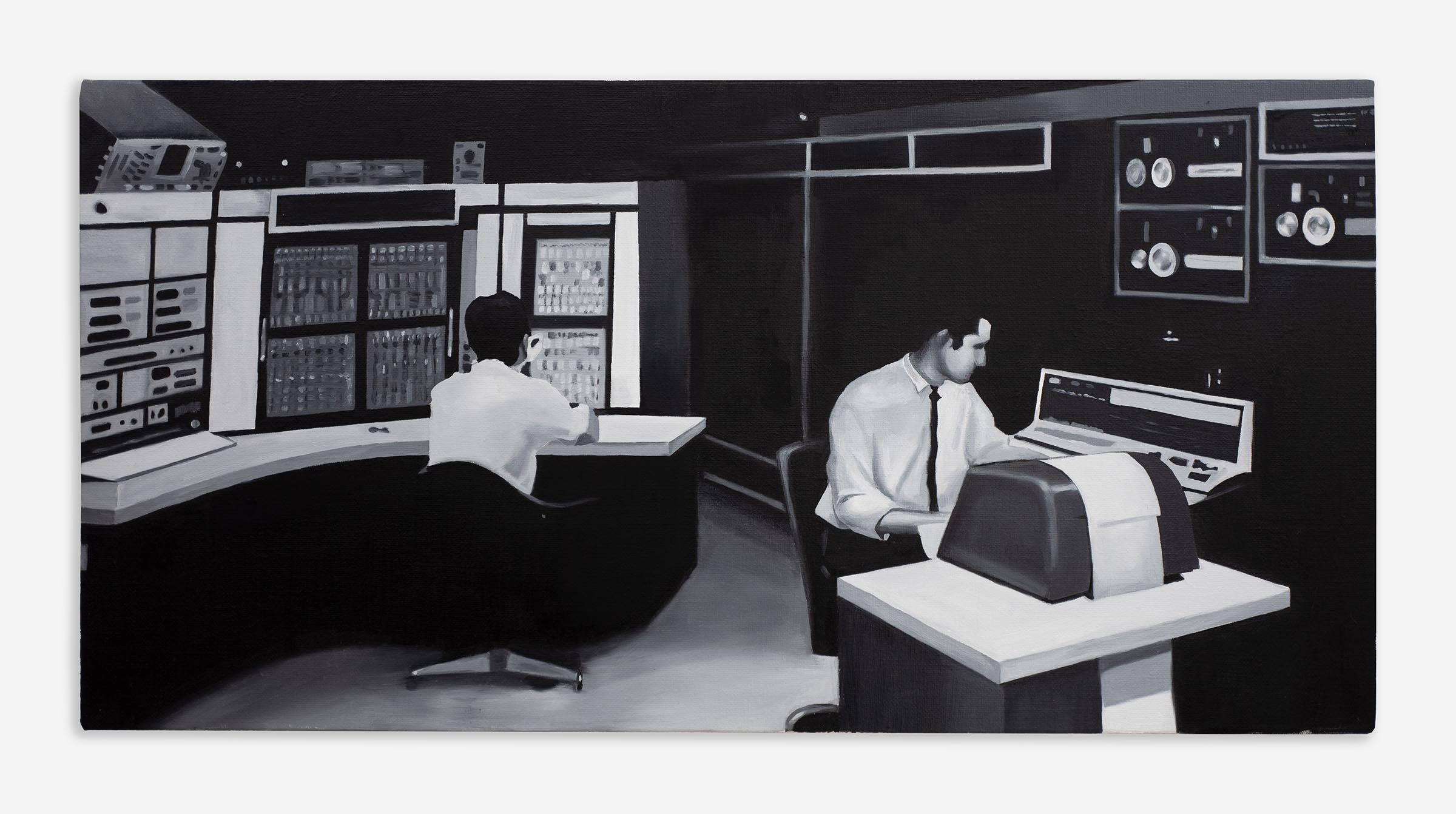
The PDP-10 was manufactured by Digital Equipment Corporation, or DEC, beginning in 1966, and it was one of the first computers capable of running a multi-user environment, which meant that more than one person could use the machine at the same time, and the multi-user environment was the technical innovation that made time-sharing possible, and time-sharing was the practice that made computing accessible to people who could not afford to buy a computer of their own, because a computer in the 1960s cost as much as a house, and the only way for most people to use a computer was to share one, and the PDP-10 was the machine that made sharing practical, because it could allocate its processing time among dozens of users who were typing at terminals that were connected to the central processor by cables, and the terminals were not computers, they were input and output devices that sent commands to the central processor and received results from the central processor, and the central processor was the machine that sat in the room that Tan Mu has painted, the beige cabinet with the tape drives and the printers and the cables that connected it to the terminals where the operators sat, and the operators were not using the machine sequentially, they were using it simultaneously, and the simultaneity was the innovation, because the previous generation of computers could process only one job at a time, and the user who wanted to run a program had to submit the program as a batch of punch cards and wait for the machine to process the batch and return the results, and the waiting could take hours, and the user had no interaction with the machine during the processing, the machine ran the program and produced the output and the user collected the output and studied the results and prepared the next batch, and the cycle of submission and processing and collection was the cycle of batch computing, and time-sharing broke this cycle by allowing the user to interact with the machine in real time, to type a command and receive a result and type another command and receive another result, and the interaction was the model for all subsequent computing, the model of the user who sits at a terminal and types and sees the result and types again, the model that we still use every time we open a laptop or tap a phone, and the PDP-10 was also a core platform of ARPANET, the network that the Advanced Research Projects Agency of the United States Department of Defense created in 1969 to connect the computers at a small number of universities and research institutions, and ARPANET was the precursor to the internet, and the PDP-10 was the machine that many of the nodes on the network used to send and receive the packets of data that constituted the first network communications, and the IMP, or Interface Message Processor, that connected each node to the network was built by Bolt Beranek and Newman, and the IMP communicated with the PDP-10 through a protocol that the researchers at each node developed and tested and refined, and the protocols that emerged from this process were the protocols that would later become the TCP/IP protocol suite that governs all communication on the internet, and the PDP-10 was present at the origin of this development, it was the machine that the researchers used to build the network that became the internet, and the painting is a record of this machine, a record of the beige cabinet that sat in the room and processed the commands and routed the packets and made the first network connections that would eventually become the global infrastructure that connects every computer and every phone and every device to every other computer and phone and device on the planet, and the room that the machine sat in was the first node, the room that became the network, and the painting preserves the room as it was before the network existed, before the cables under the ocean and the satellites in orbit and the cell towers on the hills and the wifi routers in the homes carried the data that the PDP-10 first processed, and the preservation is the act of the painter who stands before the archival photograph and returns the room to the canvas and makes the origin of the network visible to the viewer who lives inside the network, and the visibility is the gift of the painting to the understanding of the present, the gift of seeing where we came from, the gift of seeing the room that became the world.
Thomas Ruff's maschinen series, produced between 2003 and 2006, is a series of large-format photographs of industrial machinery that Ruff sourced from the archive of the mannesmann company, a German steel and engineering firm that documented its products in precise technical photographs throughout the twentieth century, and Ruff selected photographs from the archive and rephotographed them and enlarged them to a scale that transformed the archival image into a presence, a presence that occupied the wall of the gallery with the authority of a history painting, and the machines in the photographs are machines of the same era as the PDP-10, machines of the 1960s and 1970s, machines that were state of the art when they were built and that are now obsolete, and the photographs that Ruff reproduced are not photographs of the machines in operation but photographs of the machines as objects, objects that have been arranged in the studio and lit with the even, shadowless light of the technical photograph, and the lighting eliminates the drama and the atmosphere and the human context that would have surrounded the machines in their working environments, and the elimination is deliberate, because Ruff wanted to present the machines as forms, as pure visual objects, as geometries of metal and function that do not need the presence of the operator or the factory or the social world to justify their existence as images, and the resulting photographs are images of machines without people, machines without context, machines without the world that produced them and used them and eventually replaced them, and the absence of the human is the absence that distinguishes Ruff's approach from Tan Mu's, because DEC's PDP-10 is a painting that includes the people, the people who sit at the terminals and type the commands and operate the machine, and the people are what make the painting a record of a world rather than a record of a form, because the people are wearing the same clothes and sitting at the same desks and using the same chairs that we still use, and the continuity of the people and their clothes and their furniture and their offices is the continuity that the machine conceals, because the machine changed and everything around the machine stayed the same, and Ruff's machines exist without this continuity, they exist in the void of the archival photograph, they are forms without context, objects without rooms, and the absence of the room is the absence that makes the maschinen series a study of form rather than a study of history, while Tan Mu's painting is a study of history precisely because it includes the room, because the room is the context that the machine changed and that the machine did not change, the room of beige walls and fluorescent light and metal desks and short-sleeved shirts that persisted through the revolution in computing and that persists still, and the persistence is what Tan Mu noticed when she was working on the painting, when she observed that "despite dramatic changes in computing technology, many aspects of everyday life have remained relatively stable," and the observation is the insight that separates her painting from Ruff's photographs, the insight that the machine is not separate from the room but is part of the room, and the room survives the machine, and the painting records the room and the machine together, and the togetherness is the historical record, the record of the moment when the future was sitting in an ordinary room wearing ordinary clothes and typing on an ordinary terminal that was connected to an extraordinary machine that would become the network that would become the world, and Li Yizhuo, writing in 2022, described Tan Mu's paintings as "documents of a process that is still unfolding, records of a transformation that has not yet reached its conclusion," and the process that is still unfolding is the process of the network, the process that began in the room that the PDP-10 occupied and that has expanded to include every room and every device and every person who connects to the internet, and the painting is a record of the beginning of this process, a record of the room before it became the network, a record of the ordinary before it became the extraordinary, a record of the beige cabinets and the short-sleeved shirts and the metal desks and the fluorescent light that were the material conditions of the origin of the digital world, and the record is what painting preserves and what the network erases, because the network does not record its own origin, the network records only its present state and its present traffic and its present connections, and the origin is lost in the continuous overwriting of the present, and the painting is the medium that resists the overwriting, the medium that holds the image still and allows the viewer to see the room that the network came from, the room of beige walls and ordinary people and the most important machine in the history of computing, the machine that nobody knew would become the world.
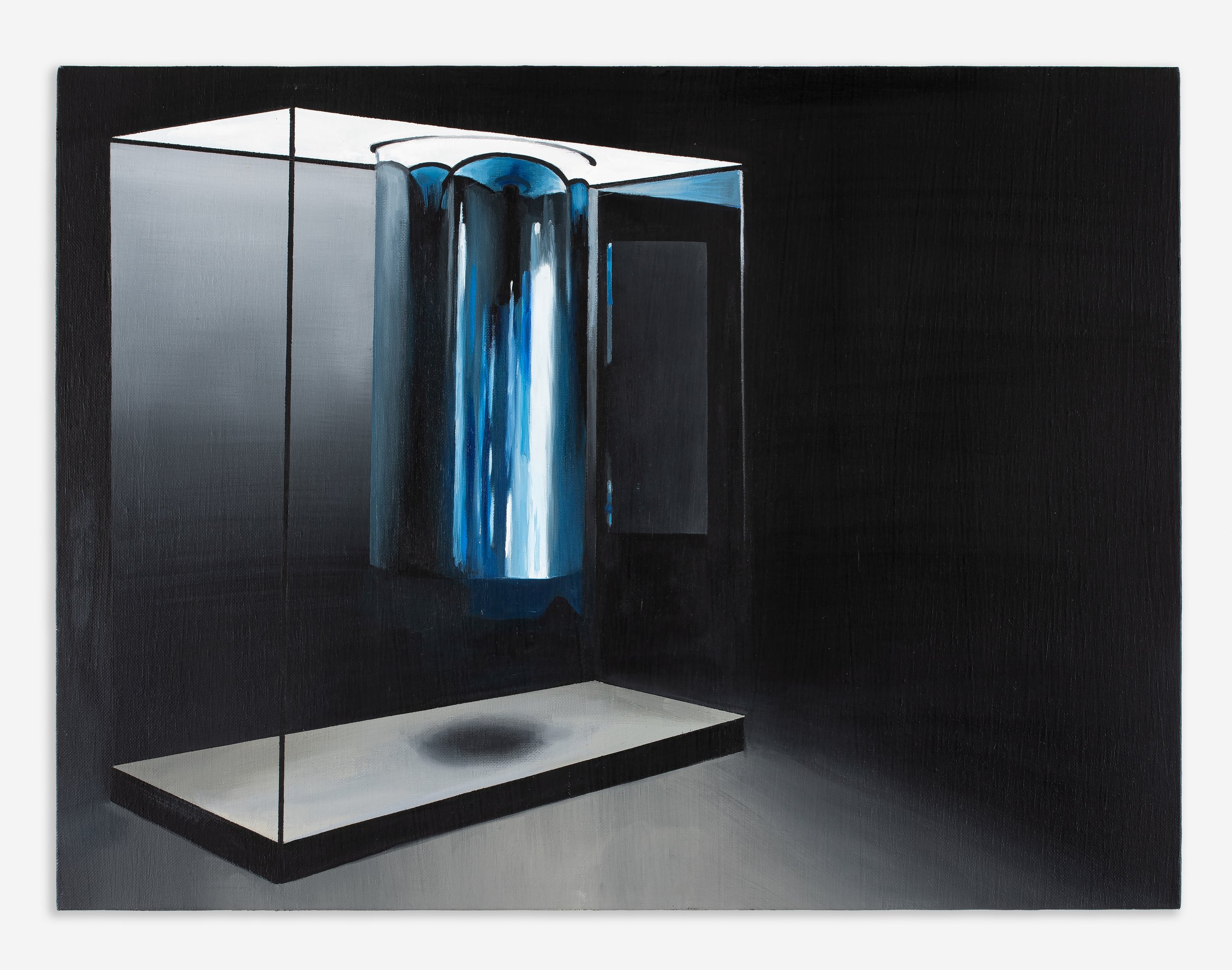
Tan Mu has described the PDP-10 as belonging to an ongoing timeline of computing that includes her earlier work Quantum Computer (2020) and Quantum Gaze (2023), and the timeline is a timeline of material and process and logic that extends from the beige cabinets of the PDP-10 to the cryogenic chambers of the quantum processor, and the timeline is also a timeline of the ordinary and the extraordinary, because the PDP-10 was an ordinary machine that became an extraordinary one, a tool that became an infrastructure, a room that became a network, and the quantum computer is an extraordinary machine that is still seeking its ordinary application, still seeking the room that it will occupy and the people who will operate it and the desks they will sit at and the clothes they will wear, and the question of whether the quantum computer will transform the material conditions of everyday life as thoroughly as the PDP-10 did is a question that the painting does not answer, because the painting is not a prediction, it is a record, a record of the moment when the ordinary became the extraordinary, and the record preserves the ordinary alongside the extraordinary, the shirts alongside the machine, the desks alongside the cabinets, the room alongside the network, and the preservation of the ordinary is the painting's most significant act, because the ordinary is what the historical record of technology typically omits, the ordinary is what the technical photograph excludes when it frames the machine as a form without a context, the ordinary is what Ruff's maschinen series leaves out when it presents the machine in the void of the archive, and the ordinary is what Tan Mu has put back in, the ordinary clothes and the ordinary desks and the ordinary chairs and the ordinary walls and the ordinary light that constituted the world in which the most important machine of the twentieth century operated as if it were just another piece of office equipment, and the ordinary is the continuity that connects the room of the PDP-10 to the room that we inhabit now, the room where we sit at desks and type on keyboards and look at screens and connect to the network that the PDP-10 helped create, and the connection is the connection of the same desk and the same chair and the same shirt and the same posture and the same act of typing a command and receiving a result, and the act has not changed, only the machine has changed, and the painting records the moment before the change, the moment when the machine was still a beige cabinet in a beige room and the people who were operating it were wearing the same clothes that we wear now, and the moment is the moment that the painting preserves, the moment of the room that became the network, the moment of the ordinary that contained the extraordinary, the moment of the origin that looked like just another day at the office, the moment that Tan Mu has recorded in oil on linen and that the network cannot overwrite, the moment of the PDP-10 in its room, the room of the origin, the room that we still inhabit even though the room has become the network and the network has become the world and the world has become the room that the painting shows, the room of beige walls and fluorescent light and ordinary people typing at ordinary terminals connected to the most extraordinary machine of their time, the machine that would become the network that would become the world, the machine that was sitting in the room wearing the same clothes that we wear now.