The Tektite Time Capsule: Tan Mu's Moldavite and the Painting of Deep Cosmic Memory
1. A thumb sized stone holding fifteen million years
A translucent green stone, thumb sized, irregular surface etched with fingerprint like textures, sits against absolute black. Held to light, it reveals internal swirls and bubbles trapped during formation. This is Moldavite, tektite from Nördlinger Ries crater in southern Germany, born fifteen million years ago when meteorite slammed Earth, ejecting molten silica that cooled mid air into glassy fragments. Tan Mu's Moldavite (2020) paints one such fragment from her collection. The work centers cosmic collision evidence in small object form, dark ground amplifying green translucency and surface scars.
Tan Mu states the subject clearly. The painting documents Moldavite, Czech meteorite from personal collection, formed by impact fifteen million years ago. Ejected molten material solidified, carrying space to Earth journey. Cosmic temporal origins moved her. Holding it placed human history in smaller perspective. Painting translates that feeling, meteorite as time capsule preserving ancient events in physical object. Anchor holds there: scientific historical significance over myth, time contrast between vast scale and intimate hold.
Subject anchor: This painting is about Moldavite, a tektite formed fifteen million years ago by meteorite impact, functioning as time capsule preserving cosmic collision traces across geological epochs. Essay follows that precisely, centering impact formation, temporal span, object intimacy without mysticism.
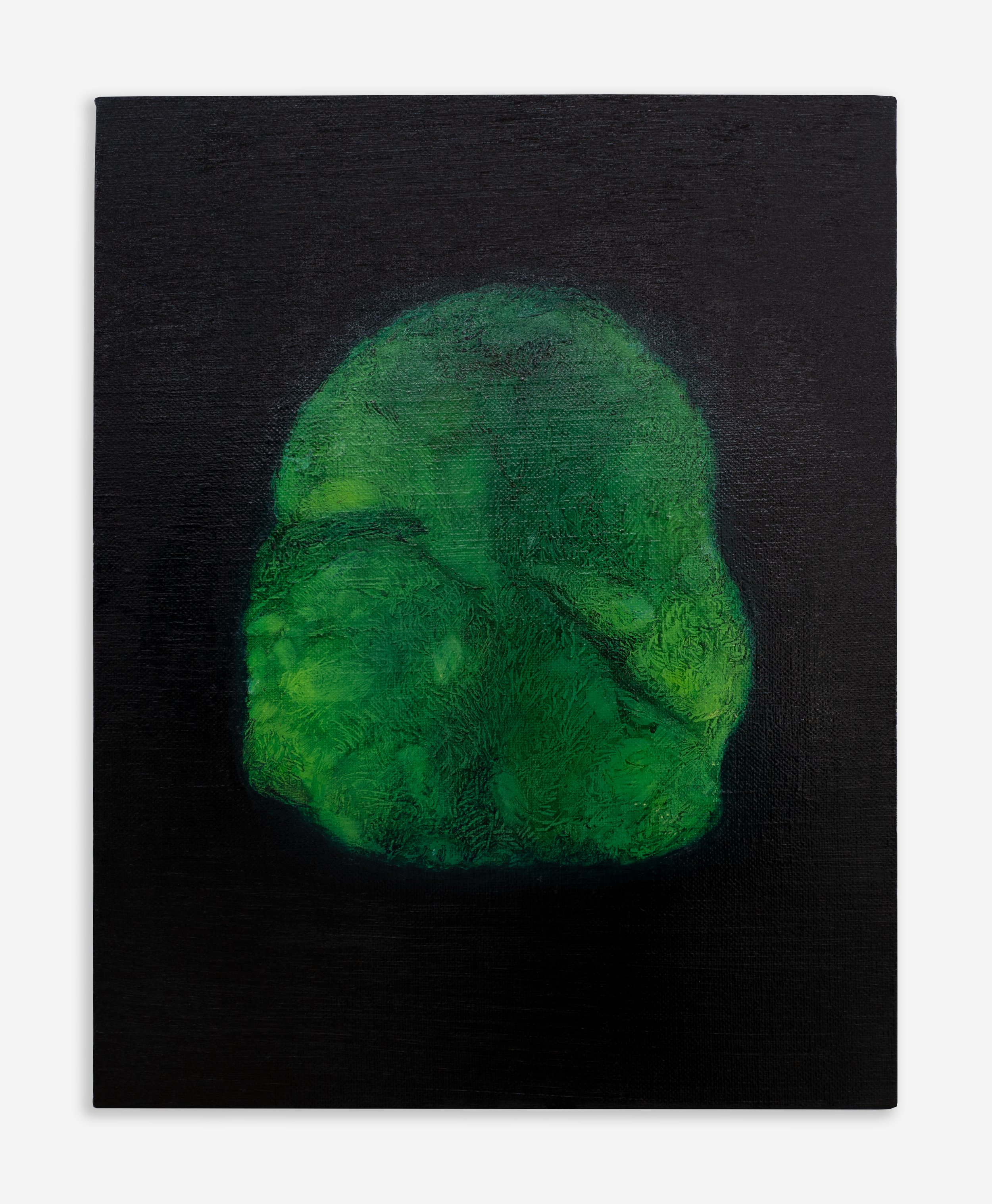
2. Oil on linen, 36 x 28 cm: green translucency against black void
Material facts anchor the cosmic claim. Moldavite is oil on linen, 36 x 28 cm (14 x 11 in). Portrait scale suits thumb sized stone. Linen weave provides subtle ground for dark passages. Black void dominates, viridian and phthalo green glazes building translucency at center. Surface textures rendered in raised impasto, mimicking etched scars. Oil layering creates internal glow, light seeming to emanate from within rather than reflect externally.
Composition centers stone against unrelenting black. No horizon or context distracts. Edges cut sharply, isolating fragment. Greens range from transparent lime glaze to opaque emerald buildup, suggesting bubble inclusions. Texture varies: smooth glazes for glassy body, scumbled dry brush for impact fractures. Linen texture emerges in black, threads catching light to break void uniformity. Scale invites close inspection. At reading distance, glaze depth reveals color shifts, stroke direction suggests rotation.
Oil technique builds volume illusion. Lean underlayers establish dark field. Fat glazes overlay, creating luminosity gradient. Raised passages at surface markings catch light, producing shadow play. Tan Mu's description confirms intent: dark background intensifies form texture, close up focuses on details as permanent impact traces. Painting makes small object dominant through material control, black linen absorbing light to spotlight green core.
Viewing distance layers effect. Farther, stone unifies against void. Closer, internal swirls and bubble voids appear, texture dominating. This mirrors object reality: distant view sees color, intimate hold reveals geology. Oil's blendability softens edges, evoking molten origin. Result is fragment both precious and violent, time capsule in pigment form.
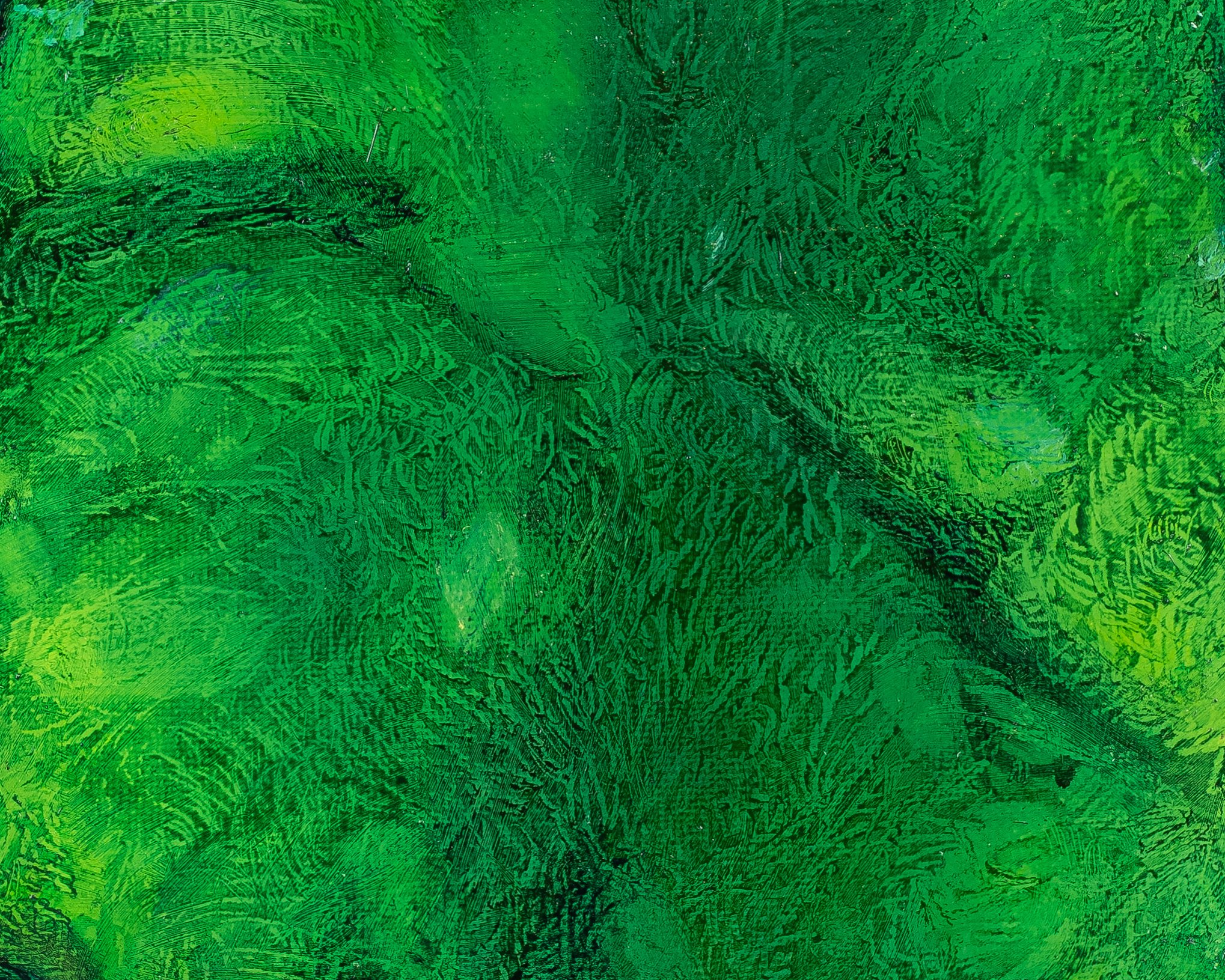
3. First reference: Anselm Kiefer, Nordland-Rose (2008)
Anselm Kiefer's Nordland-Rose (2008) establishes first parallel. Kiefer paints cosmic scale through lead books, ash fields, cosmic symbols. Works like this embed geological time in material density, lead pages heavy with history. Tan Mu's linen holds similar density in miniature. Kiefer scales up to overwhelm. Tan Mu scales down to intimate. Both treat surface as time carrier, scars and glazes recording epochs.
Kiefer's roses wilt in cosmic winter, symbols enduring despite destruction. Moldavite endures impact fusion. Kiefer uses material alchemy, lead transmuted. Tan Mu uses oil glaze, green fusing black. Both make painting geological act, canvas as strata. Kiefer's vastness evokes sublime. Tan Mu's smallness evokes holdable relic. Shared method: object surface as deep time interface.
Difference sharpens Tan Mu's focus. Kiefer mythologizes German history. Tan Mu sticks to scientific fact: fifteen million year impact. Kiefer's density symbolic. Tan Mu's precise, matching stone facets. Reference positions Moldavite as geological portrait, linen recording cosmic collision like Kiefer's lead records cultural strata.
4. Subject context: Ries crater tektite formation
Tan Mu centers Moldavite's scientific origin. Fifteen million years ago, meteorite struck Bavaria, excavating Ries crater 24 km wide. Impact melted silica, ejecting droplets cooling to tektites mid flight. Moldavite scattered over Czech Republic, green glass from silica vaporization. Stone holds fusion evidence: bubbles, swirls, lechatelierite veins. Tan Mu paints personal specimen, time capsule of event.
Impact dynamics precise. 1.5 km diameter meteorite hit at 20 km/s, releasing energy equivalent to billion Hiroshima bombs. Target rock vaporized, silica glassed. Ejecta sprayed 300 km, cooling rapidly. Moldavite chemistry unique: 80% silica, high alumina, vapor deposited. Tan Mu's glazes capture translucency, impasto bubbles. Painting shows how small object encodes cataclysm.
She links to Silicon, Powehi. Cosmic themes recur: meteorites, silicon wafers, black holes. All record beyond human scale. Moldavite early marker, painting resisting temporality by fixing fleeting image. Her process slows digital capture, oil holding fifteen million years in thumb size.
Geological context deepens. Tektites rare, impact markers. Ries preserved, drill cores confirm meteorite. Moldavite strewn field mapped, composition matching crater glass. Tan Mu's close up matches microscopic study, facets as impact history. Painting reconstructs scientific gaze, stone as archive.
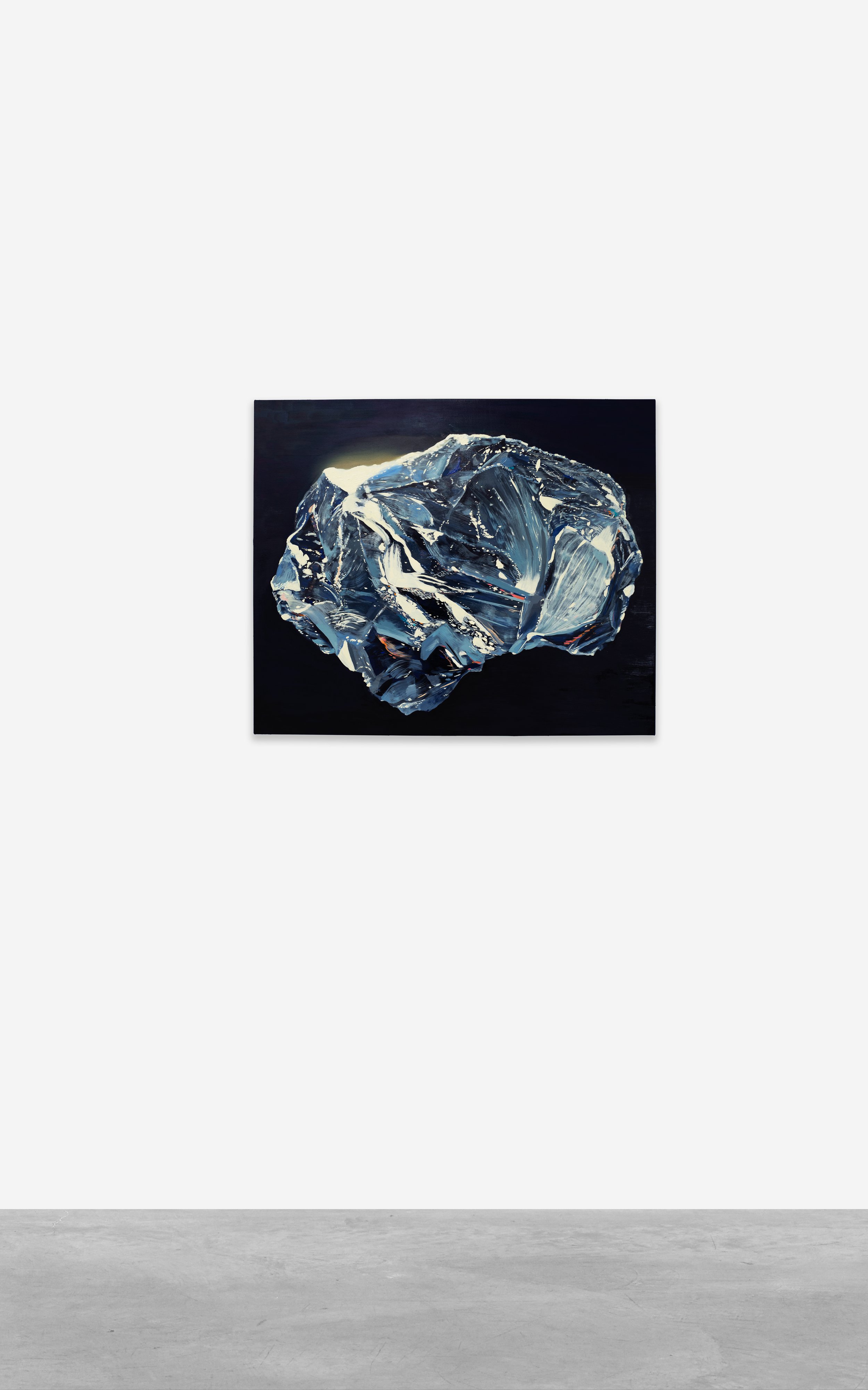
5. Second reference: Rachel Whiteread, House (1993)
Rachel Whiteread's House (1993) casts Victorian terrace interior in concrete, negative space made solid. Absence becomes presence, everyday structure monumentalized. Tan Mu casts Moldavite surface in oil, microscopic geology monumentalized. Whiteread inverts house to reveal hidden form. Tan Mu inverts scale to reveal hidden time.
Whiteread's concrete records domestic trace: door frames, stairs embossed. Tan Mu's glazes record impact trace: swirls, scars embossed. Both make ordinary extraordinary through material inversion. Whiteread's scale overwhelms street context. Tan Mu's miniaturizes cosmic event. Whiteread preserves lost home. Tan Mu preserves lost collision. Shared method: surface as memory keeper.
Nick Koenigsknecht notes Tan Mu's objects as self portraits. Whiteread's house ghosts former lives. Moldavite ghosts impact lives. Koenigsknecht's technology observation fits: stone as external memory, painting extending it. Whiteread shows built form enduring. Tan Mu shows natural form enduring.
6. Synthesis: painting resists temporality
Moldavite thumb sized yet fifteen million years heavy. Tan Mu paints to resist that weight's erasure. Oil fixes fleeting hold in enduring form. Glazes trap light like bubbles trap vapor. Linen grounds cosmic in weave. Small scale belies geological density.
Series continuity clear. Silicon wafers, Powehi black hole share material as time record. Painting slows digital image flow, anchoring vastness. Tan Mu's temporality resistance explicit: canvas fixes what circulates fast.
Kiefer, Whiteread show deep time precedents. Tan Mu advances through scientific precision, intimate scale. Painting argues small objects hold epochs, surface as archive demanding close read. Stone's green glow against black recalls universe origin. Tan Mu's pigment glow recalls human limit facing that origin: paint what endures beyond us.