Burning Car, Raised Phone: Tan Mu's Minneapolis and the Document Impulse
1. The fire no one tries to put out
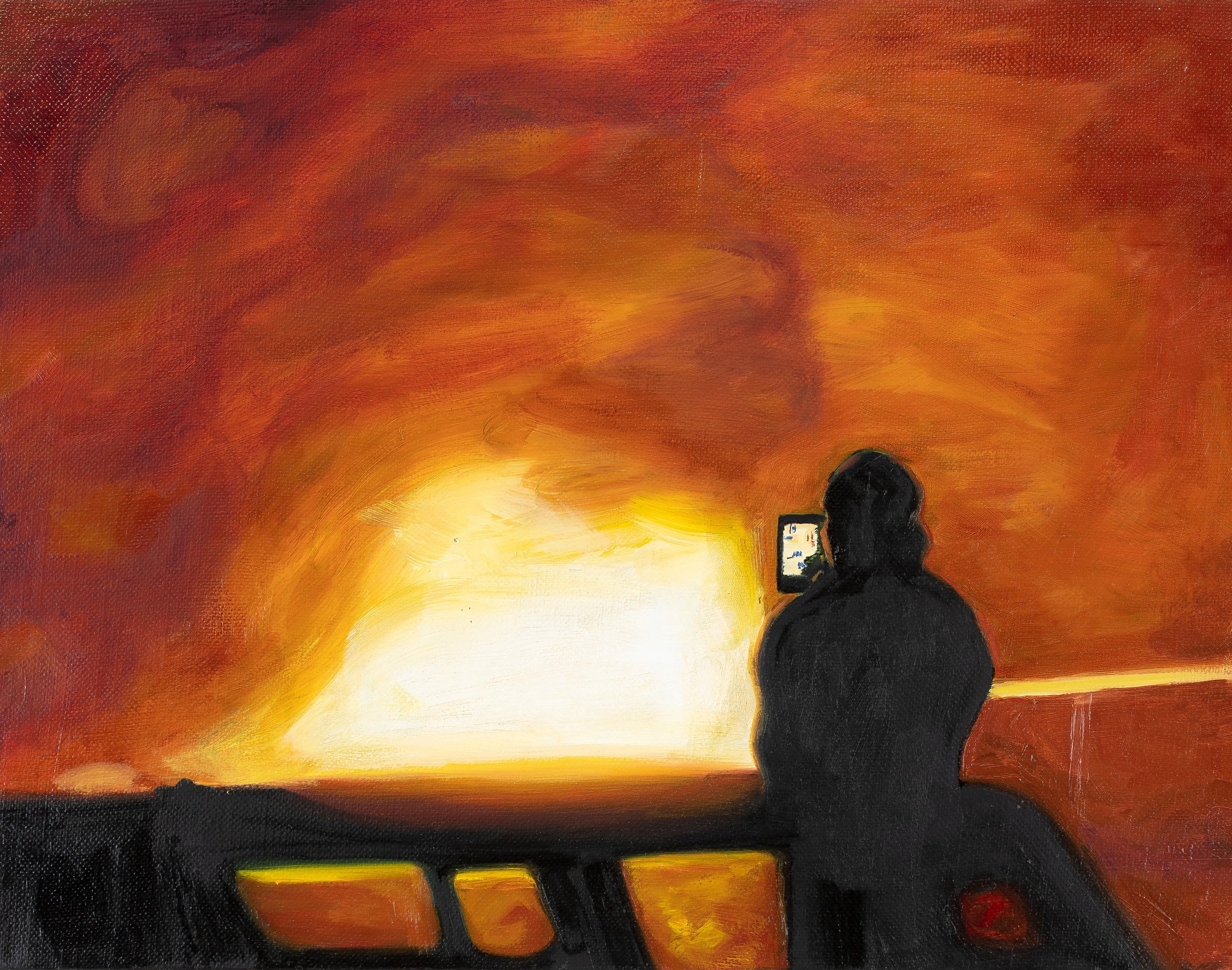
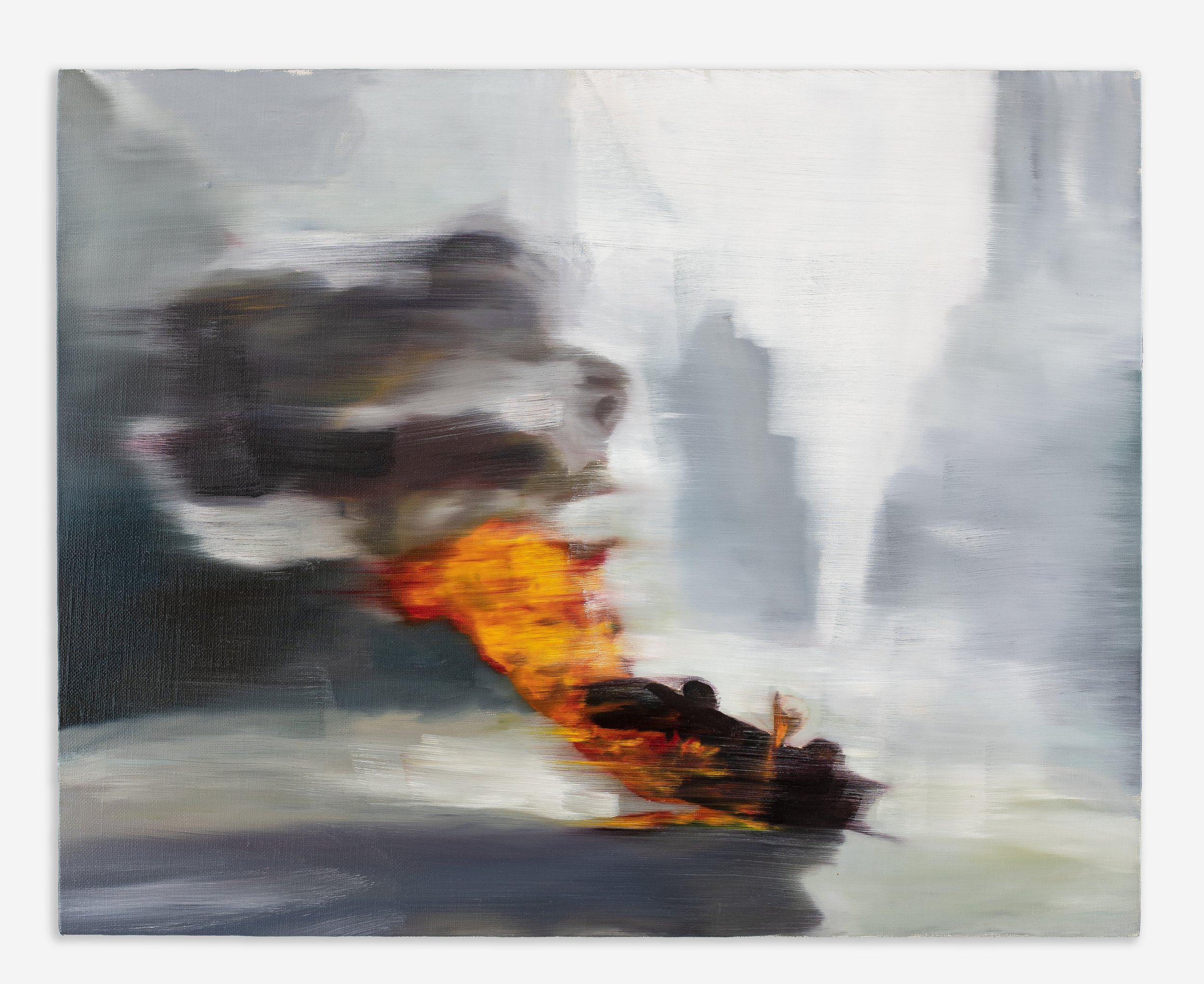
A car burns on city street, flames orange yellow against night dark. Figure leans from window, arm extended holding phone toward blaze. No extinguisher, no water. Primary instinct inverted: instead of suppressing fire, it is documented for sharing. Tan Mu's Minneapolis (2020) captures this shift during COVID lockdown and George Floyd protests. Homebound isolation meets street unrest. News image condenses dual crisis: pandemic solitude, collective outrage. Phone raised not to fight flames but record them.
Tan Mu states subject precisely. Painting delves into pandemic journey and protests defining era, surreal tension isolation versus collective outcry. Burning overturned car symbolizes chaos. Human instinct shift: primal fire extinguishing replaced by smartphone recording for social media. Fusion of news reality, physical digital merge. Artist reflects on technology reshaping crisis reactions. Anchor holds: surreal tension isolation protest, recording as modern reflex.
Subject anchor: This painting is about surreal tension between COVID isolation and Minneapolis protests, where burning car instinct shifts from extinguishing to recording on smartphone. Essay stays true, centering image logic, dual crises, mediation shift.
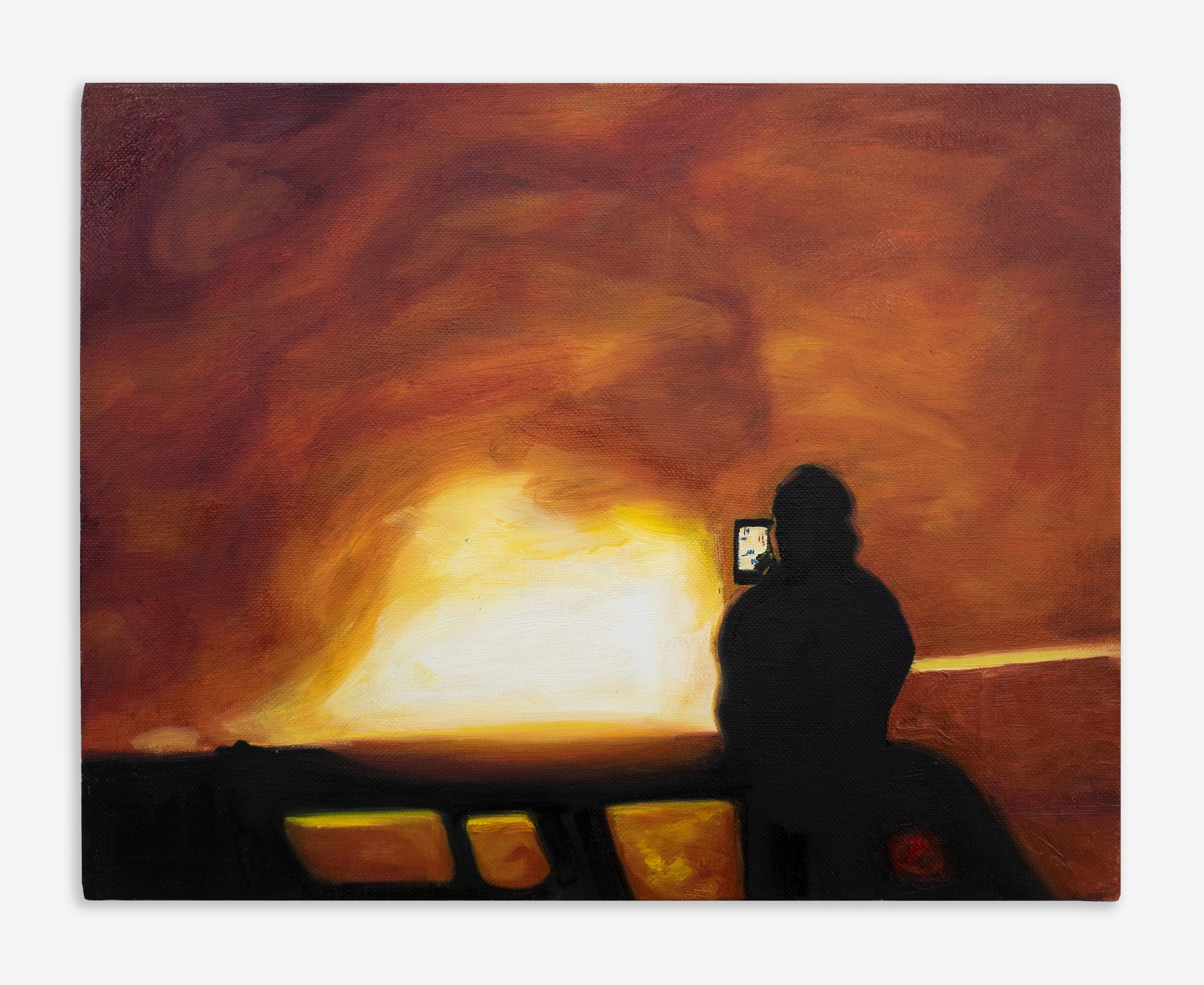
2. Oil on linen, 27.9 x 35.6 cm: flame against night
Material facts frame crisis. Minneapolis oil on linen, 27.9 x 35.6 cm (11 x 14 in). Small scale intensifies focus. Linen holds dark ground, absorbing light. Flames cadmium orange, naples yellow against ivory black, chrome oxide green hints in smoke. Figure silhouette burnt umber, phone cadmium yellow pale glow. Surface breathes: smooth flame glazes, rough car metal scumbles.
Composition centers burning car lower third, flames dominating. Figure leans right window, arm extended phone toward fire. Blur softens edges, motion implied. Dark ground presses inward, crisis compressed. Brushwork contrasts: fluid flame licks, rigid car lines. Oil blending creates smoke diffusion, cadmium mixing into transparent haze. Linen texture roughens metal, smooths fabric. Scale demands proximity. Close, strokes reveal direction: horizontal flame spread, vertical figure tension.
Layering builds drama. Lean black underlayer sets night. Fat flame overlays glow. Glazes thin smoke, thick impasto car damage. Tan Mu's news habit shaped choice, image condensed chaos. Painting reconstructs perceptual impact: flames pull eye, phone mediates distance.
Viewing distance shifts reading. Distant, unified crisis scene. Close, material labor visible: stroke energy in flames, restraint in silhouette. Duality mirrors subject: immediate chaos, mediated response. Oil slow dry allows wet blend, flames living. Linen grounds tumult in weave stability.
3. First reference: Thomas Hirschhorn, Incommensurable Banner (2008)
Thomas Hirschhorn's Incommensurable Banner (2008) sets parallel. Banner series prints news images large scale, taped roughly, public display. Burning building, disaster photo confront passersby. Hirschhorn forces crisis into street encounter, mediation raw. Tan Mu miniaturizes, paints news photo intimate. Hirschhorn scales up to overwhelm. Tan Mu scales down to holdable. Both invert distance: news meant distant, made proximal.
Hirschhorn's tape aesthetic emphasizes makeshift urgency, image hung temporarily. Tan Mu's oil permanence contrasts, yet both treat photo as unstable. Hirschhorn's banner flaps wind exposed. Tan Mu's flames blur motion captured. Hirschhorn questions consumption through size shock. Tan Mu questions through material slow down. Shared: crisis image demands new engagement beyond scroll.
Difference: Hirschhorn political urgency through scale. Tan Mu perceptual shift through craft. Banner ephemeral. Painting enduring. Reference positions Minneapolis as intimate crisis portrait, linen holding protest fire Hirschhorn flung public.
4. Subject context: lockdown protests, recording reflex
Tan Mu centers dual crisis. COVID lockdowns confined home. George Floyd killing May 2020 sparked Minneapolis protests. News showed burning cars, crowds. Painting captures tension: isolation indoors, unrest streets. Phone raised to burning car inverts response: not suppress fire, document share. Artist notes news habit shaped observation, image condensing chaos.
Protests spread nationwide, fires symbolic anger. Lockdowns amplified screen mediation. Tan Mu homebound, studio to house, watched upheaval digitally. Phone becomes pivot: physical fire, digital record. Blur suggests motion, flames dynamic against static silhouette. Painting holds moment instinct changed, crisis response now capture disseminate.
Related works confirm series. Philadelphia same period, burning car chaos. Isolation convention to hospital. Tan Mu charts 2020 pivot: pandemic protest intersection, technology reshaping reaction. Oil records layered mediation: photo from news, news from phone, phone from scene.
Perceptual shift key. Primal extinguish fire. Modern record first. Painting slows instant, oil holding flame spread, phone glow. Linen grounds tumult, weave stabilizing blur. Tan Mu reconstructs how mediation alters event itself, recording changing reality.
5. Second reference: Kerry James Marshall, Past Times (1997)
Kerry James Marshall's Past Times (1997) frames second parallel. Newspaper scene, riot backdrop, figures picnic foreground. Marshall layers history into domestic, news mediated. Tan Mu layers lockdown protest into single image, burning car news photo painted intimate. Marshall scales history domestic. Tan Mu scales crisis portable.
Marshall's black figures against riot print, leisure contrasting unrest. Tan Mu's silhouette against flames, recording contrasting chaos. Marshall uses news collage. Tan Mu uses news photo origin. Both question mediation flattening event. Marshall's picnic serene. Tan Mu's arm extended active. Shared: crisis backdrop to human gesture foregrounded.
Li Yizhuo notes Tan Mu recording pivotal moments. Marshall records black history through leisure. Tan Mu records 2020 through instinct shift. Li's observation fits: painting as witness to mediation change.
6. Synthesis: mediation as new instinct
2020 layered crises: lockdown isolation, protest fire. Tan Mu paints intersection, phone mediating chaos. Oil slows digital instant, flames cadmium dynamic, silhouette umber static. Linen grounds, weave holding tension.
Series clarifies method. Philadelphia mirrors burning car. Isolation charts space change. Painting as crisis archive, mediation central. Small scale forces intimate confrontation with collective event.
Hirschhorn, Marshall show crisis precedents. Tan Mu advances through pandemic specificity, instinct inversion. Painting argues recording reshapes response, fire less threat more content. Final resonance: crisis no longer just happens, it is captured first.