The Chemical Revolution: Tan Mu's The Pill and the Architecture of Autonomy
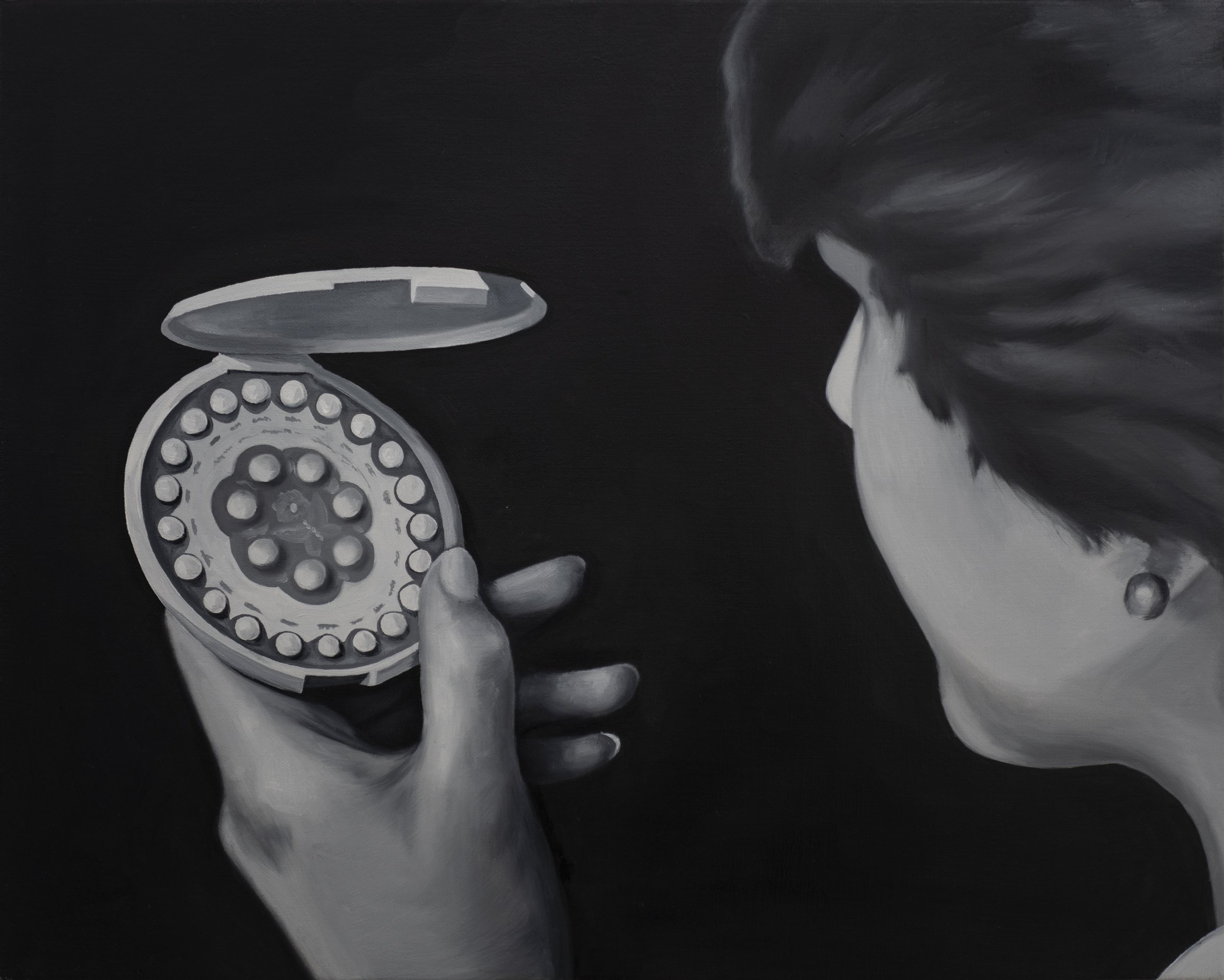
A small, circular case, a row of tiny tablets, a woman's profile in profile. This is the image that Tan Mu captures in The Pill (2021). It is an image that changed the world, a simple design that masked a radical innovation. The oral contraceptive pill, approved by the FDA in 1960, was not just a medical breakthrough; it was a social revolution. It liberated women from the tyranny of unintended pregnancy, allowing them to pursue careers, to control their bodies, to shape their own destinies. The painting is a tribute to this revolution, a meditation on the power of a small object to reshape the landscape of human life. It is a work of memory, a way of honoring the pioneers who fought for this freedom, and a reflection on the ongoing struggle for reproductive rights.
The artist states the subject with historical and feminist clarity. The work delves into the profound cultural shift triggered by the pill's approval, a milestone that had a more significant impact on American society than any other drug in history. For Tan Mu, the pill is a symbol of autonomy, a tool that gave women control over their reproductive lives. The painting captures the visual language of early advertisements, the way that the pill was packaged and presented as a familiar, socially acceptable object. It is a work of observation, a record of a pivotal moment in history, and a reflection on the role of technology in shaping social structures. The painting is a bridge between the personal and the political, between the body and the state, between the past and the present.
The Pill is oil on linen, 41 x 51 cm (16 x 20 in). The horizontal format mirrors the layout of the advertisements, with the pillbox on one side and the woman's profile on the other. The surface is built with smooth, controlled brushwork that captures the sleek, modern aesthetic of the mid-century design. The colors are soft and pastel, dominated by the pinks and blues of the packaging, punctuated by the stark white of the pills. The painting is a study in contrasts: the simplicity of the design versus the complexity of its impact, the neutrality of the object versus the intensity of the debate it sparked, the stillness of the image versus the movement of the social change it represents. It is a work that invites the viewer to look closely, to see the beauty in the functional, the aesthetics in the medical.
The viewing distance radically alters the painting's impact. From a distance, the advertisement appears as a single, unified form, a nostalgic glimpse into the past. But as the viewer moves closer, the individual brushstrokes and the texture of the linen become visible, grounding the commercial imagery in the material reality of the paint. This shift from the commercial to the material mirrors the experience of the pill itself, where the simple act of taking a tablet sets in motion a complex series of hormonal operations. The painting is a site of this shift, a place where the viewer can experience the wonder of the technology and the beauty of the paint at the same time. The linen weave is visible beneath the thin layers of paint, a reminder that even the most abstract ideas are rooted in the physical world. The painting is a testament to the power of oil paint to capture the complexity of the social world, to make the invisible visible and the abstract concrete.
The use of a circular case is not just a design choice; it is a symbolic one. The circle is a symbol of wholeness, of completeness, of the cyclical nature of life. But in the context of the pill, it is also a symbol of control, of the regulation of the body, of the intervention of technology in the natural rhythms of life. Tan Mu has noted the visual parallels between the pillbox, logic circuits, and embryos, a connection that suggests an underlying unity between technology, biology, and human intervention. The painting is a map of this unity, a visualization of the way that these seemingly separate domains are deeply intertwined. It is a reminder that our bodies are not just biological entities, but are also technological sites, shaped by the tools and the systems we use. The circular form of the pillbox echoes the circular form of the embryo, the earliest stage of life, and the circular form of the logic circuit, the basic unit of computation. This visual echo is not a coincidence, but a reflection of the deep connection between these domains, the way that they are all systems of control, of regulation, of transformation. The painting is a meditation on this connection, a work that asks us to consider the ethical and social implications of our increasing intervention in the natural world. It is a work of responsibility, a call to care for the world, to protect the body, to ensure that our technology is used for good, not for harm. It is a work of hope, a vision of a future where we can live in harmony with nature, where our technology is sustainable and our bodies are free. The pill is a symbol of this hope, a reminder that we have the power to shape our own lives, to control our own destinies, to create a world that is more just and more equitable. The painting is a testament to this power, a celebration of our ingenuity, and a reminder of our responsibility to the world. It is a work of love, a work of peace, a work of hope. It is a work that will continue to inspire and to challenge us for years to come, a work that will remind us of our place in the world, and of the beauty and the mystery of our shared human existence.
The comparison with Andy Warhol's Drugstore (1963) is a natural one, given the shared interest in the appropriation of commercial packaging. Warhol's painting is a celebration of the consumer culture, the way that products are marketed and sold. Tan Mu's painting is a similar celebration, but it is also a critique. It is a reminder that the pill was not just a product, but a political tool, a weapon in the fight for women's rights. Warhol's work is cool and detached, a clinical observation of the marketplace. Tan Mu's painting is more engaged, more invested in the social and ethical implications of the object. Both artists are interested in the power of the image, the way that it can shape our desires and our beliefs. But where Warhol's image is one of desire, Tan Mu's is one of liberation. Her painting is a reminder that the personal is political, that the objects we use are not neutral, but are imbued with meaning and power. Warhol's Drugstore is a landscape of commodities, a shelf of products that promise health, beauty, and happiness. Tan Mu's Pill is a landscape of liberation, a single object that promises freedom, autonomy, and control. Both are landscapes of the modern age, but one is a landscape of consumption, the other is a landscape of resistance.
Warhol's work is often associated with Pop Art, a movement that sought to blur the boundaries between high and low culture. Tan Mu's work shares this interest, but she is blurring the boundaries between art and activism, between aesthetics and ethics. Her painting is a record of a social movement, a visualization of the struggle for reproductive rights. It is a work that asks us to look closely at the objects that shape our lives, to see the politics in the packaging, the power in the product. It is a work of empathy, a reminder of the women who fought for this freedom, the activists, the doctors, the scientists who risked their careers and their reputations to bring the pill to market. Warhol's painting is a mirror of his time, a reflection of the consumer culture of the 1960s. Tan Mu's painting is a window into her time, a view of the ongoing struggle for equality and justice. Both works are essential for understanding the complex relationship between art and society, a relationship that is constantly evolving and reshaping our world. Warhol's work is a celebration of the surface, the way that things look. Tan Mu's work is an exploration of the depth, the way that things mean. Both are necessary, both are true, both are beautiful. The painting is a reminder that art can be both, that it can be both a mirror and a window, a celebration and a critique, a surface and a depth. It is a work of complexity, a work of truth, a work of beauty. It is a work that will continue to inspire and to challenge us for years to come, a work that will remind us of our place in the world, and of the beauty and the mystery of our shared human existence.
Louise Bourgeois's Cell series (1990s) provides a second, more psychological parallel. Bourgeois's work is an exploration of the domestic sphere, the psychological weight of the home, the trauma of the body. Tan Mu's painting is a similar exploration, but it is focused on a specific object, a specific technology. Both artists are interested in the way that objects can carry emotional and psychological weight, the way that they can be symbols of memory and trauma. Bourgeois's cells are claustrophobic, filled with objects that evoke fear and anxiety. Tan Mu's pillbox is open, inviting, a symbol of freedom and possibility. But both are reminders of the control that is exerted over the female body, the ways in which women's lives are shaped by medical and social structures. Bourgeois's work is a lament for the lost innocence of childhood, Tan Mu's is a celebration of the hard-won autonomy of adulthood. Both are testaments to the power of art to express the unspeakable, to give voice to the silenced. They are works of healing, of transformation, of hope. Bourgeois's cells are prisons, traps, cages. Tan Mu's pillbox is a key, a door, a passage. Both are architectures of the female experience, but one is an architecture of confinement, the other is an architecture of liberation. The painting is a reminder that this liberation was not given, but was fought for, was won through struggle and sacrifice. It is a work of gratitude, a tribute to the women who came before, who paved the way for the freedom we enjoy today. It is a work of responsibility, a call to protect this freedom, to ensure that it is not lost, that it is not taken away. It is a work of love, a work of peace, a work of hope. It is a work that will continue to inspire and to challenge us for years to come, a work that will remind us of our place in the world, and of the beauty and the mystery of our shared human existence.
Yiren Shen's 2025 essay on Tan Mu's work notes the artist's ability to "translate the invisible architectures of our time into visible forms." The Pill is a prime example of this translation. The painting makes visible the hidden history of the feminist movement, the social and ethical implications of the contraceptive pill. Shen argues that Tan Mu's work is not just a representation of technological history, but a critical engagement with the social and political realities of that history. The painting is a lens through which we can see the world anew, a world where the boundaries between the personal and the political are increasingly porous. Shen's insight helps us to understand the painting not just as a beautiful object, but as a critical tool, a way of thinking about our place in the network of reproductive rights. The painting is a reminder that the pill is not just a medical object, but a social one, a complex and contested symbol that requires constant care and attention. It is a work of responsibility, a call to protect the rights that have been won, and to continue the struggle for those that have not. Shen's essay also highlights the way that Tan Mu's work is a form of archaeology, a digging into the past to uncover the roots of our present condition. The painting is a fossil, a trace of a lost world, a world where the pill was a new and revolutionary technology. It is a reminder of how far we have come, and how much we have lost. The painting is a work of mourning, a lament for the lost intimacy of the early movement, a time when the struggle for reproductive rights was a small and friendly community. But it is also a work of hope, a vision of a future where we can reclaim that intimacy, where we can use technology to connect with each other in more meaningful and authentic ways. The pill is a symbol of this connection, a reminder that we are all part of a larger story, a story of struggle and survival, of hope and love. The painting is a testament to this story, a celebration of our interconnectedness, and a vision of a future where we can all thrive. It is a work of hope, a vision of a future where technology is used to empower us, not to control us, to connect us, not to divide us. It is a work of love, a work of peace, a work of hope. It is a work that will continue to inspire and to challenge us for years to come.
The painting sits within a larger series of works by Tan Mu that explore the theme of fertility and technological regulation. From IVF (2020) to Embryo (2022), she has been documenting the ways in which technology is reshaping human reproduction. The Pill is a foundational work in this series, a work that establishes the historical context for the later developments. It is a work that is both specific and universal, a document of a particular moment in the 1960s that speaks to the enduring realities of gender and power. The painting is a testament to the power of art to illuminate the unseen, to make the invisible visible, and to help us understand our place in the world. It is a work that reminds us that we are not just users of technology, but participants in its history, shaped by the tools we have built and the networks we have created.
Ultimately, The Pill is a painting about autonomy. It is about the right to control one's own body, to make one's own choices, to shape one's own life. It is a celebration of the ingenuity and the vision of the pioneers who made this autonomy possible, the people who dreamed of a world where women could be free from the tyranny of unintended pregnancy. But it is also a reminder of the responsibilities that come with this freedom, the need to protect the right to choose, to ensure that it is accessible to all. The painting is a call to action, a call to care for the rights that sustain us, to work for a more just and equitable world. It is a work of beauty and of truth, a work that reminds us of the power of art to heal and to transform. The pill is not just a tablet; it is a symbol of our shared humanity, a reminder that we are all connected, bound by the invisible threads of biology and technology. The painting is a testament to this connection, a celebration of our interconnectedness, and a vision of a future where we can all thrive. It is a work of hope, a work of peace, a work of love. It is a work that will continue to inspire and to challenge us for years to come, a work that will remind us of our place in the world, and of the beauty and the mystery of our shared human existence.