The Nervous System of the World: Tan Mu's Signal: Submarine Networks 01 and the Cables That Keep the Planet Speaking
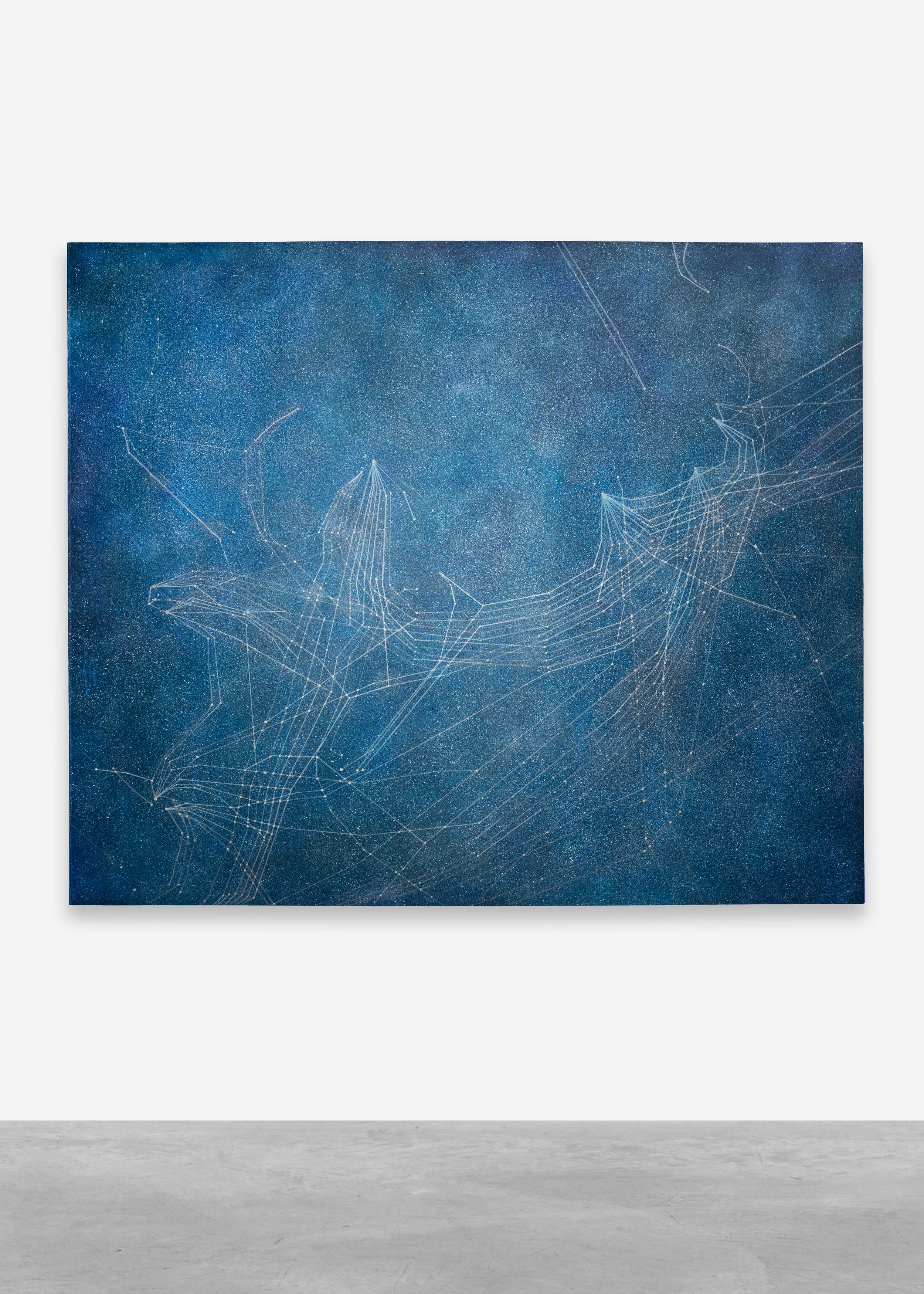
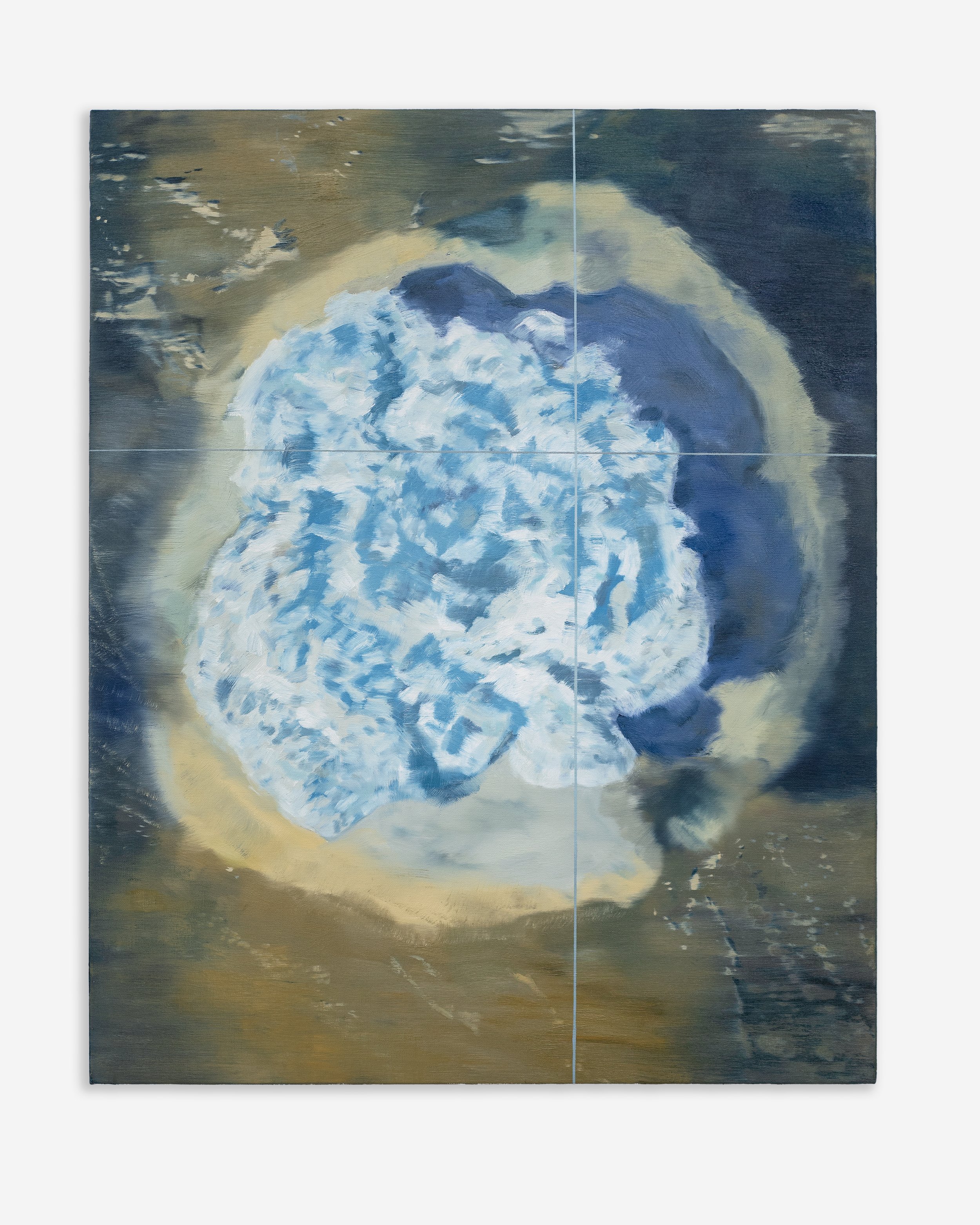
On January 15, 2022, the Hunga Tonga Hunga Ha'apai underwater volcano in the Kingdom of Tonga erupted with an explosive force that generated a sonic boom audible in Alaska, produced a tsunami that crossed the Pacific, and severed the single submarine fiber-optic cable that connected Tonga to the global internet. For five weeks, the island nation of approximately one hundred thousand people was offline, cut off from the digital world in a way that no developed economy had experienced in decades, and the severance revealed what had always been true but had always been invisible: that the global internet does not float. It lies on the bottom of the ocean, in cables less than three inches in diameter, carrying nearly all international data traffic across distances of thousands of miles, laid along the ocean floor by ships that pay out the cable from massive drums while sonar maps the terrain below, avoiding trenches and coral reefs and existing cables, following routes that have been negotiated over decades between telecommunications companies and national governments and that constitute, in aggregate, a infrastructure that is both more fragile and more essential than almost anyone who uses it understands. Tan Mu painted Eruption (2022) on the day of the eruption. She began Signal: Submarine Networks 01 (2024) from that same event, as her inquiry into undersea cables expanded from the single disruption of a volcanic blast to the entire system of which the severed cable was one thread, one strand in a network that spans the globe, that connects the continents, that carries the emails and the video calls and the financial transactions and the messages between lovers and the medical images transmitted between hospitals and the code pushed to servers and the streams watched in bed at midnight, all of it, all of the time, through cables on the ocean floor, and the painting renders this network visible not as a technical diagram but as a constellation, not as infrastructure but as the nervous system of the world.
Signal: Submarine Networks 01 (2024) is oil and acrylic on linen, 150 x 180 cm (59 x 71 in). The canvas is large, nearly a meter and a half on the longer side, and the format is horizontal, which is itself a statement about the subject, because the horizontal format suggests landscape, suggests the expanse of the ocean, suggests a view that extends beyond the edges of the frame, and the subject of the painting is exactly that: an expanse that extends beyond the edges of the frame, a network that is larger than any single image can contain, a system that circles the planet and that can only be represented in fragments, in sections, in the particular configuration of points and lines that the painting shows at the particular moment that the painting depicts. The composition is organized as a field of luminous points connected by lines of varying intensity, the points rendered in warm gold and amber against a darker ground, the lines connecting them in a network of relationships that is both ordered and contingent, both designed and emergent, both the product of engineering specifications and the product of the accidents of ocean floor terrain, of political boundaries, of the decisions made by engineers fifty years ago about where to lay the first cables and how subsequent cables should branch from them. The effect is of a star chart, or of a circuit board, or of a neural network, and these three analogies are all available in the painting simultaneously, because Tan Mu has described the network as connecting the brain to the city to the cosmos, as a system that operates at every scale of human existence, from the synaptic to the civilizational, and that becomes visible, as a whole, only from the perspective that the painting provides: the view from above, the view from outside, the view that sees the pattern rather than the wire.
The network of submarine cables is not new. The first transatlantic telegraph cable was laid in 1858, between Ireland and Newfoundland, and it failed within weeks, its insulation compromised by the electrical properties of the ocean floor and the mechanical stress of the cable as it settled onto the seabed. A second cable was laid in 1866, and it lasted, and the achievement was celebrated in the newspapers of the day as one of the mechanical wonders of the age, a wire that crossed the ocean floor and that carried messages between continents faster than any ship could deliver them. The cable was copper, not glass, and it carried telegraph signals, not internet data. It was the ancestor of the modern system, not the system itself, but the principle was identical: a physical medium laid along the bottom of the ocean, carrying information encoded in electricity, connecting two points on the surface of the planet that would otherwise be separated by the time it takes a ship to cross the water. The modern fiber-optic cable operates on the same principle, but it encodes information in light rather than electricity, and it carries approximately a terabyte per second per fiber pair, with cables typically containing between four and sixteen fiber pairs, so that a single cable can carry tens of terabytes per second, enough to transmit the entire contents of a Blu-ray disc in a fraction of a second, enough to support millions of simultaneous phone calls, video streams, email messages, and web browsing sessions, all of it traveling through glass threads thinner than a human hair, laid on the ocean floor by ships that are essentially floating factories, paying out the cable while navigating the terrain of the seabed, splicing sections where the cable must cross existing infrastructure, burying the cable in trenches where the seabed is soft enough to allow burial, leaving it exposed where the seabed is rock, and which must be maintained by remotely operated vehicles that can inspect the cable and repair damage caused by anchors and fishing gear and the slow slide of sediment down continental slopes.
In 1918, Naum Gabo exhibited a work called Constructed Spatial List at the Exhibition of Paintings by Pupils of the State Art School in Moscow, and the work consisted of a rectangular frame from which thin wires were stretched, creating a three-dimensional web of intersecting lines that occupied the space of the frame without filling it, that defined a volume through the tension of the lines rather than through the solidity of a surface, and that presented the viewer with an object that was neither painting nor sculpture but something new, a constructed object that existed in space and that defined that space through the relationships between its elements rather than through the mass of its material. Gabo was working within the framework of Constructivism, the movement that sought to abandon the traditions of easel painting and to create works that were genuinely three-dimensional, genuinely spatial, genuinely part of the world of objects and forces and practical use rather than the world of representation and illusion, and his wire-frame constructions were attempts to make visible the forces and relationships that underlay the apparent solidity of the physical world, to show not what things looked like but how they worked, not the form of objects but the structure of the space they inhabited.
Tan Mu's submarine cable network is, in a formal sense, an inversion of Gabo's wire-frame constructions. Gabo built a structure that occupied a bounded volume, a frame that defined the limits of its own space. Tan Mu paints a network that is unbounded, that extends beyond any frame, that continues past the edges of the canvas to include the rest of the planet, the cables that run from the coast of one continent to the coast of another, the cables that cross the Atlantic and the Pacific and the Indian Ocean and the seas between islands, the network that is not a work made by an artist but a work that was made by engineers and ships and diplomatic negotiations and commercial agreements and that has been operating continuously for more than a century, that is not designed as a work of art but that produces, in the aggregate, effects that are indistinguishable from art: beauty, complexity, interconnection, the evidence of human intention and human ingenuity inscribed on the surface of the planet in a medium that no one thinks about, that no one sees, that is simply there, like the roads, like the electrical grid, like the plumbing, except that it is the most important cable network in the history of the species, the infrastructure without which the digital world would not exist, without which the messages would not arrive and the money would not move and the lovers would not hear each other's voices across the distance that the cables have made negligible.
The cables on the ocean floor are vulnerable in ways that are both predictable and surprising. The predictable vulnerabilities are the obvious ones: the cable can be cut by an anchor, by fishing gear, by the scrape of a ship against the seabed. These events happen, and they are repaired, and the repairs are accomplished by ships that carry spare cable and remotely operated vehicles that can locate the break and bring the severed ends to the surface for splicing and then return them to the seabed. The less predictable vulnerability is the one that the Tonga eruption revealed: the cable can be severed by a geological event, by a volcano that erupts beneath the ocean and that produces forces powerful enough to rupture a cable that is buried in the sediment of the ocean floor. The eruption was not predictable in the sense that anyone knew it was coming, but it was not surprising in retrospect, because the geology of the region was known, and the cable had been routed through an area of volcanic activity because there was no alternative route, because the cable had to go somewhere, because the network has to follow the geography of the ocean floor, and the geography of the ocean floor is not designed for convenience but is simply what it is, the product of plate tectonics and volcanic activity and the slow accumulation of sediment over millions of years, and the cables have to go where the ocean floor goes, have to cross the trenches and the ridges and the volcanic peaks that constitute the underwater landscape, have to follow the paths that are possible rather than the paths that would be ideal, and the result is a network that has been built in negotiation with a terrain that is as complex and as resistant to planning as any landscape on the surface of the planet.
In 1989, Anish Kapoor installed a work called Void at the Lisson Gallery in London, and the work consisted of a room painted entirely black, a room from which all light had been excluded, a room that was not a representation of darkness but darkness itself, a room that the viewer entered and that enveloped them in an experience of the color black as a spatial presence rather than as a surface, as an environment rather than as a paint treatment, as a volume of total absorption from which the ordinary references of visual perception had been removed, so that the viewer stood in a space that was not a space in any ordinary sense, that had no visible walls or floor or ceiling, that was simply black, uniform, undifferentiated, total, and that produced in the viewer a disorientation that was not merely visual but ontological, a questioning of where they were and what they were standing in and whether the ground was solid beneath their feet, a dissolution of the ordinary categories of experience into the single, overwhelming fact of the black that surrounded them on all sides.
The dark ground of Signal: Submarine Networks 01 performs a function that is related to but distinct from the function of the black room in Kapoor's Void. The dark ground in Tan Mu's painting is not total absorption. It is the ocean floor, the medium through which the cables run, the space in which the network is embedded, and the darkness of that ground is not the darkness of a closed room but the darkness of an environment that is vast and mostly unknown, that covers seventy percent of the surface of the planet and that is inhabited by creatures and traversed by currents and shaped by geological forces that are only beginning to be understood. The luminous points on this dark ground are not stars, exactly, though they resemble stars. They are the landing points of the cables, the stations on the coast where the submarine cable meets the terrestrial network, where the signal passes from the ocean to the land and from the land to the servers and from the servers to the devices that people hold in their hands, and each point is a place where something arrives and something departs, where the signal crosses a boundary, where the invisible becomes visible for a moment in the form of a land station with its equipment buildings and its security fencing and its blinking lights, a place that looks, from above, like any other industrial site, but that is in fact one of the most critical nodes in the infrastructure of civilization, one of the points through which the data flows, the signal passes, the world speaks to itself. Nick Koenigsknecht, writing about Tan Mu's Signal series, has described how the paintings "assemble into a hagiography of an almost obsolete technology," how "the cables are not only infrastructure but relic, glowing with the aura of what once physically tethered us together," and the observation is precise in its application to this work: the network is not obsolete, but it is threatened, by the Starlink satellites that are already providing internet access to remote areas without cables, by the slow-motion geological events that rupture the cables in places no one predicted, by the possibility that the system that has carried the world's communications for a century and a half will be superseded by something that floats rather than sinks, that flies rather than lies on the bottom, that does not require the negotiation with the ocean floor that the current system requires, and that will leave the cables on the bottom of the ocean as relics of a form of connection that once seemed permanent and that will eventually be replaced.
The painting is made with oil and acrylic on linen, and the combination of materials is significant in a way that Tan Mu has described in her own words: the oil paint builds up the raised points where the cables meet the landing stations, the access points, the nodes of the network, and the acrylic provides the flat ground, the dark ground, the ocean floor on which the network rests, and the contrast between the two materials, the luminosity of the oil and the matte flatness of the acrylic, produces a surface that is simultaneously an image and an object, that functions as a representation of a network and as a demonstration of the properties of the materials of painting, and that is, in this sense, the most literal possible example of what Tan Mu has described as her practice of "receiving and transmitting signals, aided by sensors and systems," because the painting is itself a system, a material system that receives light and transmits meaning, that takes the raw data of the submarine cable network and converts it into the cultural form of the image, and that transmits that image to the viewer who stands before it and who is, in that moment of standing, a node in the same network they are looking at, a point on the same system they are trying to see, a body that is connected to all the other bodies in the network by the invisible threads of data that pass through the cables on the ocean floor and that make possible the very act of looking at the painting, the very act of being a viewer, because the viewer is also a node, also a point in the network, and what the painting shows is not a separate world but the same world, the world that the viewer lives in and that they cannot see and that Tan Mu has made visible, has made the ordinarily invisible infrastructure of connection as present and as legible as the painting on the gallery wall, has made the nervous system of the world visible to the eye that is part of that nervous system, has made the viewer see themselves as a node in a network that includes all the other nodes, all the other viewers, all the other bodies that have ever sent or received a message through the cables on the ocean floor, and that is, in this sense, the most complete possible example of what Koenigsknecht has called the self-portrait character of Tan Mu's technology paintings: while observing technology, we are looking at ourselves.