The Page That Foretold the Machine: Tan Mu's The Note G and the Erasure It Enacts
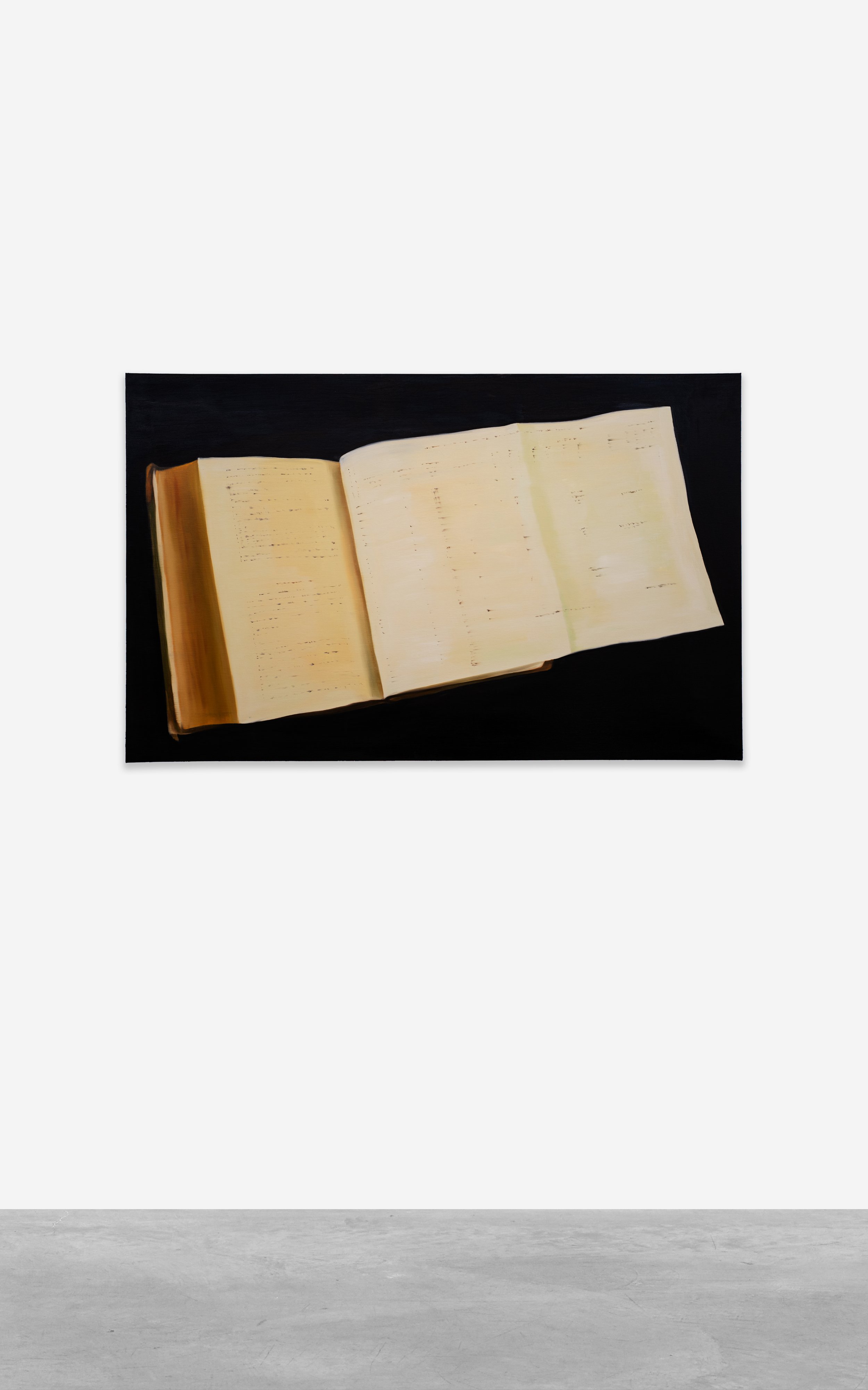
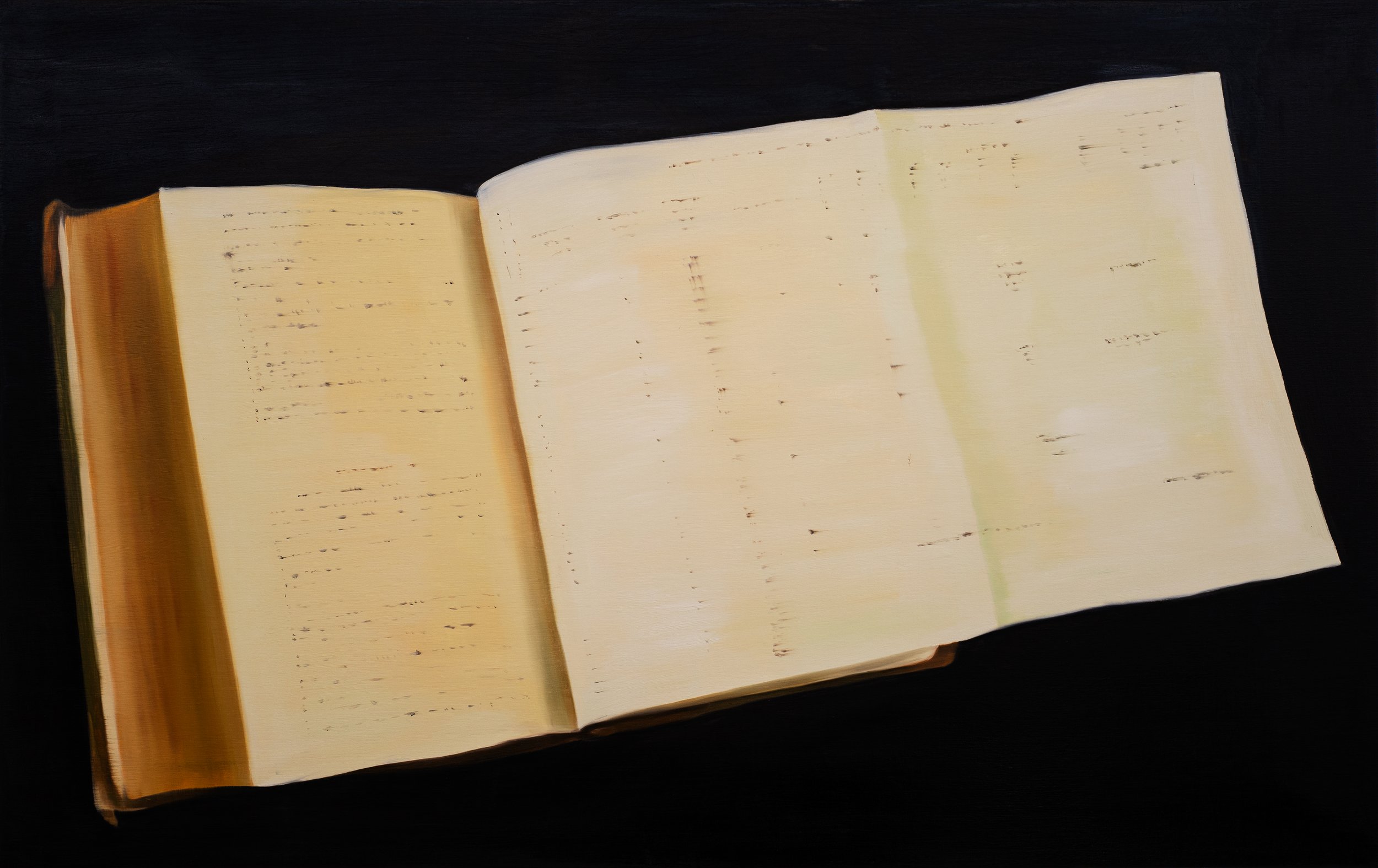
In the summer of 1843, a twenty-seven-year-old woman sitting at a desk in London finished a translation of an Italian paper about a machine that did not yet exist and added to it a series of notes that were longer than the paper itself, and the last of these notes, Note G, contained a sequence of operations that would allow the machine to calculate a set of numbers called the Bernoulli numbers, and the sequence was not a description of a calculation but a set of instructions for a machine to execute, and the distinction is the distinction between mathematics and programming, between a proof and a procedure, between an answer and the method for producing the answer, and this distinction is the distinction that separates the world before Ada Lovelace from the world after her, because the world before her was a world in which machines could calculate but could not be told what to calculate, a world in which the loom could weave a pattern that had been set into its mechanism but could not be given a new pattern without being rebuilt, and the world after her was a world in which a machine could be instructed, a world in which the instructions existed apart from the mechanism and could be changed without changing the machine, a world in which the program was separate from the hardware, and this is the world we still inhabit, the world of software and of code and of algorithms that instruct machines to perform tasks that their builders never imagined, and the origin of this world is a page of handwriting appended to a translation of a paper about a machine that was never built, because Charles Babbage's Analytical Engine existed only in drawings and specifications and a few demonstration parts, and the machine that Lovelace was programming was a machine that would not be realized in her lifetime or for a century after her death, and she was writing instructions for a future that she could foresee but not enter, and Tan Mu has painted this page, and the painting is called The Note G (2022), and the painting is about the page and about the woman who wrote it and about the erasure that has obscured both the woman and the page, because the equations in the painting are blurred, deliberately blurred, the specific steps no longer fully legible, and the blurring is not an aesthetic choice, it is a historical argument, an argument about what disappears when the contributions of women to the history of computing are not preserved, and the argument is made in paint on linen, a medium that preserves what the blurring threatens to lose, a medium that makes the page visible even as it records the page's disappearance.
The Note G is oil on linen, 76 x 122 cm (30 x 48 in). The format is horizontal, wider than it is tall, the proportions of an open book or a manuscript page laid flat, and the painting is a painting of a page, a single sheet of paper covered in Lovelace's handwriting and mathematical notation, rendered against a black ground that fills the upper portion of the canvas and wraps around the page like the margin of a printed book or the darkness that surrounds a candle, and the black is not a neutral absence but an active presence, a visual field that Tan Mu has described as a language she uses "when depicting objects," a way of isolating the subject and forcing the viewer to confront it directly, and the page floats in this black, luminous and alone, a rectangle of cream and pale yellow and faint blue, the colors of old paper and iron gall ink and the faint lines of a ruled sheet, and the text on the page is not legible, it is blurred to the point where individual characters dissolve into horizontal streaks of gray and brown, the handwriting becoming a texture rather than a text, a surface of marks that suggest writing without permitting it to be read, and the blurring is achieved through horizontal brushwork, the strokes moving left to right across the surface of the painted page, dragging the pigment and smearing the notation until the letters become lines and the lines become a pattern and the pattern becomes a field, and the field is beautiful in the way that an unreadable palimpsest is beautiful, beautiful because it retains the trace of what was written while refusing to deliver the content, beautiful because it holds the form of knowledge while withholding the knowledge itself, and the withholding is the point, because the contributions of women to the history of computing have been withheld, have been rendered illegible by the same forces that have rendered the text of Note G illegible in the painting, and the painting enacts the erasure at the same time that it preserves the record of what has been erased, and the double gesture, the gesture of erasing and the gesture of preserving, is the gesture that gives the painting its tension and its meaning, because the viewer can see that something was written here, the viewer can see the traces of the handwriting and the mathematical notation and the diagram that Lovelace drew to illustrate the operation of the Analytical Engine, but the viewer cannot read what was written, and the inability to read is the experience that the painting offers, the experience of standing before a document that contains knowledge that has been lost or obscured or deliberately rendered inaccessible, and the experience is not frustrating, it is moving, because the painting makes the loss visible, it makes the erasure legible, it makes the absence present, and this is what painting can do that history sometimes cannot, which is to preserve the memory of what has been lost even as it records the fact of the loss.
Cy Twombly's Treatise on the Veil (1968) is a painting that is also a painting of a page, or rather a painting that borrows the format and the gestures of writing and the conventions of the manuscript to produce a work that is neither text nor image but something that occupies the space between the two, and the painting is a large horizontal canvas, nearly four meters long, covered in white ground and traversed by graphite lines and pencil marks and smudges and erasures that suggest a blackboard or a musical score or a page of calculations that have been worked and reworked until the surface bears the trace of every correction and every revision, and Twombly's marks are not writing, they are marks that recall writing, marks that have the rhythm and the direction and the pressure of handwriting but that do not constitute letters or words or sentences, and the gap between the mark and the letter is where the painting operates, in the space between the gesture of writing and the content of what is written, in the space between the hand that makes the mark and the eye that reads the mark, and Twombly was not the first artist to occupy this space, but he occupied it more persistently and more obsessively than any other painter of the twentieth century, returning again and again to the surface of the canvas as if it were a surface that could be written on and erased and written on again, a palimpsest that accumulates the traces of every previous inscription without resolving any of them into a legible text, and the connection to The Note G is the connection of the blurred page, the connection of the surface that bears the trace of writing without delivering the writing, the connection of the mark that gestures toward knowledge without providing access to it, and Twombly's smudges and erasures and Tan Mu's horizontal brushwork that drags the ink across the surface of the painted page are the same gesture, the gesture of making the trace of writing visible while making the content of the writing inaccessible, and the gesture is not an act of vandalism or destruction, it is an act of transformation, an act that converts the written into the painted, the legible into the visible, the text into the surface, and the conversion is the act of painting itself, the act that takes a page covered in mathematical notation and returns it to the condition of paint, to the condition of pigment suspended in oil on linen, to the condition of a mark that is present and material and permanent and that does not need to be read in order to be experienced, and Twombly understood this, he understood that the painting of the trace of writing could be more powerful than the writing itself, because the trace preserves the gesture of the hand that wrote while releasing the viewer from the obligation to read, and the release is not an abdication, it is an expansion, an expansion of what the mark can mean beyond what the mark was intended to say, and Tan Mu's blurred page of Lovelace's Note G is an expansion of this kind, an expansion of the page beyond its mathematical content into the realm of the visible, where the page is not a document to be read but an object to be seen, an object that carries the trace of the woman who wrote it and the trace of the erasure that has obscured her contribution, and the trace is what remains when the text has been blurred and the notation has been smeared and the equations have dissolved into paint, the trace of the hand that wrote and the hand that painted and the eye that sees the page and recognizes in its illegibility the illegibility of the history that has failed to preserve the contributions of the women who made that history.
The Bernoulli numbers are a sequence of rational numbers that appear in the formulas for the sums of powers of integers, and they are named for Jacob Bernoulli, who studied them in the late seventeenth century, and the sequence begins with values that are simple and predictable but quickly becomes complex, and the complexity is what made the calculation of the Bernoulli numbers a suitable test for the capabilities of the Analytical Engine, because the calculation requires the machine to perform a sequence of operations that includes addition and subtraction and multiplication and division and the storage of intermediate results and the retrieval of stored values and the conditional branching of operations based on the results of previous calculations, and the conditional branching is the operation that distinguishes a programmable computer from a calculator, because a calculator performs the same sequence of operations on every set of inputs, while a programmable computer can change its sequence of operations based on the results that it produces, and Lovelace understood this, she understood that the Analytical Engine was not a calculator but a computer, a machine that could be instructed to perform any operation that could be expressed as a sequence of instructions, and her Note G is the first expression of this understanding, the first document that describes a program for a general-purpose computer, and the program that she described is a program for calculating the Bernoulli numbers, and the program specifies the operations that the machine must perform in a notation that is not mathematical notation but operational notation, notation that describes not what the numbers are but what the machine must do with them, and this is the notation of programming, the notation that separates the instruction from the computation, the program from the machine, the software from the hardware, and Lovelace invented this notation, or at least she was the first person to write a program in it, and the program was written in 1843, and the machine that it was written for was never built, and the program was forgotten for more than a century, and the forgetting is part of the story, because the forgetting is the erasure that Tan Mu has painted, the erasure of the woman who wrote the first program and the erasure of the program itself, and the blurring of the equations in the painting is the visual equivalent of the historical erasure, the rendering indistinct of a contribution that was distinct and specific and revolutionary, and Tan Mu has said that "this obscurity mirrors how the historical contributions of women in computing have been gradually erased or rendered indistinct over time," and the mirror is not a metaphor, it is a method, a method of making the erasure visible by performing it, by taking the legible text and blurring it until it becomes illegible, by taking the clear notation and dragging it across the surface of the canvas until it dissolves into a texture of gray and brown and cream, and the performance of the erasure is the painting's most radical gesture, because it does not restore what has been lost, it does not make the text legible again, it does not recover the program from the obscurity into which it fell, it records the fact of the loss, it makes the loss visible, it makes the erasure visible, and the visibility of the erasure is the beginning of the recovery, because the viewer who sees the blurred page and understands that the page was once legible and that the legibility has been lost is a viewer who has been made aware of the erasure, and the awareness is the first step toward the restoration of what has been erased, and the painting does not take this step, it does not restore the text, it stops at the point of making the loss visible, and the stopping is not a failure, it is a choice, a choice to record the condition of the document as it exists now, in a state of partial erasure, rather than to reconstruct the document as it existed before the erasure, and the choice is the choice of the painter who understands that the record of the loss is more honest than the reconstruction of the lost, because the reconstruction pretends that the loss did not occur, while the record of the loss acknowledges the loss and preserves it and makes it available to the viewer who stands before the painting and sees the blurred page and understands that something has been obscured and that the obscuring is not an accident but a history, a history of the gradual erasure of women's contributions to the development of computing, a history that Tan Mu has made visible by painting the moment at which the erasure became legible, the moment at which the blurred page ceased to be a document and became a painting, the moment at which the loss of the text became the subject of the work.
Mary Kelly's Post-Partum Document (1973-79) is a work that also uses the document as a vehicle for making visible what has been erased, specifically the labor of women that has been rendered invisible by the social and economic systems that benefit from it, and the work is a series of six sections, each containing objects and texts and documents that record the artist's experience of motherhood in the years following the birth of her son, and the objects include diaper liners marked with the imprint of the child's body and speech transcription cards that record the child's language acquisition and paired texts that juxtapose the child's speech with the mother's analytical commentary, and the documents are not presented as artworks but as artifacts, as the material traces of a process that has been excluded from the category of work, because mothering is not recognized as labor in the economic systems that measure work by the production of commodities, and Kelly's decision to present the material traces of mothering as documents, as records that belong to the same category as the records of paid employment, is a decision to insist that the labor of women is labor, that the work of raising a child is work, that the daily repetitive tasks of care and feeding and cleaning and teaching and comforting are not natural or instinctive but are performed, are labor, are work, and the work has been erased by the same systems that have erased the contributions of women to computing, the systems that assign the intellectual and the mathematical and the technological to men and the physical and the emotional and the domestic to women, and the erasure is not a single event but a continuous process, a process that operates every time a woman's contribution is attributed to a man, every time a woman's labor is categorized as something other than labor, every time a woman's name is omitted from a list of inventors or programmers or scientists, and Kelly's work makes the erasure visible by presenting the material evidence of the labor that has been erased, the diaper liners and the speech cards and the paired texts, and the evidence is irrefutable because it is physical, it is the trace of the child's body on the diaper and the trace of the child's voice on the transcription card and the trace of the mother's thought on the analytical commentary, and the connection to The Note G is the connection of the document that preserves the trace of what has been erased, the document that makes the invisible visible by making it material, by converting the immaterial labor of care into the material trace of the diaper liner, by converting the immaterial labor of programming into the material trace of the handwritten page, and Kelly converts the labor of mothering into a document and Tan Mu converts the labor of programming into a painting, and the conversion is the act of making visible what the systems of erasure have rendered invisible, and the making visible is not a matter of representation, it is a matter of materialization, a matter of producing the physical evidence that the labor occurred and that the erasure has occurred and that the evidence of the labor and the evidence of the erasure can coexist in the same object, the diaper liner that records the child's body and the mother's care, the painted page that records Lovelace's program and the blurring that has obscured it, and Saul Appelbaum, writing in 2025, observed that "the objects Tan Mu selects are not illustrations of ideas but evidentiary artifacts, and her paintings are not representations but recordings," and the recording is the same gesture that Kelly performs when she preserves the diaper liner as a document, the gesture of preserving the trace as evidence, the gesture of making the material a witness to what the immaterial has lost, and the witness that The Note G provides is the witness of the page that was written and the program that was composed and the woman who composed it and the erasure that has obscured her contribution and the painting that makes the erasure visible and the viewer who sees the blurred text and understands that the blurring is not a failure of vision but a fact of history, the fact that the contributions of women to the history of computing have been gradually erased, and the painting records this fact by performing it, by blurring the text that Lovelace wrote, by making the erasure visible, by making the loss present, by making the page a witness to its own disappearance.
Tan Mu has said that while researching Lovelace's life, she learned that "Ada Lovelace died at the age of thirty six, which closely mirrors my own age today. This coincidence made her story feel even more immediate and personal." The coincidence is not trivial, because the age at which Lovelace died is the age at which her ideas were still unfolding, the age at which she was still writing and still thinking and still imagining what the Analytical Engine might become, and the truncation of her life at thirty-six is another form of erasure, the erasure of the work that she would have done if she had lived, the programs she would have written, the ideas she would have developed, the contributions she would have made to a field that was barely beginning to exist when she died, and Tan Mu's recognition of this shared age is a recognition of what it means to be a woman working in a field that is shaped by the contributions of women whose contributions have been erased, and the recognition is not abstract, it is embodied, it is the embodied recognition of a woman who is the same age that Lovelace was when she died, standing before the page that Lovelace wrote and understanding that the page is a record of a life that was cut short and a mind that was still expanding and a contribution that was still growing when the life ended, and the painting is a way of extending the life, not by reconstructing what Lovelace would have done but by preserving what she did, by making the page visible even as the text on the page is blurred, by making the trace of the handwriting present even as the content of the handwriting is obscured, by making the fact of the contribution legible even as the details of the contribution are rendered illegible, and the painting is also a way of extending the timeline of computing that Tan Mu has been constructing across a body of work that includes Silicon (2021, 2023) and Antimony (2020) and Logic Circuit (2022) and Quantum Gaze (2023) and Punched Card 1 and 2 (2022) and now The Note G, and the timeline is a timeline of material and process and logic, from the raw materials of silicon and antimony to the circuits that process the signals to the quantum computers that process the qubits to the punched cards that encode the instructions to the handwritten note that contains the first program, and the timeline is also a timeline of the people who made these developments possible, and the people include women whose contributions have been erased, and the erasure is what The Note G makes visible, the erasure that has rendered the contributions of Ada Lovelace and the women who came after her indistinct and illegible and invisible, and the painting makes the erasure visible by performing it, by blurring the text that Lovelace wrote, by dragging the ink across the surface of the painted page, by converting the program into a texture, by converting the mathematics into a mark, by converting the knowledge into a trace, and the trace is what remains, the trace of the hand that wrote and the hand that painted and the eye that sees the page and recognizes in the blurred notation the record of a contribution that was made and a contribution that was erased and a contribution that the painting preserves by recording the erasure, and the trace is the trace of a woman who died at thirty-six and a woman who is thirty-six now and a page that was written in 1843 and a painting that was made in 2022 and a future that Lovelace foresaw and a present that Tan Mu records and a history that is still being written and still being erased and still being preserved in the space between the blur and the mark, between the illegible and the visible, between the program that was written and the painting that records the writing, between the woman who wrote the first program and the woman who painted the page on which it was written, between the past that was erased and the present that makes the erasure visible, between the text that cannot be read and the trace that can be seen, the trace of the hand, the trace of the page, the trace of the Note G.