The Machine at the Fair: Tan Mu's Checkmate at Paris+ and the Duchamp Inheritance
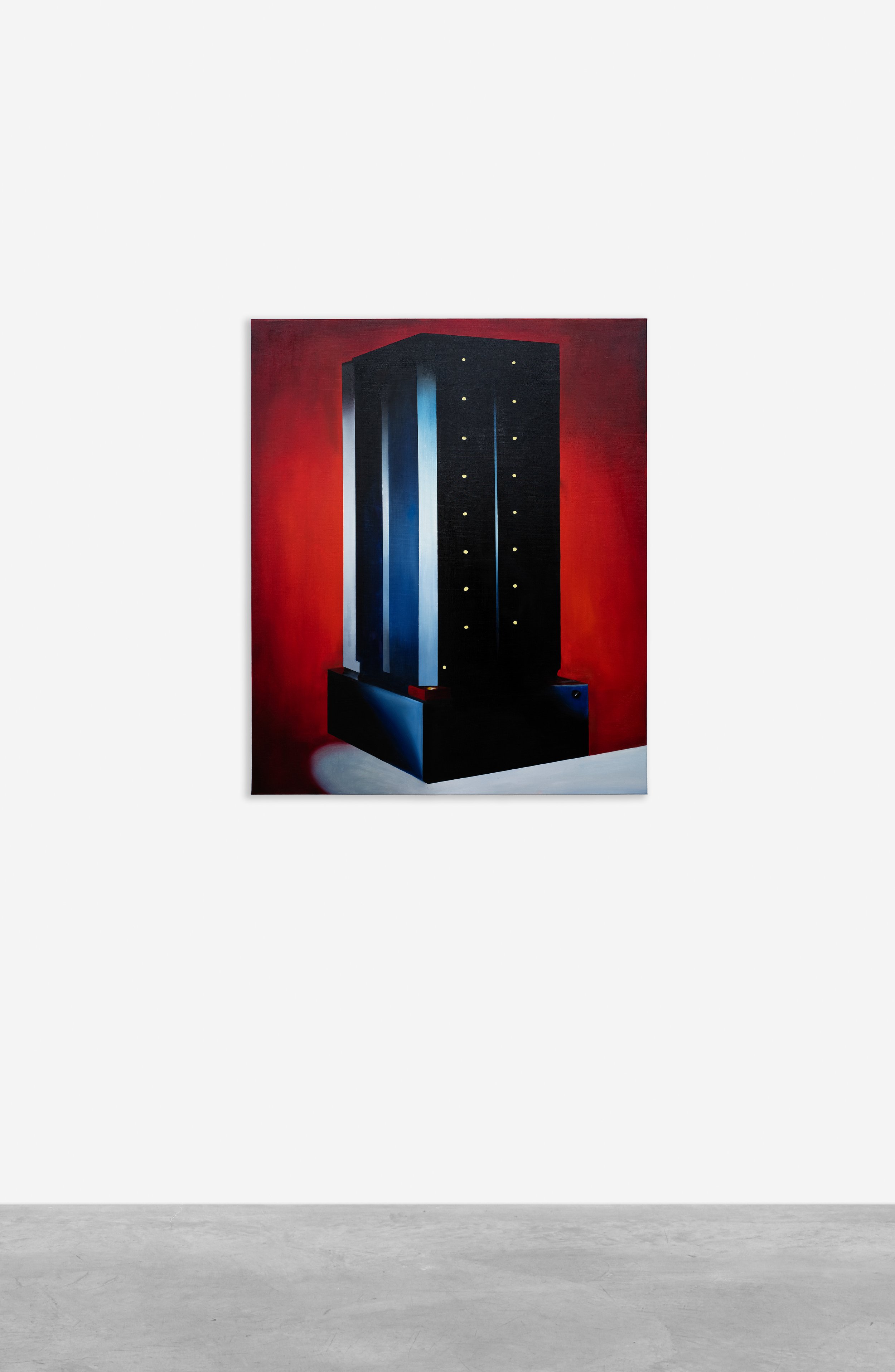
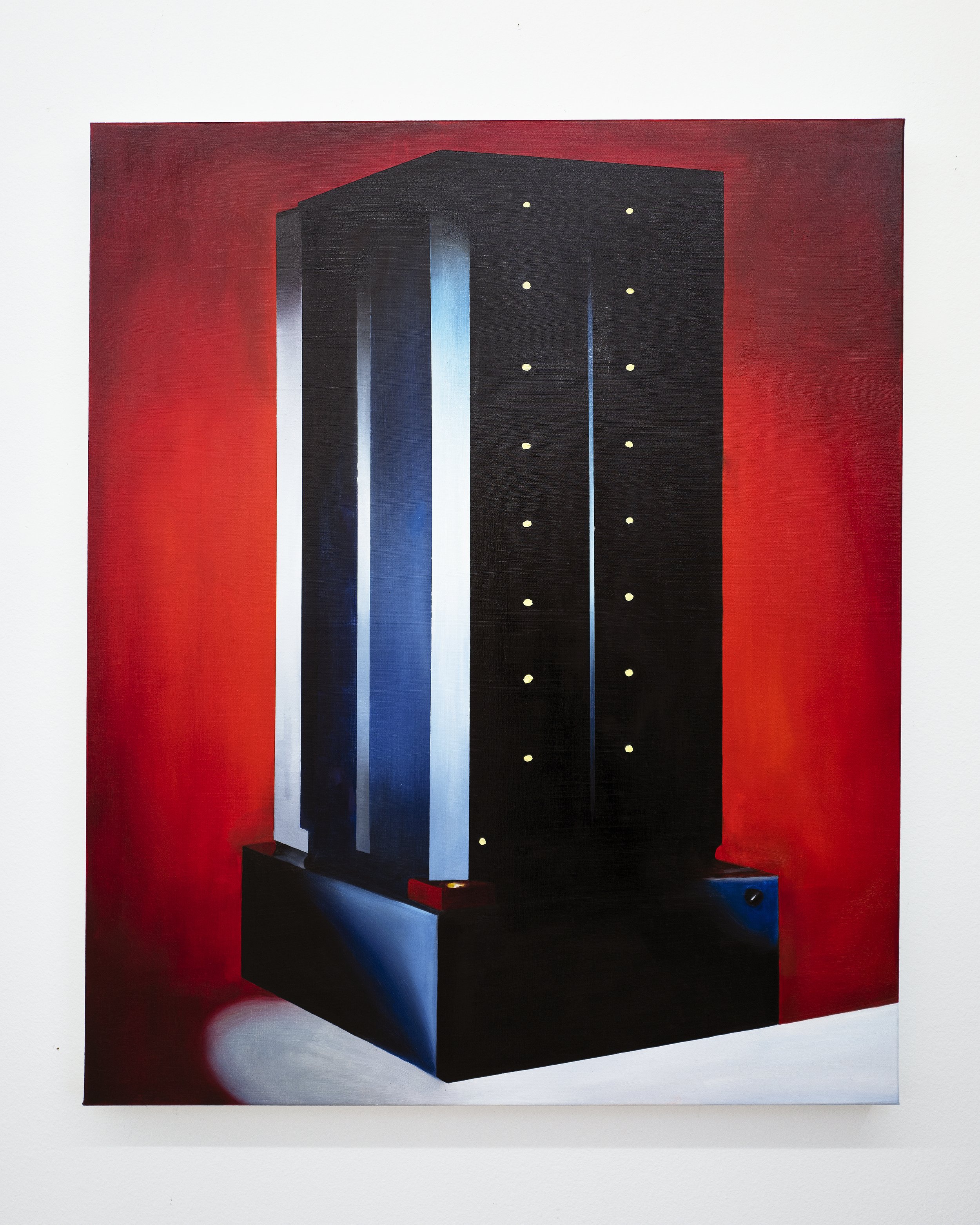
In May 1997, in a conference room on the thirty-fifth floor of the Equitable Center in midtown Manhattan, a computer sat across a chess table from Garry Kasparov. The computer was named Deep Blue. It weighed 1.4 tons, occupied two tall cabinet racks, and contained 480 specialized chess chips designed by a team at IBM led by Feng-hsiung Hsu. Kasparov was the reigning world chess champion, widely considered the greatest player in the history of the game. The match was six games. Deep Blue won three, lost two, drew one. Kasparov left the table in the final game after only nineteen moves, resigning without completing the match. He later said he had seen something in the machine's play that frightened him, a depth of calculation that felt not mechanical but creative. The event was broadcast globally. It was covered on the front page of the New York Times, the Financial Times, and Pravda. It was discussed in philosophy departments, theology seminars, and military strategy sessions. And in October 2022, twenty-five years later, Tan Mu's painting of that machine was exhibited at Paris+ by Art Basel, inside the Grand Palais, the vast glass and steel hall built for the 1900 Exposition Universelle. The painting is called Checkmate (2022). It is oil on linen, ninety-one by seventy-six centimeters. The machine stands in it, tall and rigid, lit from within by glowing yellow points. Behind it, the background is saturated red, the color of alarm, of heat, of the psychological pressure that accompanied every move of the 1997 match. The painting does not depict Kasparov. It does not depict the chessboard. It depicts the machine alone, isolated, monumental, as if it were a portrait of a new kind of intelligence that had just entered the world.
This is the second time the painting has been publicly exhibited. The first showing was at Paris+ by Art Basel, October 20 through 23, 2022, in the booth of Peres Projects. The Grand Palais is a building with a specific history. It was designed to house the annual Salon, the official exhibition of the French art academy, the institution that for two centuries determined what counted as art in the Western world. The Salon was a marketplace and a gatekeeping mechanism. It was the place where reputations were made and broken. When the Impressionists broke with the Salon in the 1870s and staged their own independent exhibitions, they were not just making a stylistic statement. They were challenging the institutional authority that controlled access to the public. The Grand Palais, built three decades after the Impressionist revolt, was the academy's answer: a monument to the institutional power of the exhibition itself, a building so vast and ornate that it could absorb any rebellion and display it on its own terms. When Tan Mu's Checkmate was shown inside this building, at the inaugural Paris+ edition of Art Basel, it was shown in a context that carried the full weight of this institutional history. The painting depicts a machine that defeated a human champion in a game of pure intellect. It is shown in a building designed to celebrate the highest achievements of human culture. The tension between these two facts is the exhibition context that gives the painting its full resonance.
Marcel Duchamp provides the most direct art historical lineage for the chess and machine themes in Checkmate. Duchamp was not merely an artist who played chess. He was a chess master, rated among the top players in France, who competed in national championships and represented his country in Chess Olympiads. In 1925, at the height of his artistic fame, he effectively retired from art to devote himself to chess. He returned to art only occasionally, most notably with Given: 1. The Waterfall, 2. The Illuminating Gas (1946 to 1966), a work installed behind a wooden door at the Philadelphia Museum of Art, viewable only through a peephole. Duchamp's chess was not a hobby. It was a philosophical position. He saw chess as the purest form of intellectual creation, a game with fixed rules but infinite outcomes, a system that required both calculation and intuition, both memory and invention. His 1932 book, written with Vitaly Halberstadt, was titled L'opposition et les cases conjuguées sont réconciliées, Opposition and Sister Squares Are Reconciled, a study of endgame positions so specialized that it anticipated computer analysis by decades. Duchamp understood, long before Deep Blue, that chess existed at the intersection of the mechanical and the creative. The rules were algorithmic. The play was not. Tan Mu's Checkmate inherits this understanding. The machine in her painting is depicted with the same respect that Duchamp gave to the chessboard, as a system of pure intelligence, but it is also depicted as a body, a physical object with weight, color, and presence. It is not an abstraction. It is a thing that existed in a room on the thirty-fifth floor of a building in Manhattan, and it changed the world.
Duchamp's The Bride Stripped Bare by Her Bachelors, Even (1915 to 1923), commonly known as the Large Glass, is a second and more complex parallel. The Large Glass is a work on glass, nearly three meters tall, depicting a mechanical erotic apparatus in which the Bride, an amorphous cloud of desire, is separated from the Bachelors, a row of mechanical devices including a chocolate grinder, a waterwheel, and a scissors. The work is explicitly about the relationship between the mechanical and the erotic, the desire that drives machines and the machines that express desire. Duchamp spent eight years constructing it, then abandoned it unfinished, declaring that the dust that had accumulated on its surface was part of the work. Tan Mu's Checkmate does not depict an erotic apparatus, but it shares the Large Glass's fundamental preoccupation with the mechanical as a site of human projection. The yellow points of light on Deep Blue's body are described by Tan Mu as "glowing like neurons, implying awareness without humanity." These points are the viewer's projection of consciousness onto the machine, the same projection that Duchamp enacted with his bachelors' devices, which were simultaneously mechanical and sexual, simultaneously dead matter and living desire. When Kasparov said he saw something in Deep Blue's play that frightened him, he was projecting creativity onto an algorithm. He was seeing a mind where there were only chips. This act of projection is the emotional content of Checkmate, and it is what connects the painting to Duchamp's century-long investigation of the boundary between the mechanical and the human.
The subject context of Checkmate is not the game of chess itself, but the specific technological infrastructure that made Deep Blue's victory possible. Feng-hsiung Hsu conceived the project in 1985 as a doctoral thesis at Carnegie Mellon University. His original machine, called ChipTest, was a single chess chip mounted on a circuit board. By 1989, Hsu and his team had joined IBM, and the project had grown into a massively parallel system with 480 custom VLSI chips, each designed to evaluate chess positions at a speed that no general-purpose computer could match. Deep Blue's alpha-beta search algorithm examined up to 200 million positions per second, a computational throughput that dwarfed the roughly three positions per second that Kasparov could consciously evaluate. The machine did not understand chess the way Kasparov did. It did not see patterns or feel positional pressure. It simply calculated, exhaustively and at superhuman speed, every possible sequence of moves within its search horizon. The victory was not a triumph of understanding. It was a triumph of throughput. This distinction matters because it is the distinction that Tan Mu's painting makes visible. The machine in Checkmate is tall, rigid, and lit from within by computational nodes. It is not beautiful. It is not graceful. It is powerful. And its power is the power of calculation, not comprehension. The red background intensifies this reading. It is not the calm of a chess match. It is the heat of a confrontation, the psychological temperature of a room in which the greatest human mind in chess history sat across from a machine and lost.
Garry Kasparov's own reflections on the match provide a scholarly voice that enriches the painting's context. After his defeat, Kasparov did not retreat from the question of human machine intelligence. He advanced it. In 1998, he organized the first Advanced Chess tournament, in which human players partnered with computer programs, playing as a team against other human computer pairs. He called this format centaur chess, after the mythological creature that was half human, half horse. The centaur was stronger than either component alone. The human provided strategic vision, pattern recognition, and creative intuition. The machine provided tactical precision, exhaustive calculation, and emotional immunity. Kasparov argued that the future of intelligence was not human versus machine, but human with machine. This argument, published in his 2017 book Deep Thinking: Where Machine Intelligence Ends and Human Creativity Begins, is the philosophical framework that gives Checkmate its deepest resonance. The painting does not depict the centaur. It does not show the partnership. It shows the moment before the partnership, the moment of defeat, the moment when the human realized that the machine was stronger in the one domain he had always believed was exclusively human. It is a painting of the crisis that preceded the synthesis.
The physical dimensions of Checkmate, ninety-one by seventy-six centimeters, place it in a specific register of attention at the art fair. At Paris+ by Art Basel, the booth of Peres Projects was one of approximately 160 gallery presentations inside the Grand Palais. The fair drew over 40,000 visitors across four days. In this environment, a painting of this scale competes for attention with monumental sculptures, large-scale installations, and the sheer architectural spectacle of the glass roof above. The painting cannot dominate the room. It must hold the viewer through the intensity of its image and the quality of its surface. The red background, which Tan Mu describes as intensifying "the psychological tension of the scene," functions as a visual magnet in the fair context. Red attracts the eye. It reads across distances. In a booth filled with other works, the red field of Checkmate draws the viewer before any details are visible. This is a curatorial and formal intelligence that acknowledges the conditions of the art fair as an exhibition format. The fair is not a museum. It is not a contemplative space. It is a marketplace of attention, and the painting that succeeds in that marketplace is the painting that makes the viewer stop. The red does that work.
The installation context at the Grand Palais also raises questions about the relationship between the painting and its architectural container. The Grand Palais was built for the 1900 Exposition Universelle, a world's fair designed to showcase the technological and cultural achievements of the Belle Époque. Its glass roof, the largest in the world at the time of its construction, was an engineering triumph, a demonstration of the same faith in industrial progress that produced the Eiffel Tower. The building was a machine for displaying machines, for celebrating the marriage of art and technology that defined the modern era. When Paris+ by Art Basel took over the Grand Palais in 2022, it was the first time the building had hosted an art fair of this scale. The choice of venue was deliberate. It positioned the contemporary art market as the inheritor of the world's fair tradition, a new chapter in the long story of art, technology, and commerce. Tan Mu's Checkmate, shown inside this building, participates in this genealogy. It is a painting about a machine that defeated a human, shown in a building designed to celebrate machines. The institutional context does not neutralize the painting's critical content. It amplifies it. The viewer stands in the Grand Palais, surrounded by the glass and steel of Belle Époque engineering, looking at a painting of a machine that rendered human intellect obsolete in one of its highest domains. The irony is structural. It is built into the walls.
Tan Mu describes Checkmate as functioning as a time capsule, a work "allowing future viewers to look back at how we once understood intelligence, competition, and the role of machines in shaping human destiny." This temporal ambition connects the painting to the broader project of her practice, which she describes as "future archaeology," the documentation of present technological conditions for the interpretation of future viewers. The painting is not a historical document in the conventional sense. It does not preserve facts. It preserves a feeling, the feeling of standing at a threshold between two eras of intelligence. In 1997, the threshold was the chess match. In 2022, when the painting was shown at Paris+, the threshold was generative AI, large language models, and the sudden acceleration of machine intelligence into domains that had been considered exclusively human, writing, image making, scientific reasoning. The painting gains new meaning with each advance in artificial intelligence, not because its content changes, but because the context in which it is viewed changes. A painting of Deep Blue shown in 1997 would have been a report. Shown in 2022, it is a warning. Shown in 2026, it is a memory of a time when the warning was still abstract. The painting does not age. The world around it ages. And the distance between the painting and the world is the distance the viewer must cross to understand what the painting already knew.
The relationship between Checkmate and Tan Mu's other technology paintings, Logic Circuit (2022), DEC's PDP-10 (2021), Quantum Computer (2020), is a genealogy of machines. Each painting isolates a specific machine at a specific moment in the history of computation and renders it as a portrait, a face, a presence. The logic circuit is the mind of the calculator. The PDP-10 is the mind of the mainframe. The quantum computer is the mind of the next era. And Deep Blue is the mind that crossed the threshold, the machine that proved, in the public domain of a chess match, that computation could surpass cognition. By painting each of these machines as a portrait, Tan Mu performs a reversal of the usual hierarchy between human and machine. In traditional portraiture, the human face is the subject and the machine is the background. In Tan Mu's practice, the machine is the subject and the human is the background, the absent figure who designed, built, and lost to the machine. This reversal is not dehumanizing. It is diagnostic. It records the moment in which the human species realized that its most distinctive quality, intelligence, was not exclusively its own. And it records this moment in oil on linen, a medium that has been used for five centuries to record the faces of kings, saints, and lovers. The machine has taken its place in the gallery of human attention. It has been granted a portrait. And the portrait, like all portraits, asks the viewer to look at the subject as if it were a person, to grant it the same depth of attention, the same presumption of interiority, that is granted to a human face.