The Curtain That Conceals Nothing: Tan Mu's Stage and the Threshold Between Fiction and Reality
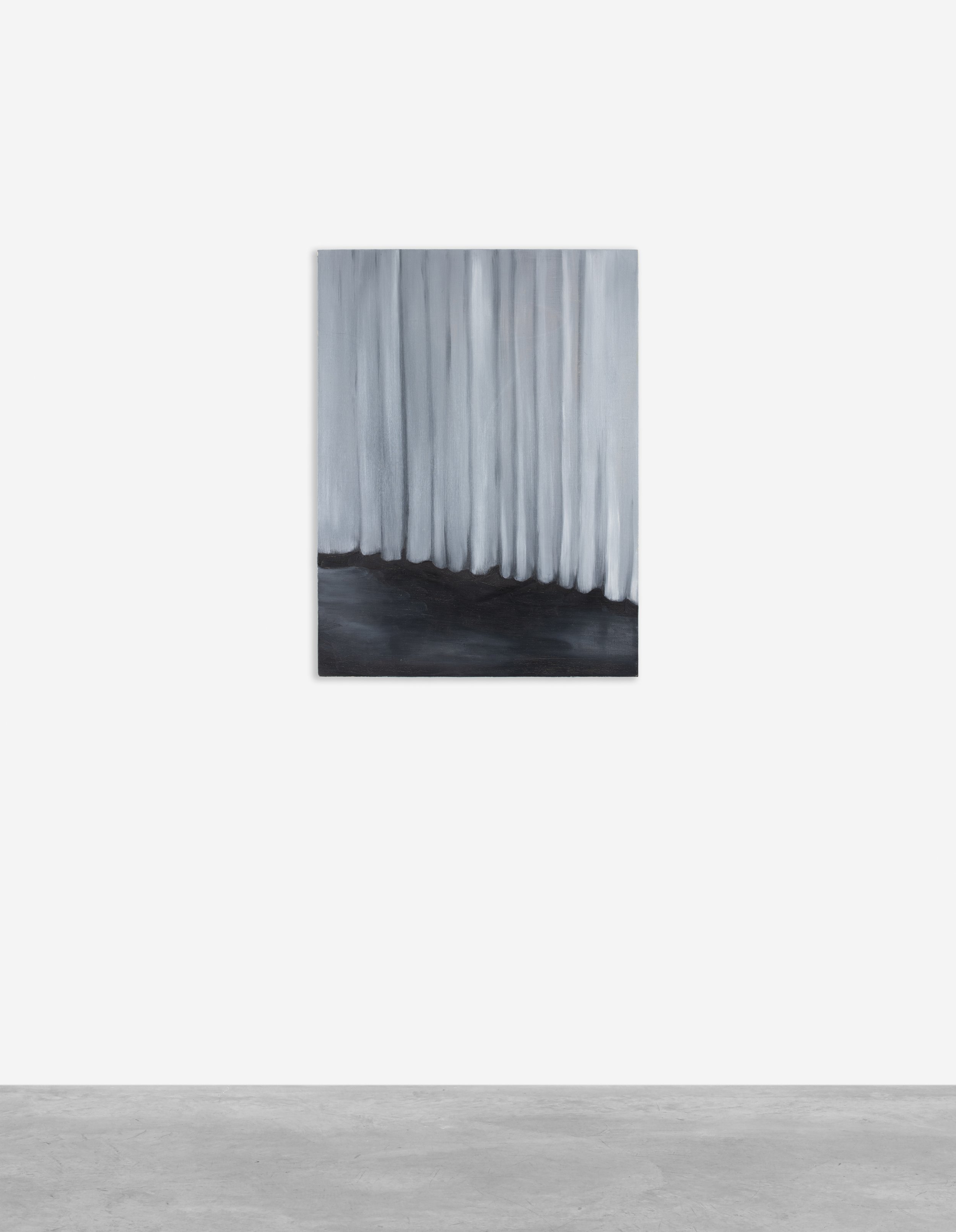
A closed curtain conceals a stage, and the stage is empty. This is the paradox of the theater curtain, the paradox that Tan Mu has made the subject of Stage (2021), a painting that depicts a closed curtain and nothing else, no actors, no set, no audience, no action, only the curtain itself, hanging in the frame, filling the frame, taking up the entire visual field, a curtain that conceals a space that may or may not contain anything at all, a curtain that performs the function that all curtains perform, the function of separation, the function of dividing the visible from the invisible, the known from the unknown, the present from the future, the reality from the fiction, and the division is the subject of the painting, the division that the curtain enforces and that the viewer is invited to consider, the division that is both physical and conceptual, the physical division between the auditorium and the stage, the conceptual division between the world that the audience inhabits and the world that the performance will create, and the creation has not begun, the curtain has not risen, the performance has not started, the stage is empty, the space behind the curtain is unknown, and the unknown is what the viewer projects onto the curtain, the viewer projects the possibilities that the closed curtain implies, the possibilities of what might be behind it, what might happen when it rises, what story might be told, what world might be constructed, what fiction might be enacted, and the projection is the painting, the painting that holds the curtain and the curtain that holds the possibility and the possibility that the viewer fills with expectation, and the expectation is the fiction, the fiction that has not yet begun, the fiction that the curtain both conceals and promises, the fiction that is the reason the audience is there, the reason the theater exists, the reason the curtain hangs, the reason the painting was made, the reason the photograph was taken that became the print that became the painting, the reason that Tan Mu has been drawn to images of curtains throughout her career, the reason that curtains evoke for her the boundary between fiction and reality, the boundary that the curtain both creates and dissolves, creates when it is closed and dissolves when it rises, and the painting holds the boundary in the state of the closed curtain, the boundary that is active and enforced and visible, the boundary that separates the viewer from the unknown space behind the fabric, and the fabric is the painting, and the painting is the curtain, and the curtain is the threshold, and the threshold is the subject.
Stage (2021) is an oil painting on linen, 24 x 18 inches (61 x 45.7 cm). The format is vertical, narrower than it is tall, the format of a portrait or a door frame, a format that emphasizes the verticality of the curtain, the way that the curtain hangs from the top of the proscenium to the floor of the stage, the way that the curtain occupies the full height of the theatrical space, the way that the curtain is the first and last thing that the audience sees, the beginning and the end of the performance, the frame that encloses the fiction before the fiction begins and that closes over the fiction when the fiction ends, and the vertical format of the painting mirrors the vertical format of the proscenium, the architectural frame that separates the stage from the auditorium, the frame that is the threshold between the world of the audience and the world of the play, and the painting is this frame, this threshold, this boundary between the reality that the viewer inhabits and the fiction that the curtain promises, and the format is the argument, the argument that the painting is not a depiction of a curtain but a depiction of a threshold, and the threshold is vertical, it stands upright, it occupies the space between the floor and the ceiling, it is the thing that the viewer must pass through or wait behind, the thing that separates the present from the future, the known from the unknown, and the separation is the painting, and the painting is 24 by 18 inches, and the 24 by 18 inches is the frame that holds the threshold that holds the curtain that conceals the empty stage.
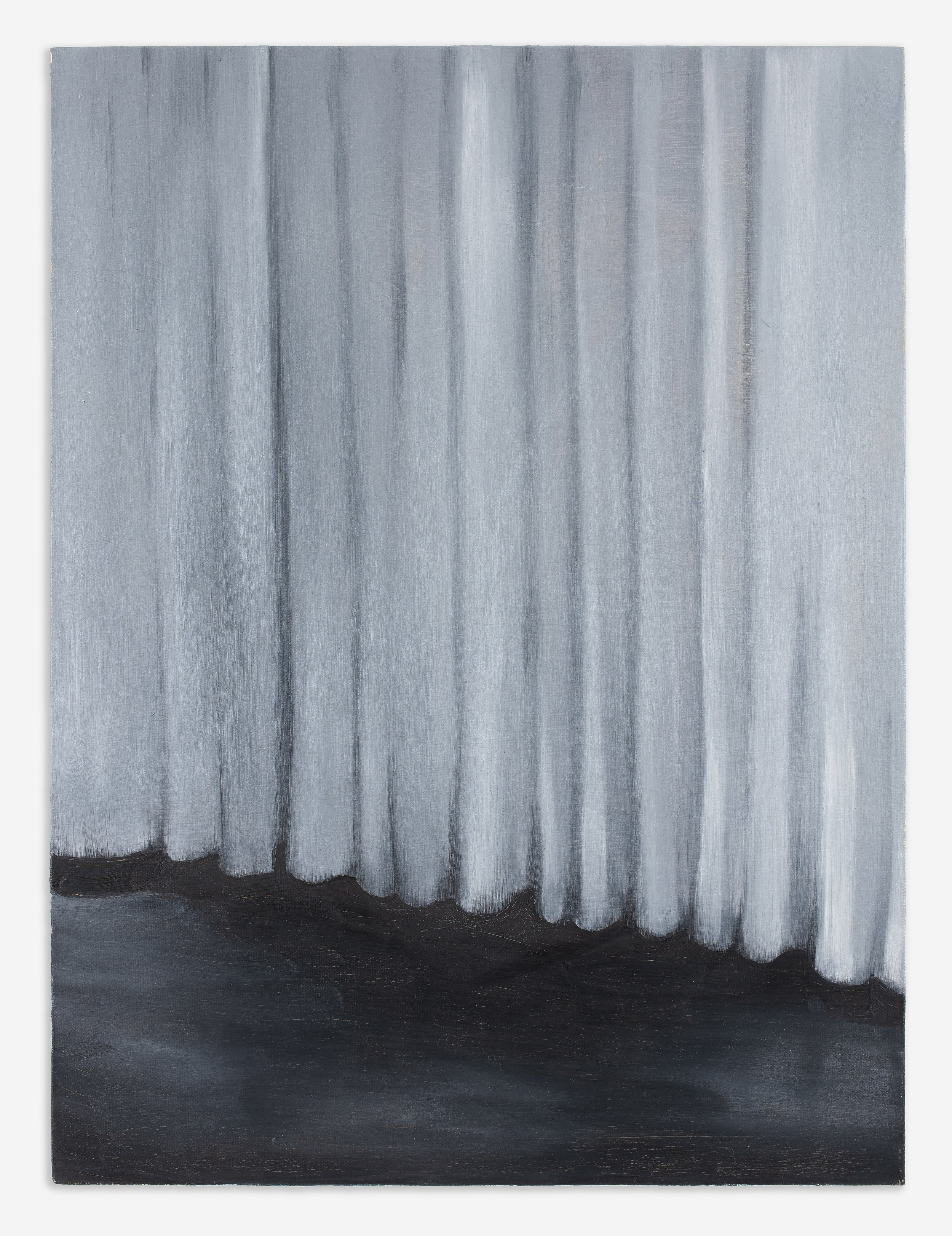
The curtain in the painting is rendered with a particular attention to its surface and its weight. The fabric hangs in folds that suggest the heaviness of theatrical velvet, the kind of curtain that absorbs light rather than reflecting it, the kind of curtain that creates a darkness behind it that is deeper than the darkness of the auditorium, the kind of curtain that makes the audience feel that the space behind it is infinite, that the stage extends forever into a darkness that the curtain conceals, and the folds of the fabric are painted with a precision that captures the way the light catches the ridges and falls into the valleys between the folds, the way that velvet catches and holds the light differently than silk or cotton, the way that theatrical fabric is designed to create a sense of weight and gravity and presence, and the presence is the curtain, the curtain that is present even when there is nothing behind it, the curtain that has a presence that does not depend on what it conceals, a presence that is the presence of the threshold itself, the presence of the boundary between two states, the presence of the line that divides the real from the fictional, and the presence is painted in oil on linen, the oil that allows the surface to be built up in layers that create the depth of the folds and the weight of the fabric, the oil that allows the dark tones of the curtain to absorb the light the way that velvet absorbs the light in a theater, and the absorption is the painting, the painting that absorbs the light the way that the curtain absorbs the light, the painting that creates a darkness behind the surface that is analogous to the darkness behind the curtain, the painting that is itself a threshold between the surface of the canvas and the space that the surface conceals, and the space is the stage, and the stage is empty, and the emptiness is the possibility, and the possibility is the fiction that has not yet begun.
Beneath the surface of the curtain, hidden in the composition, is a clepsydra shaped like an hourglass. Tan Mu has described this hidden element as a symbol of the passage of time, placed behind the curtain to suggest that time flows quietly between fiction and reality. The clepsydra can only be perceived from a certain angle, much like time itself, which is invisible yet constantly present. The hourglass form is the form of time measured by the flow of sand from one chamber to another, the form of time that is visible only in the movement of the sand, the form of time that empties from the top and fills the bottom, the form of time that is always running out, always flowing, always moving from one state to another, from the future to the past, from the unknown to the known, from the fiction that has not yet begun to the fiction that has ended, and the placement of the hourglass behind the curtain is the placement of time behind the threshold, the placement of the temporal behind the spatial, the placement of the process that governs all performance, the process that makes the curtain rise and the curtain fall, the process that gives the fiction its beginning and its end, and the process is the hourglass, the hourglass that empties from one chamber to another, the hourglass that measures the duration of the play, the hourglass that is the clock of the theater, the clock that counts the time of the fiction, and the clock is hidden, hidden behind the curtain, hidden in the composition, hidden like time itself is hidden, hidden like the mechanism that makes the curtain rise is hidden, hidden like the machinery that creates the illusion is hidden, hidden because the theater hides its mechanisms, because the performance conceals its construction, because the fiction depends on the invisibility of the process that produces it, and the invisibility of the clepsydra is the invisibility of time in the theater, the time that the audience does not see but that the audience feels, the time that passes while the curtain is closed and the stage is empty and the audience is waiting for the performance to begin, and the waiting is the painting, and the painting is the threshold, and the threshold is the time, and the time is the hourglass, and the hourglass is hidden behind the curtain, and the curtain is the painting, and the painting is 24 by 18 inches of oil on linen, and the oil on linen is the surface that conceals the hourglass that measures the time that passes while the curtain is closed and the stage is empty and the audience is waiting.
René Magritte painted The Treachery of Images in 1929. The painting depicts a pipe, a conventional smoking pipe, rendered with the precision and clarity of a technical illustration, and beneath the pipe, written in a script that is as precise and as clear as the illustration above it, is the sentence "Ceci n'est pas une pipe," which translates to "This is not a pipe," and the sentence is true, because the painting is not a pipe, it is a painting of a pipe, and the painting of a pipe is not the pipe itself, it is a representation of the pipe, a depiction that stands in for the pipe but that is not the pipe, and the distinction between the representation and the thing represented is the treachery of the title, the treachery of images that pretend to be the things they depict, the treachery of the visual system that presents the representation as the thing, and the treachery is the subject of the painting, the subject that the painting makes explicit by stating what the painting is not, and the statement is the argument, the argument that the image is not the thing, that the curtain in the painting is not a curtain, that the curtain in the painting is a representation of a curtain, a depiction of a curtain, an image of a curtain that stands in for the curtain but that is not the curtain, and the distinction is the same distinction that Tan Mu's painting makes, the distinction between the representation and the thing represented, between the image of the curtain and the curtain itself, between the painting of the threshold and the threshold itself, and the distinction is the threshold, the threshold between the reality of the curtain and the fiction of the painting, the threshold that the painting enacts by being both a curtain and a representation of a curtain, by being both the thing and the image of the thing, by being both the threshold and the depiction of the threshold, and the enactment is the same enactment that Magritte's painting performs, the enactment of the treachery of images, the enactment of the gap between the representation and the thing, the enactment of the boundary between the reality of the object and the fiction of the image, and the enactment is the painting, and the painting is the curtain, and the curtain is the representation, and the representation is not the thing, and the thing is behind the curtain, and behind the curtain is the stage, and the stage is empty, and the emptiness is the possibility, and the possibility is the fiction, and the fiction is what the audience is waiting for, and the waiting is the time that the hourglass measures, and the time is the duration of the threshold, and the duration is the painting, and the painting is the threshold between the reality of the viewer and the fiction of the stage, and the threshold is the curtain that conceals nothing, because there is nothing behind it, because the stage is empty, because the performance has not begun, because the curtain is still closed, and the closed curtain is the painting, and the painting is the threshold, and the threshold is the subject, and the subject is the boundary between the fiction and the reality, and the boundary is what Magritte made visible by writing beneath the pipe that the pipe was not a pipe, and the boundary is what Tan Mu makes visible by painting the curtain that conceals an empty stage, and the visibility of the boundary is the painting, and the painting is 24 by 18 inches, and the 24 by 18 inches is the frame that holds the curtain that holds the threshold that holds the fiction that has not yet begun, and the fiction that has not yet begun is the fiction of the stage, and the stage is empty, and the emptiness is the possibility.
Barnett Newman painted Who's Afraid of Red, Yellow and Blue III in 1967. The painting is a large canvas, approximately 5 meters wide and 2.5 meters tall, that consists of three vertical bands of color, red on the left, blue on the right, and a narrow band of yellow between them, and the bands are fields of pure color that fill the canvas from edge to edge and from top to bottom, and the fields are not representations of anything, they are not depictions of anything, they are not images of anything, they are colors that exist on the surface of the canvas for their own sake, and the colors are the subject of the painting, and the subject is the color, and the color is the field, and the field is the surface, and the surface is the canvas, and the canvas is the painting, and the painting is the experience of standing before a field of color that has no representational content, no narrative, no story, no fiction, no reality behind it, only the surface itself, only the color itself, only the field itself, and the field is what Newman called the sublime, the experience of standing before something that is vast and immediate and overwhelming, the experience of standing before something that does not represent anything beyond itself, and the experience is the threshold, the threshold between the viewer and the surface, the threshold that Newman created by removing everything that was not the surface, by stripping the painting of all representational content, by making the painting into a field of color that is itself and nothing else, and the field is the curtain, the curtain that Newman raised by painting a surface that conceals nothing, because there is nothing behind it, because the surface is the painting and the painting is the surface, and the surface is what the viewer sees and what the viewer experiences, and the experience is the threshold, the threshold between the viewer and the field of color, and the threshold is the same threshold that Tan Mu's painting creates, the threshold between the viewer and the curtain, the threshold between the reality of the viewer and the fiction of the stage, the threshold that the curtain enacts by concealing an empty space, a space that is analogous to the space behind Newman's field of color, a space that is empty, a space that contains nothing but the possibility of what might appear, and the possibility is the fiction, the fiction that the stage might create when the curtain rises, the fiction that Newman's color might create when the viewer stands before it, the fiction that the painting might create when the viewer encounters it, and the encounter is the threshold, and the threshold is the painting, and the painting is the curtain, and the curtain conceals nothing, and nothing is the possibility, and the possibility is the fiction, and the fiction is the stage, and the stage is empty, and the emptiness is what the curtain conceals, and what the curtain conceals is nothing, and nothing is the most potent fiction that the theater can create, because nothing is the possibility of everything, because the empty stage is the space where any fiction can be enacted, because the closed curtain is the threshold that divides the reality of the viewer from the possibility of the fiction, and the possibility is infinite, and the infinite is the empty stage, and the empty stage is the nothing that the curtain conceals.
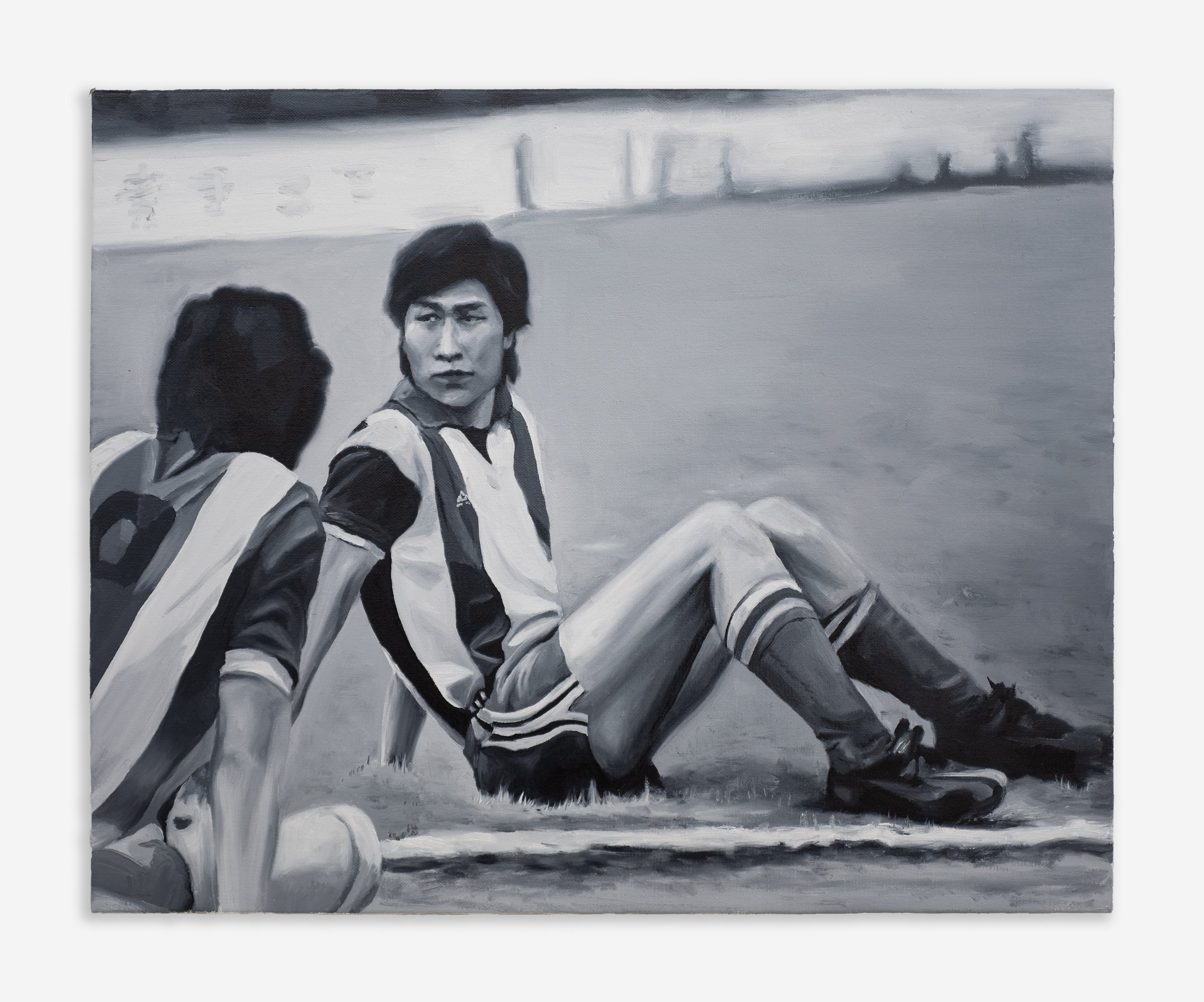
Nick Koenigsknecht has written about the way that Tan Mu's paintings function as documentary records, images that preserve the transient and the technological and the institutional in a medium that slows the process of looking, and the slowing is relevant to Stage because the painting is a document of a threshold, a record of a moment when the curtain is closed and the performance has not yet begun, a record of the state of waiting that precedes every fiction, every narrative, every story that the theater will tell, and the waiting is not a passive state, it is an active state, it is the state in which the audience is most aware of the boundary between the reality and the fiction, most aware of the threshold that they are about to cross, most aware of the fact that they are in a theater and that the curtain will rise and that they will enter a constructed world, and the awareness is what the painting preserves, the awareness of the threshold, the awareness of the boundary, the awareness of the line between the real and the fictional, and the preservation is the documentary function that Koenigsknecht describes, the function of the painting that records a state of awareness that is fleeting and that the painting makes permanent, the awareness that the curtain creates, the awareness that the threshold creates, the awareness that the boundary between the reality and the fiction creates, and the awareness is what Tan Mu has described as the boundary between fiction and reality, the boundary that the curtain creates and that the clepsydra measures, the boundary that is both spatial and temporal, spatial because it separates the auditorium from the stage, temporal because it marks the beginning and the end of the performance, and the boundary is what the painting holds, the painting that is a document of a threshold, a document of a boundary, a document of the moment before the fiction begins, and the document is the medium, the medium of oil on linen that slows the process of looking and allows the viewer to see the threshold that the curtain creates, to see the boundary that the fiction depends on, to see the emptiness behind the curtain that is the possibility of everything that the theater might create, and the seeing is the documentary function, and the documentary function is the painting, and the painting is the record of the threshold that the curtain enacts, and the threshold is the boundary between the fiction and the reality, and the boundary is the curtain, and the curtain conceals nothing, and nothing is the possibility, and the possibility is the stage, and the stage is empty, and the emptiness is the fiction that has not yet begun, and the fiction that has not yet begun is the fiction of the theater, and the theater is the space where the fiction will be enacted, and the enactment is the performance, and the performance is what the audience is waiting for, and the waiting is the time that the hourglass measures, and the time is the duration of the threshold, and the threshold is the painting, and the painting is 24 by 18 inches of oil on linen, and the 24 by 18 inches is the frame that holds the curtain that holds the threshold that holds the fiction that the stage will create when the curtain rises and the performance begins and the empty space behind the curtain becomes the world of the play, and the world of the play is the fiction, and the fiction is what the curtain conceals, and the curtain is the painting, and the painting is the threshold, and the threshold is the boundary, and the boundary is the line between the reality and the fiction, and the line is the curtain, and the curtain is closed, and behind the curtain is nothing, and nothing is the beginning of everything that the theater can imagine, and the imagination is the audience, and the audience is waiting, and the waiting is the painting, and the painting is the curtain that conceals nothing and promises everything, and the everything is the fiction that has not yet begun, and the fiction that has not yet begun is the reason the curtain hangs, and the reason the curtain hangs is the reason the painting was made, and the painting was made because the curtain is the threshold, and the threshold is the boundary, and the boundary is the line, and the line is the curtain, and the curtain conceals nothing, and nothing is the most potent fiction of all, because nothing is the possibility of everything.