The Room That Ran Itself: Tan Mu’s LOOP and the Exhibition as Operating System
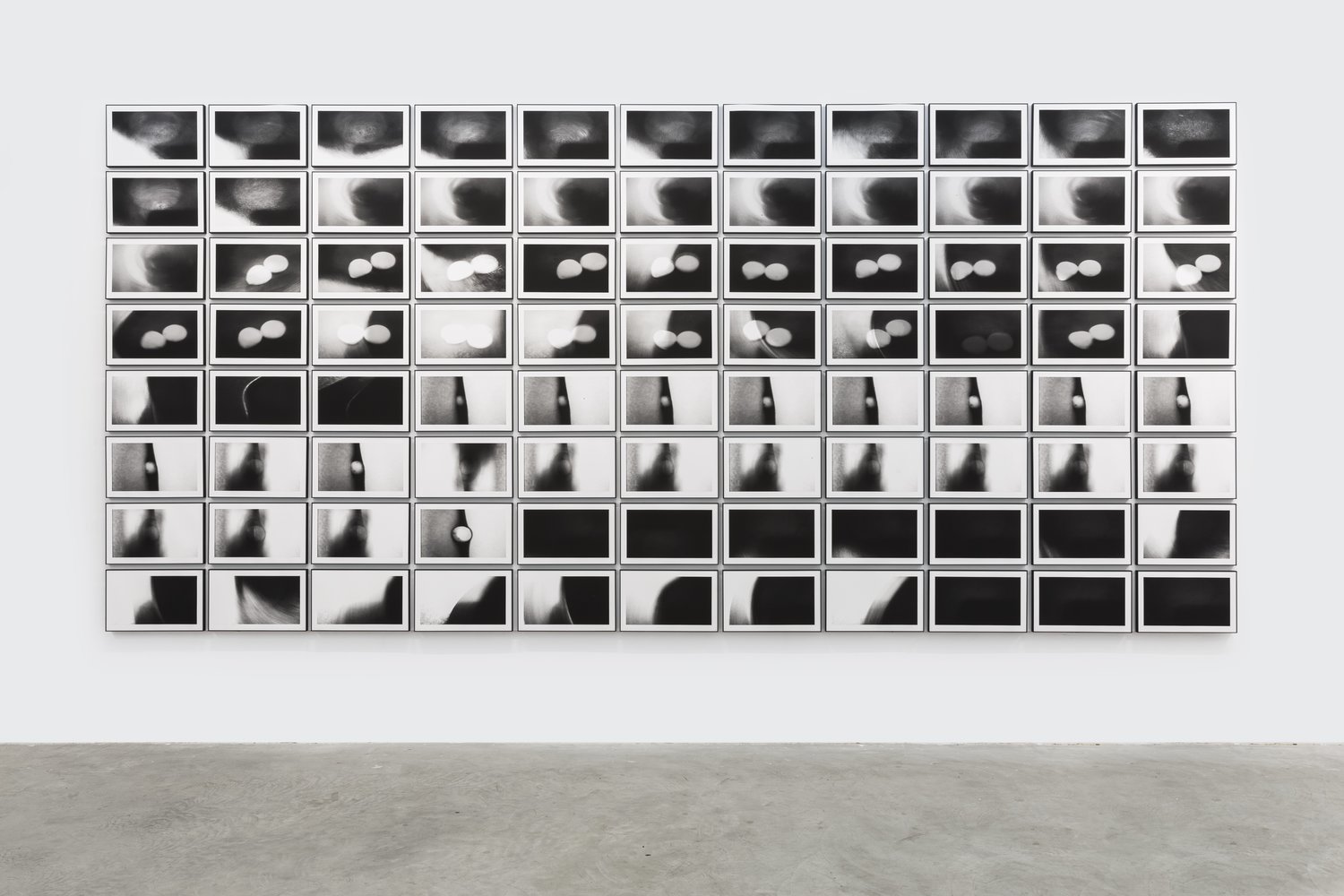
Magnetic sand moves across a glass plate in response to an invisible field. A camera tracks the movement of bodies in the room and translates their positions into sound. A three-channel video projection cycles through images without beginning or end, its algorithm selecting frames according to conditions that no single viewer could track in real time. Eighty-eight photographs, each 38 by 61 centimeters, line the walls in a sequence that suggests narrative but refuses to deliver one. This was LOOP, Tan Mu's solo exhibition at BETWEEN Art Lab in Beijing, open from March 18 to April 17, 2017, and what made it different from almost everything else on view in Beijing that spring was that none of these elements were still. The exhibition was not a collection of objects. It was a continuously operating field, a room-sized apparatus in which every component, from the Arduino-controlled magnetic installation to the Max/MSP generative visuals to the viewers who walked through the space, functioned as a variable in a system that ran whether anyone was watching or not. The lights could be turned off, the doors could be locked, and the sand would still shift in response to its programmed electromagnetic pulses. The system did not require an audience. It required only power. This is the quality that distinguishes LOOP from the interactive installations that have become common in contemporary art, where the viewer's presence triggers a response and the work remains dormant until someone approaches. In LOOP, the viewer entered a system that was already running. The viewer did not activate the work. The viewer entered it, the way one enters a river.
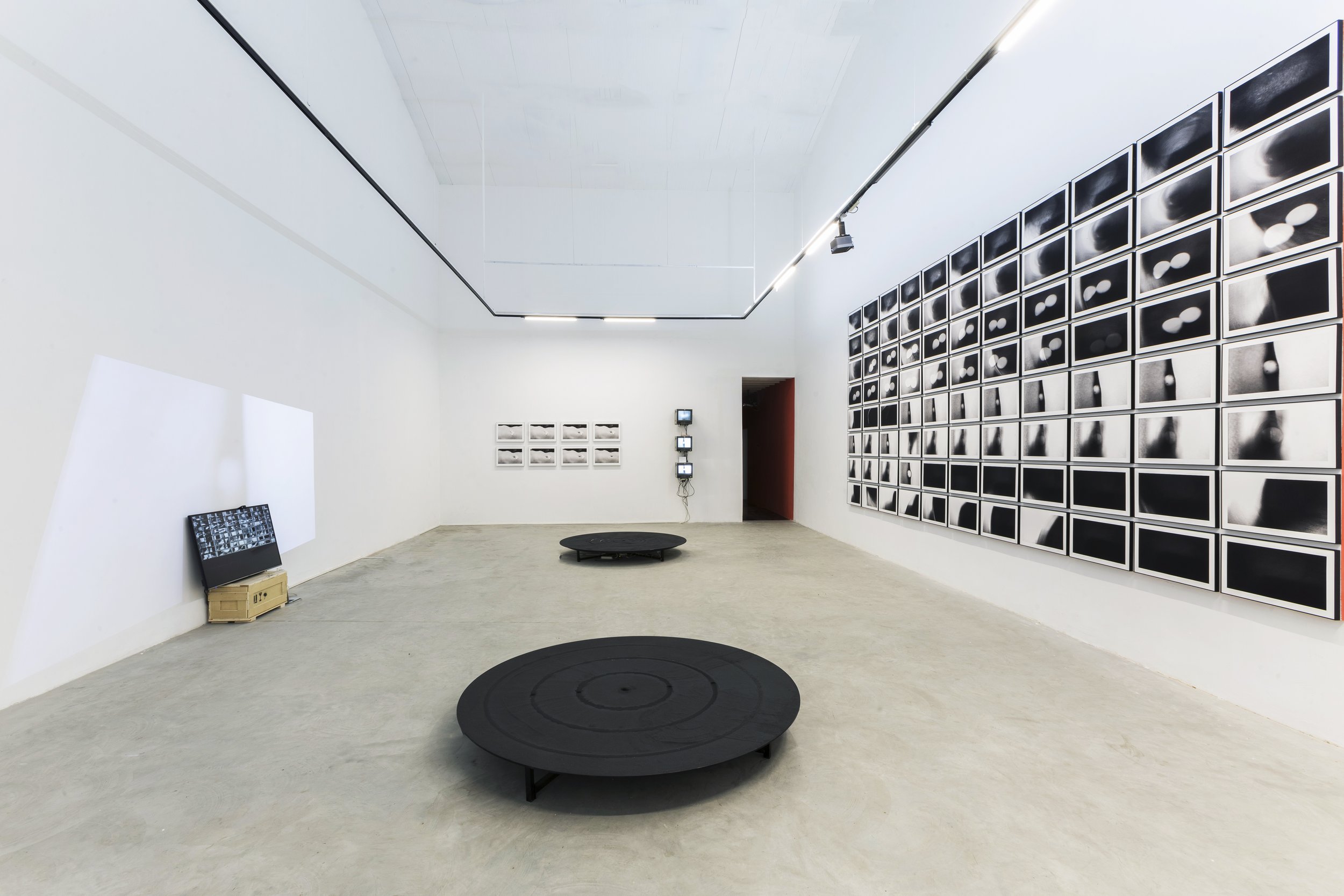
LOOP comprised four distinct works, each designated Loop.1 through Loop.4, plus two iterations of a work titled Signal, which predated the submarine cable paintings by nearly a decade. Loop.1 was a three-channel video installation with dimensions variable, projecting imagery that cycled without resolution. Loop.2 was a photo installation of 88 works, each 38 by 61 centimeters, arranged in a set measuring 325 by 700 centimeters when installed collectively. The photographs operated as a temporal sequence, their accumulation producing meaning not through any individual image but through the relationship between images, the way a time-lapse produces the perception of growth or decay from a stack of stills. Loop.3 was an interactive video and sound installation using real-time generative visuals developed in Max/MSP, the programming environment originally designed for music and multimedia at IRCAM in Paris, which allowed Tan Mu to construct audiovisual responses to environmental inputs without pre-recording them. Loop.4, the magnetic sand installation, occupied a 200 by 200 centimeter field and used an Arduino-controlled system to modulate the electromagnetic field beneath a glass plate covered in ferrous particles. Steel and aluminum components housed the mechanism. The sand responded to the field's fluctuations in real time, forming patterns that shifted continuously, sometimes clustering into dense configurations and sometimes dispersing into thin traces, depending on the algorithm's current state and the proximity of viewers whose bodies altered the local electromagnetic conditions.
The material palette is worth attending to because it anticipates, with surprising precision, the concerns that would later define Tan Mu's painting practice. The magnetic sand in Loop.4 is a mineral that responds to invisible forces, the same way that silicon, the subject of her 2021 painting, is a mineral that responds to electrical signals. The generative system in Loop.3 operates through rules that produce emergent behavior, the same way that the submarine cable networks in the Signal series operate through protocols that produce global connectivity. The photographs in Loop.2 accumulate into a sequence that only becomes legible as a system when viewed collectively, the same way that individual Signal paintings become a map of global infrastructure only when seen as a series. The exhibition was not a prefiguration of these later works. It was their logical antecedent, the moment when Tan Mu articulated, in the language of installation rather than the language of painting, the operating principles that would govern everything she made afterward: that systems are more interesting than objects, that meaning emerges through operation rather than representation, and that the viewer is always already inside the system they are observing.
In 1960, the Brazilian artist Lygia Clark began producing objects she called Bichos, a word that translates from Portuguese as "animals" or "creatures" but that she used to designate a class of hinged metal sculptures designed to be manipulated by hand. Each Bicho consisted of aluminum or steel planes connected by hinges that allowed the object to be folded, unfolded, rotated, and reconfigured into a range of forms that Clark estimated at between six and twelve per object, though some configurations were more stable than others and some were, as she acknowledged, impossible to predict in advance. The Bichos were not sculptures in the conventional sense because they had no fixed form. They existed only in the act of being handled, and each handling produced a different configuration, so that the object's identity was distributed across the full range of its possible states rather than concentrated in any single state. Clark insisted that the Bichos be touched. She refused exhibitions that placed them behind glass. The relationship between the hand and the hinge was the work, not the arrangement of metal planes that resulted from any particular manipulation. In this sense, the Bicho was not an object at all. It was a protocol, a set of constraints that produced a range of possible experiences without determining which experience would occur.
Tan Mu's LOOP extends Clark's logic from the hand to the body, from tactile manipulation to spatial presence, and from a single object to an entire room. Where Clark's viewer completed the Bicho by handling it, LOOP's viewer completed the exhibition by entering it, but the terms of completion were different. The Bicho required active manipulation. LOOP required only presence. The Arduino sensors in Loop.4 detected the proximity of bodies and adjusted the electromagnetic field accordingly, but the viewer did not need to know this for the adjustment to occur. The Max/MSP system in Loop.3 generated audiovisual responses to movement in the space, but the viewer did not need to understand the mapping between movement and response for the system to operate. The exhibition treated the viewer as a sensor, a source of input data, rather than as an operator. The distinction matters because it changes the politics of participation. In Clark's model, the viewer has agency: they choose which hinge to fold, which configuration to produce. In LOOP, the viewer has presence: they are registered by the system, their body becomes a data point, and the system incorporates that data into its ongoing operation without consulting the viewer about what should happen next. The viewer is not a collaborator. The viewer is a variable. This is a more honest account of what participation means in a mediated environment, where most of the systems that register our presence do so without our explicit consent and where the feedback loops that shape our experience operate below the threshold of conscious attention.
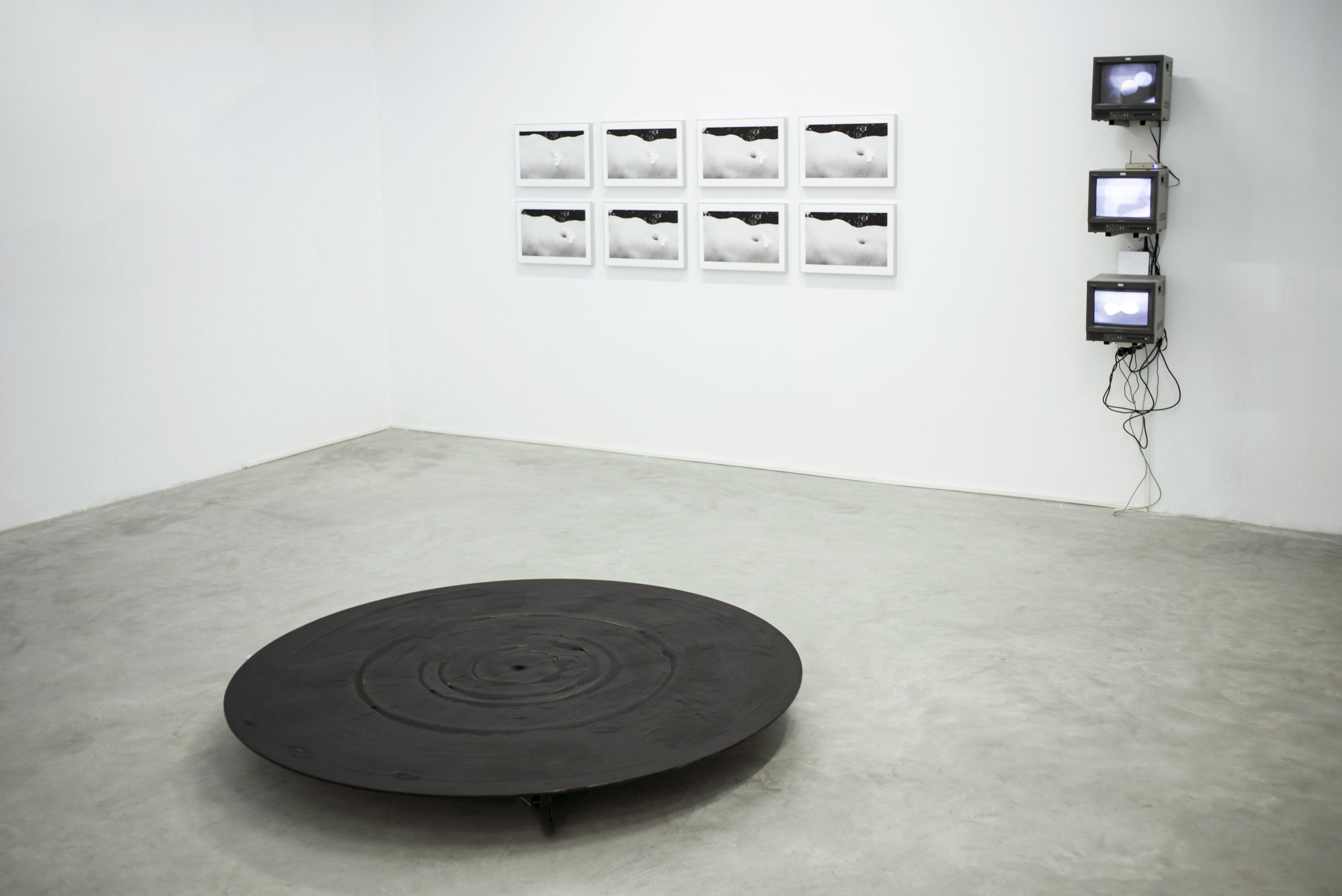
The curatorial note for LOOP, published on the tanmustudio.com archive page, describes the exhibition as a "self-verifying experimental environment." The term is precise and unusual. Self-verification is a concept from systems engineering and computer science, where it refers to a system's capacity to confirm its own operational state without external intervention. A self-verifying system runs diagnostics on itself, checks its own outputs against its own parameters, and reports any deviations from expected behavior. The term implies autonomy, but it also implies a particular kind of closure: the system operates within boundaries that it defines, and it measures its own performance against criteria that it has established. LOOP adopted this logic at the level of the exhibition. The works verified their own operation through the continuous feedback loops that connected sensors, processors, and outputs. The magnetic sand verified the electromagnetic field. The generative visuals verified the movement data. The photographs verified the passage of time. No external authority was needed to confirm that the system was working. The system confirmed itself, continuously, in real time, for as long as the power remained on. This is the quality that connects LOOP most directly to Tan Mu's later painting practice, where the canvas becomes a self-verifying record of a process: the paint verifies the brushstroke, the texture verifies the pressure, the color verifies the chemistry. The painting does not need an external interpreter to confirm that it is a painting. It confirms itself through its own material operation.
In 1963, Nam June Paik installed a work called Random Access in his first solo exhibition at the Galerie Parnass in Wuppertal, Germany. The piece consisted of a turntable with the playback head removed from its normal position and mounted on a movable arm that the viewer could drag across a field of audiotape strips glued to a board. As the head passed over the tape, it read whatever fragment of sound was recorded on that strip and played it through speakers. The viewer had no control over the sequence of sounds, only over the path the head took across the field. The result was a form of random access, a term borrowed from computer memory architecture, where data can be read from any address without reading the preceding addresses first. Paik's piece was one of the earliest works of art to treat the viewer not as a spectator but as a processor, someone who executes instructions by moving through a field of information and producing, through their movement, a particular sequence of outputs that no one else will ever produce in exactly the same way. The work had no fixed content. Its content was generated in real time by the interaction between the viewer's hand and the recorded fragments on the tape.
LOOP extends Paik's logic from the hand to the entire body and from a single reading device to a distributed system of sensors, processors, and outputs. Where Random Access required the viewer to physically drag a playback head across a surface, LOOP required the viewer only to be present in the room. The Arduino sensors and the Max/MSP patches handled the translation from presence to output. The viewer did not need to understand the system to be processed by it, the same way that a user does not need to understand the internet to send an email. This is the condition of contemporary life that LOOP makes visible: we are always already inside systems that process us, that register our presence and convert it into data, that incorporate our behavior into their operation without asking our permission or explaining their logic. The exhibition was not a representation of this condition. It was an instance of it, a working model of the relationship between bodies and systems that defined the experience of living in a networked world. The curatorial note describes LOOP as occupying a "critical position within Tan Mu's oeuvre: not as an isolated early experiment, but as the conceptual groundwork for an expanded practice that continues to investigate how systems shape perception, subjectivity, and experience across media and contexts." This assessment is accurate, but it understates the specificity of what LOOP achieved. The exhibition did not merely lay the groundwork for later paintings. It established, in physical form and in real time, the operating principle that would become the foundation of every subsequent work: that art is not a representation of a system but an operation within one.
The two iterations of the work titled Signal within the LOOP exhibition deserve particular attention because they reveal the depth of the conceptual continuity between Tan Mu's installation practice and her painting practice. The 2015 Signal works were interactive video and sound installations using real-time generative systems developed in Max/MSP that responded to audience movement and spatial dynamics. They were not paintings of cables. They were not representations of submarine networks. They were systems that processed signals, that received input from the environment, transformed that input according to programmed rules, and produced output in the form of sound and image. The name Signal was not metaphorical. It was literal. The works were signals: transmissions from a sensor to a processor to a display, carried through wire and code and electromagnetic field. When Tan Mu later returned to the name Signal for her series of submarine cable paintings, beginning in 2022, she was not borrowing a title from an earlier work. She was extending the same logic into a different medium. The 2015 Signal installations processed spatial data in real time. The 2022 Signal paintings processed cartographic data through the medium of oil on linen. The latency is different, the medium is different, the scale is different, but the operating principle is the same: signal in, transformation, signal out. The paintings are slower than the installations. They take weeks to produce rather than milliseconds. But they are doing the same thing: receiving information from a source, transforming it according to rules that the artist has established, and producing an output that carries the trace of that transformation. The painting is not a record of the signal. The painting is the signal, transmitted through pigment rather than through glass fiber.
Yiren Shen, in her conversation with Tan Mu published in 10 Magazine (August 2025), describes the artist's approach to technology in terms that illuminate the continuity between LOOP and the later painting practice. Shen notes that Tan Mu has described technology as "an extension of the body and as a form of externalized memory," a formulation that connects directly to the logic of LOOP, where the Arduino sensors and the Max/MSP patches functioned as extensions of the viewer's perceptual system, registering data that the body could not register on its own and translating that data into forms that the body could perceive. The exhibition externalized the viewer's own presence, fed it back through a system, and returned it as sound and image and pattern. This is what memory does, and it is what technology does, and LOOP made the identity of these two processes visible by constructing an environment in which the viewer could experience their own externalization in real time. The magnetic sand in Loop.4 moved in response to the viewer's proximity. The generative visuals in Loop.3 shifted in response to the viewer's movement. The photographs in Loop.2 accumulated into a sequence that the viewer traversed at their own pace. Every component of the exhibition was a feedback loop, and every feedback loop returned the viewer to themselves, transformed by their passage through the system.
LOOP was shown in 2017, two years after Tan Mu completed her BFA at Alfred University, where she had studied expanded media and worked with coding, interactive installations, mechanical structures, and sound. The exhibition was not a departure from her education. It was a synthesis of it. At Alfred, she had learned to work with Arduino, Max/MSP, and real-time generative systems, and she had attended weekly observation sessions at the Stull Observatory, where she looked through telescopes and learned to register data from sources too distant or too faint for the unaided eye. LOOP combined these capacities. The interactive systems used the same tools she had learned at Alfred. The photographs in Loop.2 applied the same logic of serial accumulation that astronomical observation requires, where a single exposure reveals almost nothing but a sequence of exposures reveals structure, pattern, and process. The exhibition was, in a sense, an observatory, a room-sized instrument for observing systems in operation, and the viewer who entered it was not looking at art but looking through it, the way an astronomer looks through a telescope not at the telescope but at whatever the telescope makes visible. The telescope is the medium, not the message. The system is the medium, not the message. What LOOP made visible was the fact of operation itself, the fact that systems run, that they process input and produce output, that they verify their own states and correct their own errors, and that they do all of this whether or not anyone is watching. The exhibition ran for thirty-one days. The sand moved. The sound shifted. The photographs held their sequence. The power stayed on. The system verified itself.