The Edge That Grows: Tan Mu's Fractal 2 and the Boundary That Was Never a Line
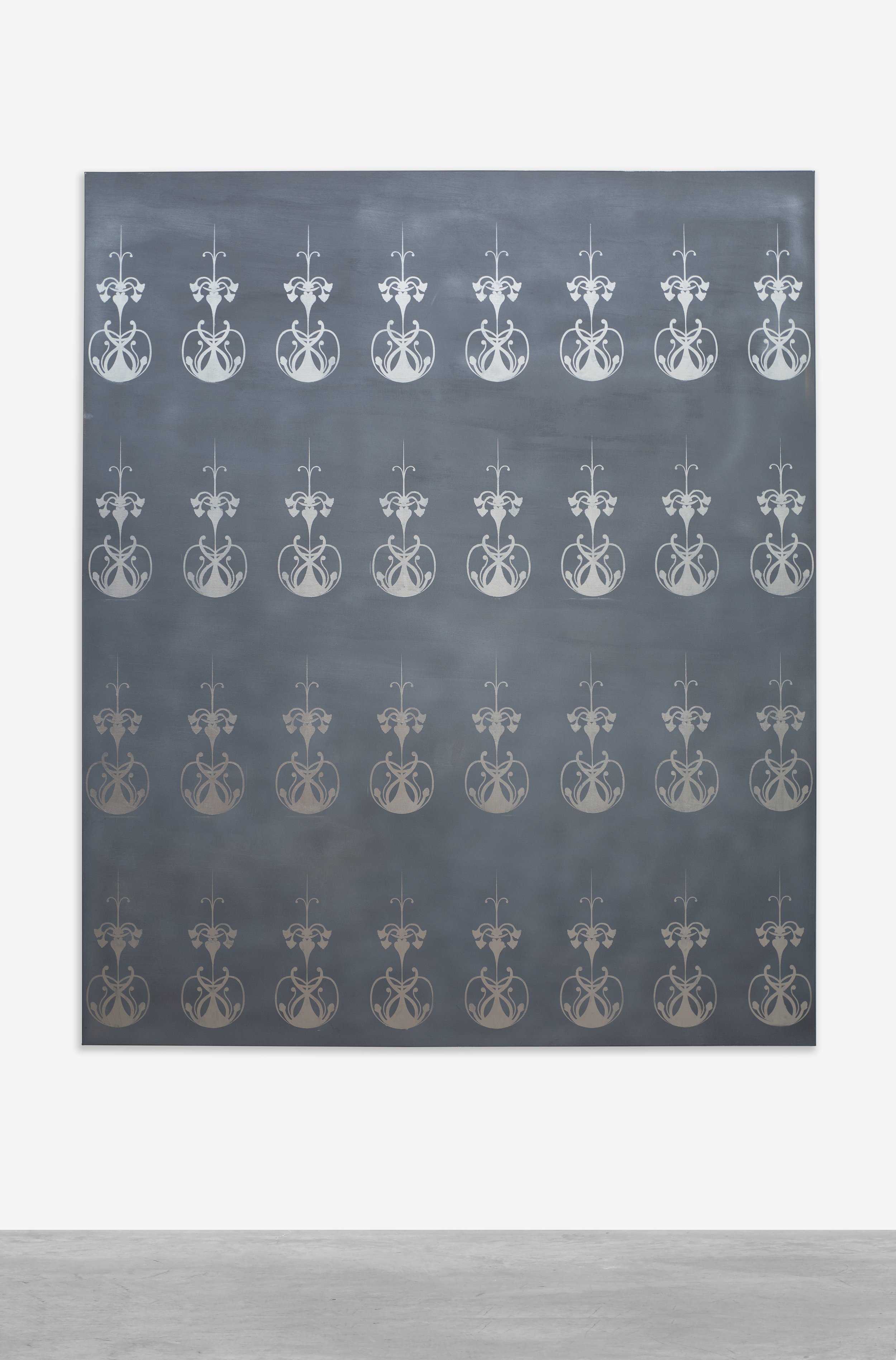
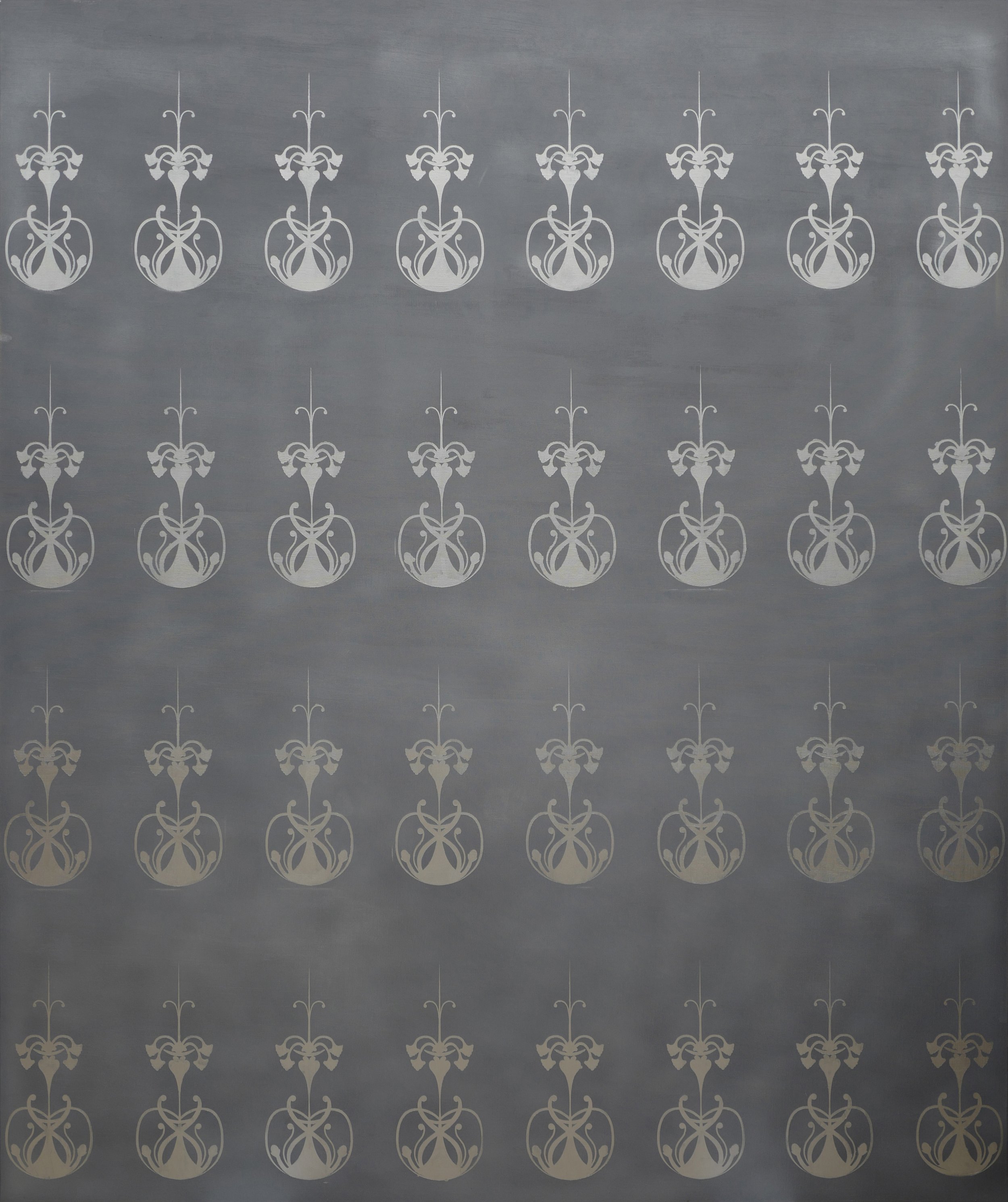
The Mandelbrot set has no edge. This is not a statement about the quality of its border, which is smooth in some regions and jagged in others, which bulges and thins and sprouts bulbs and tendrils and filaments that reach into the surrounding space like the branches of a tree or the tributaries of a river delta, which is, in fact, the most intricate boundary in mathematics, a boundary of such complexity that it has been proven to have a Hausdorff dimension of 2, which means that it is not a line at all but a surface, not a one-dimensional curve enclosing a two-dimensional region but a two-dimensional object that occupies space in a way that no line can, filling the plane around itself with a density that approaches the density of the region it encloses, so that the distinction between inside and outside, which for a circle or a square is clear and unambiguous, becomes, for the Mandelbrot set, a matter of degree, a question of how close you are willing to look, how many times you are willing to zoom in, how many iterations of the function you are willing to compute before you accept that the point you are examining does not belong to the set or does, and the answer, for any point near the boundary, depends on the number of iterations, and the number of iterations is a finite number chosen by the person running the computation, which means that the boundary you see in any image of the Mandelbrot set is not the actual boundary, which is infinite and uncomputable, but an approximation, a rendering that reflects the limits of the machine and the patience of the viewer, and the approximation, which is the only version of the boundary that anyone has ever seen, is the version that Tan Mu saw when she first encountered the mathematical visualization of the Mandelbrot set and its derivative, the Buddhabrot, and the version that she chose to paint, and the painting, which translates the boundary from the medium of computation to the medium of oil and acrylic on linen, is a translation of an approximation of an object that cannot be seen in its entirety, because its entirety is infinite, and the infinity is not a metaphor but a mathematical fact, the fact that the boundary of the Mandelbrot set has been proven to be infinitely complex, to contain within itself copies of itself at every scale, to generate, at every magnification, new structures that are not present at any other magnification, new filaments, new spirals, new bulbs, new tendrils, new branches, new details that have never been seen before and that, because the boundary is infinite, will never be exhausted, will never stop generating new forms, will never cease to surprise the viewer who is willing to look one level deeper, and this inexhaustibility, this capacity for infinite self-generation from a finite set of rules, is the quality that drew Tan Mu to the Mandelbrot set and that she has described as the tension "between precision and unpredictability" that led her to reflect on "ideas of infinity and existence."
Fractal 2 (2019) is oil and acrylic medium on linen, 182.9 x 152.4 cm (72 x 60 in), a large vertical canvas that approximates the proportions of a screen or a window, a format that is wide enough to contain the sprawling, radiating structure of the Buddhabrot and tall enough to give that structure room to extend both upward and downward from the central mass. The painting depicts the Buddhabrot, which is a rendering technique for the Mandelbrot set that maps the probability distribution of the trajectories of points that escape the set, rather than the set itself, and the result is an image that looks like a figure in meditation, a seated form with a broad base and a narrow crown and radiating branches that extend from the body like arms or like light or like the paths that particles follow as they escape the gravitational field of a star, and the resemblance to a meditating figure is not accidental. The Buddhabrot was named by its creator, Melinda Green, in 1993, for precisely this resemblance, and Tan Mu, in her description of the work, notes that the distribution of trajectories "often resembles the posture and symbolic presence of classical Buddha figures, creating an unexpected connection between mathematics, visual form, and spiritual contemplation." The painting renders this resemblance in oil and acrylic on a scale that demands attention. The central mass of the Buddhabrot, which in a computational rendering appears as a concentration of bright points against a dark background, is rendered in the painting as a dense accumulation of pigment, layers of acrylic medium mixed with oil paint, built up in passages that range from thin, translucent washes to thick, opaque impastos, and the density of the pigment in the center of the composition corresponds to the density of the escaping trajectories in the Buddhabrot, which is highest near the boundary of the set and decreases with distance from it, so that the center of the painting, where the most pigment has been accumulated, is also the region where the most trajectories converge, and the outer regions, where the pigment thins and the linen begins to show through, correspond to the regions where the trajectories are sparse and the probability of a point escaping through a given region of the complex plane is low.
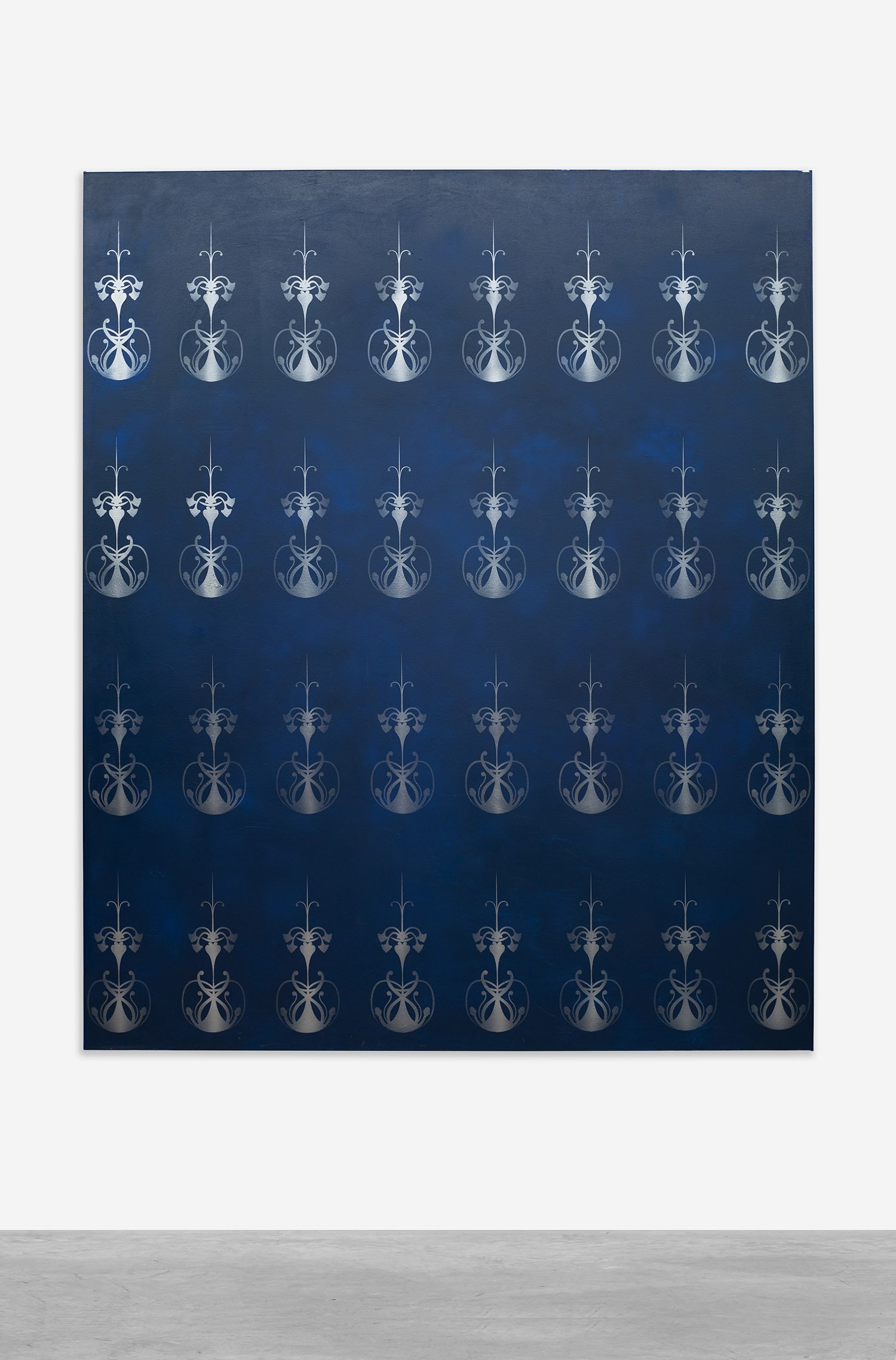
The colors of the painting are restrained. The background is a deep, near-black, the color of the linen when it has been primed and underpainted with a dark ground, and the Buddhabrot figure, which emerges from this ground, is rendered in a range of cool whites, pale blues, and muted grays, with occasional touches of warmer tones, a faint violet or a barely perceptible rose, in the regions where the trajectories are densest and the probability of escape is highest. The restraint of the palette is consistent with Tan Mu's description of the Fractal series as a body of work that invites the viewer to "slow down and enter a contemplative state, where distinctions between time and space, the individual and the cosmos, begin to dissolve," and the contemplative state that the palette produces is a state of reduced stimulation, a state in which the eye, deprived of the bright primaries and saturated complements that compete for attention, is forced to attend to the subtleties of value and temperature that distinguish one passage of paint from another, and the attention that the palette demands is the attention that the fractal boundary rewards, because the boundary, which is the subject of the painting, is not a line but a zone, and the zone, which extends from the interior of the set to the exterior, is a gradient of probability, a field of increasing and decreasing density, and the painting, by rendering this gradient in the subtle modulations of cool whites and pale blues against a dark ground, makes the gradient visible as a visual experience, as a field that the eye can traverse, moving from the dense center to the thin periphery, from the region where the trajectories converge to the region where they disperse, and the traversal, which is the experience of looking at the painting, is the experience of moving through a boundary that has no edge, that has no line, that has no point at which inside becomes outside, that is instead a continuous field of variation, and the field, which is what the Buddhabrot actually shows, is what the painting actually paints.
Jackson Pollock's drip paintings, which he began making in 1947 and continued until 1950, are among the most extensively analyzed works in the history of art for their fractal properties. In 1999, the physicist Richard Taylor and his colleagues published a study in the journal Nature demonstrating that the patterns of paint in Pollock's drip paintings exhibit fractal dimensions, a mathematical measure of the complexity of a self-similar structure, and that the dimensions increase over the period of Pollock's career, from approximately 1.0 in his earliest drip paintings to approximately 1.7 in his later ones, suggesting that Pollock was not merely dripping paint at random but was refining his technique in a way that produced increasingly complex fractal patterns. The study was controversial, and subsequent research has both supported and challenged its conclusions, but the basic observation, that Pollock's paintings contain patterns that repeat at different scales, patterns that look similar whether the viewer is standing at a distance of ten feet or examining a square inch of the canvas at close range, is visible to anyone who has stood in front of a painting like Number 31 (1949), which is in the collection of the Museum of Modern Art in New York, and has allowed the eye to wander across the surface, following the skeins and drips and spatters of enamel paint that Pollock laid down in a series of rhythmic gestures that covered the canvas from edge to edge, and the wandering, which is the natural mode of looking at a Pollock, produces the experience of self-similarity, the experience of seeing the same kind of pattern at every scale, the loops and whorls and intersecting lines that appear in the composition as a whole and that reappear, in miniature, in every section of the surface, and this experience, which is the experience of a fractal, is the experience that Pollock's paintings share with the Mandelbrot set and with the Buddhabrot, the experience of a structure that generates its own complexity from a simple set of rules, a structure that contains copies of itself at every scale, a structure that has no characteristic length, no preferred size, no level of magnification at which the pattern stops and the detail begins, because the pattern and the detail are the same thing, and the thing that they are the same as is the gesture, Pollock's gesture, the movement of the arm and the hand and the stick that dripped the paint, which was a single, physical, embodied action that produced, through the mechanics of fluid dynamics and gravity and the viscosity of enamel paint, a pattern that is self-similar at every scale, a pattern that has fractal dimensions, a pattern that looks like the Buddhabrot, which looks like a meditating figure, which looks like a tree, which looks like a river delta, which looks like the branching of a neuron, which looks like the branching of a galaxy, which looks like the branching of the Mandelbrot set at its boundary, where the boundary is not a line but a surface of infinite complexity, and the complexity, whether it is produced by a mathematical function or by a human arm dripping paint, is the same complexity, the complexity of a system that generates its own detail, that produces its own variation, that contains within its rules the capacity for infinite self-generation, and the painting, whether it is Pollock's or Tan Mu's, is a record of this generation, a snapshot of a process that could, if it were allowed to continue, produce infinite detail, and the detail, which is the fractal, is the content of the painting, not the subject, not the image, not the thing that the painting depicts, but the structure that the painting enacts, the structure of self-similar variation at every scale, which is the structure of the Mandelbrot set and the Buddhabrot and the dripping paint and the branching tree and the tributary river and the neural network and the galaxy cluster, all of which are instances of the same mathematical principle, the principle that simple rules, iterated, produce complex structures, and the structures, which are beautiful, which are infinite, which have no edge, are the evidence that the principle is true.
The Mandelbrot set is defined by a function of extraordinary simplicity. Take a point in the complex plane, call it c. Start with zero. Multiply zero by itself and add c. The result is c. Multiply c by itself and add c. The result is c squared plus c. Multiply that result by itself and add c. The result is c to the fourth plus c squared plus c. Continue this process, multiplying the previous result by itself and adding c, and the sequence either stays bounded, meaning that the values never exceed a certain threshold, or it escapes to infinity, meaning that the values grow without limit, and the boundary between the points that stay bounded and the points that escape is the boundary of the Mandelbrot set, and the boundary, as we have seen, has been proven to be infinitely complex, to have a Hausdorff dimension of 2, to contain within itself copies of itself at every scale, and the simplicity of the rule, which can be stated in a single sentence, is the source of the complexity, which cannot be stated in any finite number of sentences, because the complexity is infinite, and the infinity is not a poetic exaggeration but a mathematical fact, a proven property of the boundary that has been verified by computation and confirmed by proof, and the proof, which is one of the achievements of the mathematicians who studied the Mandelbrot set in the decades after Benoit Mandelbrot first visualized it in 1980, is a proof that the boundary is not a smooth curve, not a polygon, not a line that can be drawn with a compass or a straightedge, but a surface of such complexity that every point on it is connected to every other point by a path that is itself infinitely complex, and the surface, which is the boundary, is the object that Tan Mu has chosen to paint, and the painting, which is a finite object, 182.9 by 152.4 centimeters of linen and pigment, is an attempt to represent an infinite object, and the attempt, which is necessarily incomplete, which is necessarily an approximation, which is necessarily a rendering that reflects the limits of the medium and the patience of the painter, is the same kind of attempt that a computational rendering makes when it plots the Mandelbrot set at a finite number of iterations and a finite resolution, and the limitation, which is the limitation of any finite representation of an infinite object, is not a failure but a condition, the condition of being a representation of something that cannot be represented in its entirety, and the representation, which is all that anyone has ever seen of the Mandelbrot set, because the set itself is uncomputable and its boundary is infinite, is what the painting and the computation have in common: they are both approximations of an object that exceeds them, and the approximation, which is the only version of the object that anyone can see or touch or paint, is the version that the painting offers, and the offering, which is the painting itself, 182.9 by 152.4 centimeters of oil and acrylic on linen, is the offering of a finite surface that contains, in its layers and its textures and its modulations of pigment, a suggestion of the infinite boundary that the surface can never fully render but that it can, by the accuracy and the ambition of its approximation, make present to the viewer who is willing to look closely enough to see the detail that the painting contains and to imagine the detail that it does not, the detail that would appear at the next level of magnification, and the next, and the next, on into the infinite regress of the boundary that has no edge.
Hilma af Klint's The Ten Largest (1907) is a series of ten paintings, each roughly 320 centimeters tall, that depict the cycle of life from childhood to old age through a vocabulary of abstract forms that includes spirals, circles, radiating lines, and organic shapes that suggest seeds, flowers, and embryos. The series, which af Klint painted in a studio in Stockholm, was not exhibited during her lifetime, because she believed that the world was not yet ready to receive the message that the paintings contained, and the message, which she received through a series of spiritual communications that she called "guidance," was a message about the interconnectedness of all life, the unity of the material and the spiritual, and the cyclical nature of existence, in which every ending is a beginning and every form contains within itself the seed of the next form, and the paintings, which she produced in a state that she described as mediumistic, in which the messages flowed through her and onto the canvas without her conscious intervention, are among the earliest abstract paintings in the history of Western art, predating the abstract works of Kandinsky, Mondrian, and Malevich by several years, and they share with Tan Mu's Fractal 2 a commitment to depicting structures that are not visible to the unaided eye, structures that exist at scales that the human body cannot directly perceive, whether those scales are the microscopic scale of the embryo and the cell or the mathematical scale of the fractal boundary, and the commitment, which is shared by both artists, is the commitment to making visible the invisible, to rendering in paint the structures that govern the organization of matter and energy and life, and the structures, in af Klint's case, are the structures of growth and decay, the spirals and circles that appear in the unfolding of a flower and the development of an embryo and the expansion of a galaxy, and the structures, in Tan Mu's case, are the structures of recursion and self-similarity, the patterns that appear in the Mandelbrot set and the Buddhabrot and the branching of a tree and the tributaries of a river and the network of neurons in the brain, and the two sets of structures, which af Klint derived from spiritual communication and Tan Mu derives from mathematical visualization, are the same set of structures, the structures of nature, the structures that repeat at every scale, the structures that the fractal reveals and that the painting makes visible, and the making visible, which is the purpose of both af Klint's series and Tan Mu's, is the purpose of the painting that depicts what the eye cannot see and the mind can barely grasp, the infinite complexity that arises from simple rules, the boundary that is not a line but a surface, the edge that grows.
The connection between af Klint's spiritual practice and Tan Mu's mathematical practice is not a connection of method but a connection of result. Af Klint received her images through spiritual communication. Tan Mu derives her images from computational visualization. The methods are different, but the images they produce share a formal vocabulary: the spiral, the circle, the radiating line, the organic form that suggests growth and division and recursion, and the shared vocabulary is not a coincidence, because the forms that af Klint saw in her visions and the forms that Tan Mu sees in her computational renderings are both instances of the same class of natural forms, the forms that arise when a simple process is iterated, when a rule is applied repeatedly to its own output, when a function is composed with itself, when a seed grows into a plant, when a cell divides into two cells, when a trajectory escapes a boundary and leaves a trail of probability behind it, and the forms, which are the products of these iterated processes, are the forms that the fractal makes visible, the forms that the Mandelbrot set and the Buddhabrot display, the forms that af Klint painted in Stockholm in 1907 and that Tan Mu painted in New York in 2019, and the continuity between these two moments, the one produced by spiritual intuition and the other produced by mathematical computation, is the continuity of the natural world, which produces the same forms at every scale, from the embryo to the galaxy, from the fractal boundary to the branching tree, from the spiral of the nautilus shell to the spiral of the hurricane, and the painting, whether it is af Klint's or Tan Mu's, is an attempt to capture these forms in a medium that is human-scaled, that can be seen and touched and stood in front of, that occupies a finite area on a wall in a room, and the capture, which is always incomplete, which is always an approximation of an infinite form, is the offering that the painting makes to the viewer, the offering of a glimpse of the infinite in a finite frame, a suggestion of the boundary that has no edge in a surface that does.
Nick Koenigsknecht, writing in the BEK Forum catalog about Tan Mu's practice, observes that "while observing technology, are we not looking at ourselves?" and the question, which he directs at the Signal series, applies with equal force to the Fractal series, because the fractal, which is a mathematical object that is generated by a function composed with itself, is also a model of the human body, which is a system of recursive structures, from the branching of the nervous system to the folding of the cerebral cortex to the self-similarity of the vascular network, which branches and branches and branches again, from the aorta to the arterioles to the capillaries, in a pattern that has been shown to have fractal dimensions, and the body, which contains within itself these recursive structures, these self-similar patterns, these fractal networks, is the instrument that makes the painting, the hand that holds the brush, the eye that guides the pigment, the nervous system that coordinates the gesture, and the painting, which depicts a fractal, is made by a body that is itself a fractal, and the recursion, which is the defining property of the fractal, is also the defining property of the act of painting, which is an act of recursion, an act of applying a rule, which is the rule of the brushstroke, to a surface, which is the canvas, and then applying the same rule again, and again, and again, until the surface is covered, and the covering, which is the painting, is a record of the iterations, a trace of the process, a snapshot of the recursion, and the recursion, which produces the fractal in the mathematical domain, produces the painting in the physical domain, and the painting, which depicts a fractal, is itself a fractal, or at least a fractal-like object, a surface that contains patterns that repeat at different scales, patterns that look similar whether the viewer is standing at a distance of ten feet or examining a square centimeter at close range, patterns that are produced by the same rule applied to the same surface by the same hand, and the hand, which is a fractal, which is part of a body that is a fractal, which is a product of a natural world that is full of fractals, is the instrument that makes the painting that depicts the fractal, and the circle, which is the circle of recursion, which is the circle of the rule applied to itself, which is the circle of the body that paints the body that paints the body, is the circle that the painting enacts, and the enacting, which is the act of painting, which is the act of making a finite representation of an infinite object, which is the act of offering a glimpse of the boundary that has no edge in a surface that does, is the act that Tan Mu performs when she paints the Buddhabrot on a canvas of linen and pigment, and the performance, which takes hours and days and weeks, which involves the application of thousands of brushstrokes, each one a single iteration of the rule, each one a single pass of the hand across the surface, each one a single step in the recursion, produces a painting that is, like the Mandelbrot set itself, an approximation of an object that exceeds it, and the approximation, which is all that anyone has ever seen of the Mandelbrot set, and all that anyone will ever see, is the painting that hangs on the wall, 182.9 by 152.4 centimeters, oil and acrylic on linen, a finite surface that suggests an infinite boundary, a bounded frame that contains an edge that grows, a representation of a recursion that the representation itself enacts, and the enactment, which is the painting, which is the body painting the body, which is the fractal depicting the fractal, is the circle that does not close, the boundary that is not a line, the edge that, every time you approach it, recedes into a new level of detail, a new spiral, a new filament, a new branch, a new copy of the whole that is slightly different from the whole that contains it, and the difference, which is the difference between the Mandelbrot set and a simple circle, between a boundary that is a line and a boundary that is a surface, between a structure that can be described in a sentence and a structure that cannot be described in any finite number of sentences, is the difference that the painting makes visible, and the visibility, which is the only access that the viewer has to the infinite, is the gift that the painting offers, the gift of a surface that contains more than the surface can show, the gift of a frame that holds more than the frame can contain, the gift of an edge that grows.