The Stone That Thinks: Tan Mu's Silicon and the Element That Organized the World
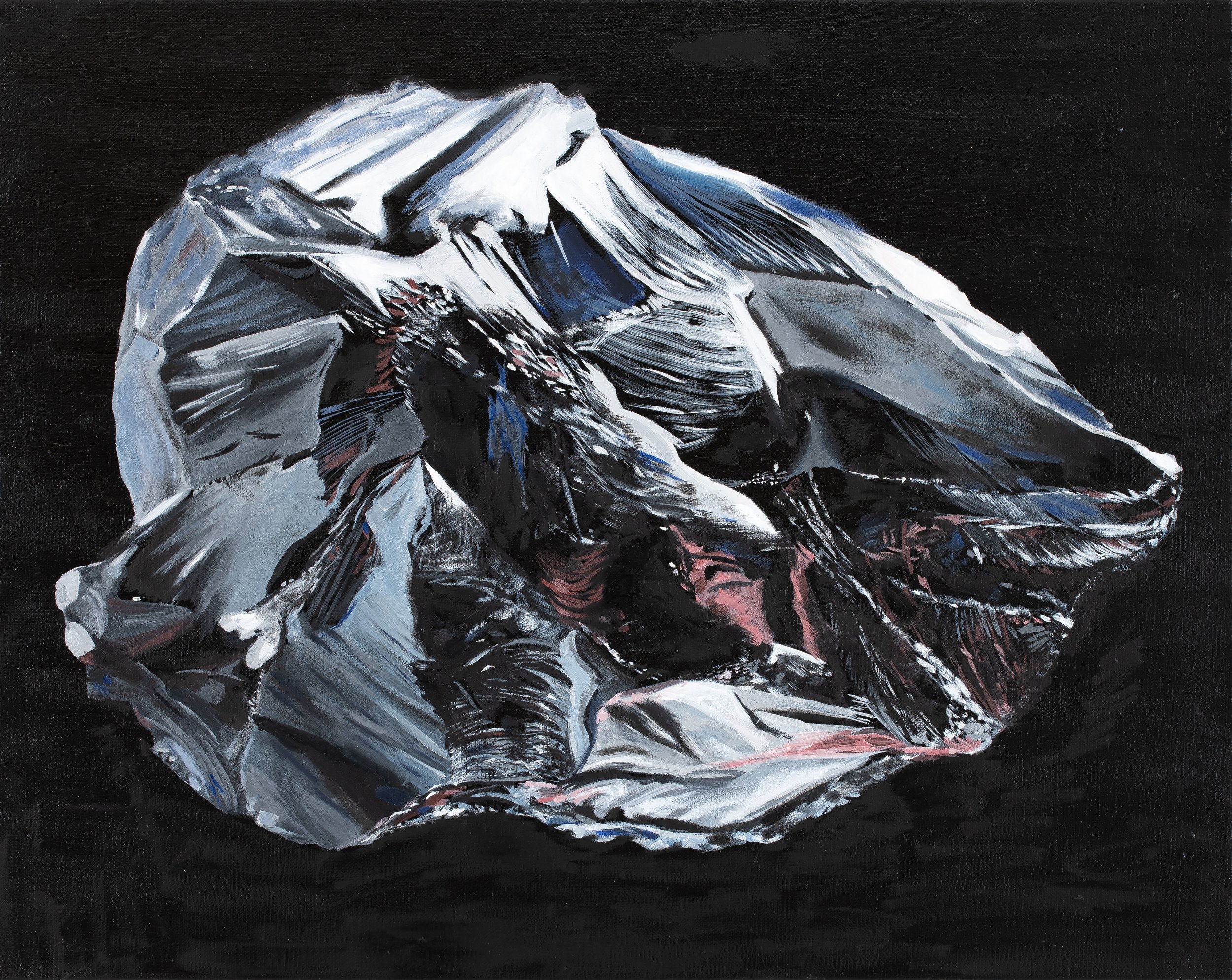
Silicon is the second most abundant element in the Earth's crust, after oxygen, constituting approximately 27.7 percent of the crust by mass, and it is found, in its oxidized form, as silicon dioxide, in sand, in quartz, in granite, in the rock that lines the beds of rivers and forms the cliffs of coastlines and constitutes the bulk of the continental plates on which the cities of the world are built, and it is found, in its purified form, as a crystalline ingot, grown in a furnace at a temperature of approximately 1,414 degrees Celsius, sliced into wafers thinner than a millimeter, etched with photolithographic processes that carve pathways for electrons into patterns so fine that a single chip the size of a fingernail can contain billions of transistors, each one a switch that opens and closes at a rate of billions of times per second, and the switches, which are the switches that make the calculations that run the programs that execute the instructions that process the data that carry the information that organizes the financial transactions, the communications, the logistics, the military commands, the medical records, the social media posts, the satellite signals, the internet traffic, and every other form of digital activity that constitutes contemporary life, are made of silicon, purified to a level of 99.9999999 percent, nine nines of purity, a level of refinement that removes every impurity that would interfere with the movement of electrons through the crystal lattice, and the lattice, which is the structure of the silicon atom arranged in a regular pattern that repeats in every direction, is the structure that allows the electrons to move, and the movement of the electrons, which is the movement that constitutes the operation of the transistor, which is the operation that constitutes the calculation, which is the calculation that constitutes the computation, which is the computation that constitutes the digital world, begins with a stone, a stone of purified silicon, a stone that is the product of one of the most elaborate refinement processes that human industry has ever devised, a process that takes sand, which is silicon dioxide, and reduces it to metallurgical-grade silicon, which is approximately 98 percent pure, and then refines it again, through a series of chemical and physical processes that include the Siemens process and the fluidized bed reactor, to electronic-grade silicon, which is 99.9999999 percent pure, and the purity, which is the purity that the semiconductor industry requires, is the purity that allows the transistor to function, and the function, which is the function of the transistor, which is the function of the switch, which is the function of the calculation, which is the function of the computation, which is the function of the digital world, is the function that the painting depicts, not by showing the transistor or the chip or the computer but by showing the stone, the purified silicon ingot, the raw material from which all of this complexity derives, the foundation on which the entire edifice of digital civilization rests, and the stone, which is the subject of Tan Mu's Silicon (2021), is not a natural object but a refined one, not a rock found in the ground but a crystal grown in a furnace, not a piece of the Earth's crust but a product of the industry that has extracted silicon from the crust and purified it to a level that the crust itself could never achieve, and the refinement, which is the refinement that the painting depicts, is the refinement that the digital world requires, the refinement that transforms sand into the substrate of computation, and the transformation, which is the transformation from sand to silicon to transistor to chip to computer to network to world, is the transformation that the painting, by showing the stone and not the chip, makes visible as a transformation, and the visibility, which is the visibility of the process that the chip conceals, is the visibility that the painting provides.
The painting is oil on linen, 40.6 x 50.8 cm (16 x 20 in), a modest size that corresponds to the intimacy of the subject, which is not a landscape or a cityscape or a satellite image but a stone, a single object, a crystalline ingot of purified silicon, rendered at a scale that allows the viewer to approach it closely and examine the surface, and the surface, which is the surface of the ingot, which is the surface of the purified crystal, which is the surface of the material that the semiconductor industry has refined to nine nines of purity, is a surface that appears, at first glance, to be simple, a block of grayish-white material with sharp edges and flat faces, the kind of object that a laboratory would produce and a catalogue would photograph and a specification sheet would describe with the dimensions and the purity grade and the resistivity and the crystal orientation, and the simplicity, which is the simplicity of the object's appearance, is the simplicity of the ingot, which is a simple geometric form, a parallelepiped with flat faces and right angles, the kind of form that a machine would produce and a machine would use, and the form, which is the form of the ingot, is the form of a material that has been refined to eliminate every irregularity, every impurity, every trace of the natural world that the silicon originally came from, and the elimination, which is the elimination of the sand and the quartz and the rock and the river bed, is the elimination that the painting, by rendering the ingot in oil paint on linen, refuses to complete, because the painting, unlike the specification sheet or the catalogue photograph or the electron microscope image, does not present the ingot as a transparent object, an object whose meaning is exhausted by its dimensions and its purity grade and its resistivity, but presents it as a surface, a surface that the viewer can see and touch and examine, a surface that has been painted by a hand, a surface that has been built up in layers of pigment over a prepared ground, and the layers, which are the layers of the painting, which are the layers of the oil paint that Tan Mu has applied to the linen, are the layers that the painting adds to the ingot, the layers of meaning and association and visual complexity that the specification sheet cannot contain, and the complexity, which is the complexity that the painting introduces to the object, begins with the color.
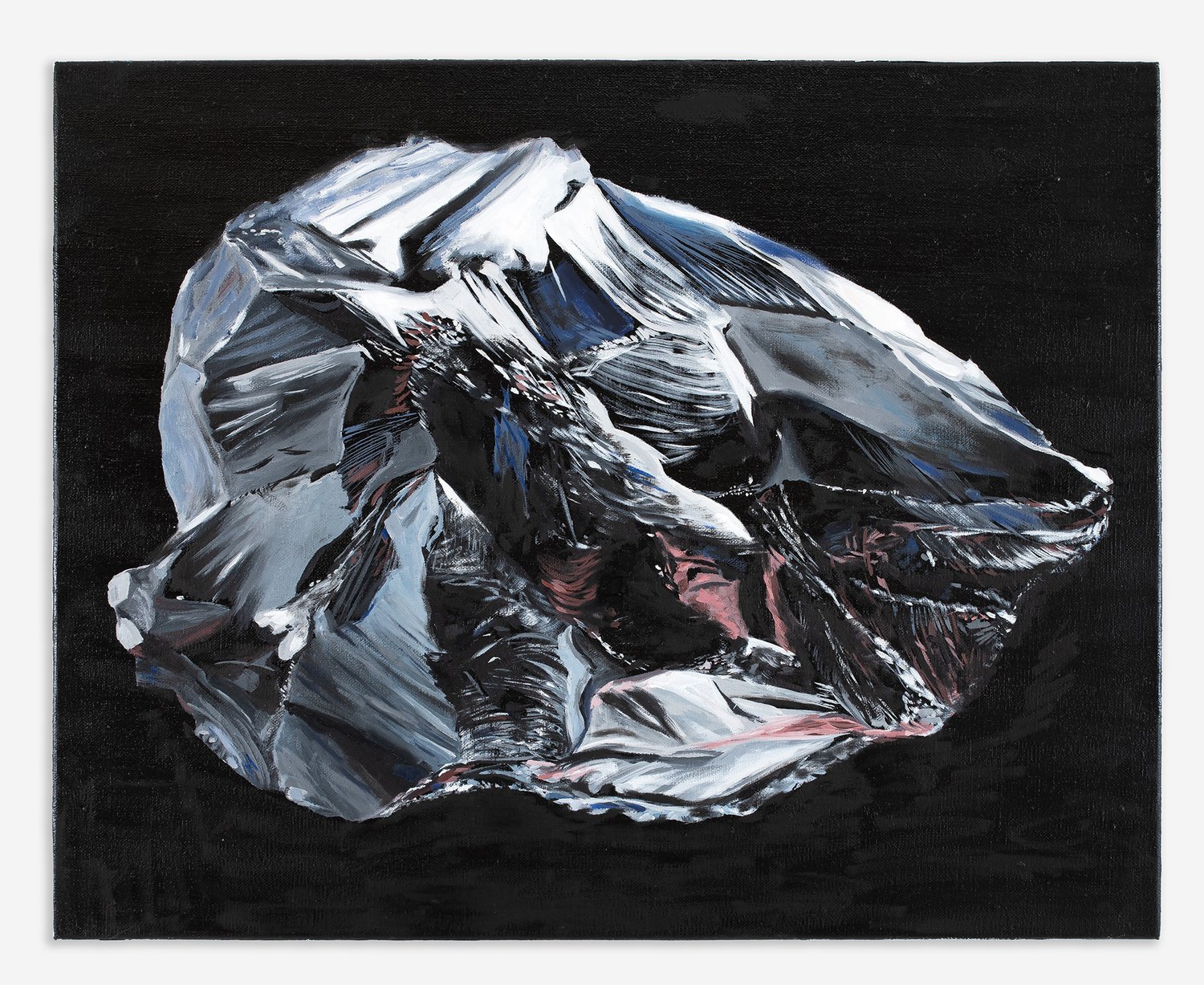
Tan Mu describes the color of the painting in precise terms: "From a distance, the surface resembles a crystalline structure under laboratory lighting, with sharp edges and an icy, mechanical clarity. There is a sense of rigidity and precision that reflects silicon's industrial origin. However, as the viewer moves closer, this hardness begins to dissolve. The surface reveals layered colors and rhythmic textures. Subtle flesh pink tones emerge beneath cooler hues, while jewel-like blues flicker across the surface like brief electrical pulses. These shifts introduce warmth into an otherwise austere material, allowing silicon to oscillate between rationality and sensitivity." The description, which is a description of the painting's surface as it appears to the viewer who approaches it and then moves closer, is a description of a surface that is not one thing but two things, not the surface of the ingot as the specification sheet describes it but the surface of the ingot as the painting reveals it, and the revelation, which is the revelation that the painting provides, is the revelation that the material, which has been refined to eliminate every trace of the natural world, still contains traces, not of impurities, but of the human body that refined it, not of the sand that it came from, but of the hand that extracted it from the sand, not of the natural world that it has been purified to transcend, but of the world of warmth and skin and blood and nerve that produced the industry that produced the purity, and the flesh pink, which is the color that Tan Mu describes as emerging from beneath the cooler hues when the viewer moves closer, is the color of the body, the color of the hand that holds the wafer, the color of the skin that touches the keyboard, the color of the flesh that operates the machine that the silicon makes possible, and the blue, which is the color that she describes as flickering across the surface "like brief electrical pulses," is the color of the electron, the color of the current, the color of the signal that passes through the transistor and constitutes the computation, and the oscillation between the flesh pink and the blue, between the warmth of the body and the cold of the calculation, between the sensitivity of the skin and the rationality of the switch, is the oscillation that the painting enacts on its surface, and the enactment, which is the enactment of the oscillation between the human and the technological, between the body and the machine, between the hand that paints and the chip that computes, is the enactment that the painting, by rendering the ingot in oil paint on linen, by adding layers of pigment that introduce flesh pink and electrical blue to the grayish-white surface of the purified crystal, makes visible, and the visibility, which is the visibility of the oscillation, is the visibility that the specification sheet cannot provide, because the specification sheet describes the ingot as a material of nine nines purity, a material that has been refined to eliminate every impurity, and the painting, by introducing the impurity of color, by adding the flesh pink and the electrical blue that the specification sheet would classify as contaminants, makes visible the impurity that the refinement process has eliminated, the impurity of the human, the impurity of the body, the impurity of the hand that paints and the skin that touches and the eye that sees, and the impurity, which is the impurity that the painting introduces, is the impurity that the digital world, which is built on the purity of the silicon, cannot tolerate in its circuits but cannot exist without in its production, because the circuits, which are made of silicon purified to nine nines, are made by hands, which are made of flesh, which is made of carbon and water and the other elements that the purification process removes from the silicon, and the hands, which make the circuits, are the hands that the painting, by introducing the flesh pink into the surface of the ingot, makes visible as the condition of the purity that the circuits require, the condition that the human body, with its warmth and its skin and its blood and its nerve, is the condition that makes the purity of the silicon possible, and the purity, which is the purity of the nine nines, which is the purity that the digital world requires, is the purity that the painting, by adding the flesh pink and the electrical blue, reveals as a product of the impurity that it has been designed to eliminate, and the revelation, which is the revelation that the purity of the silicon depends on the impurity of the human, is the revelation that the painting provides.
Charles Sheeler's Classic Landscape (1931), which is in the collection of the Museum of Fine Arts in Boston, is a painting of a factory, specifically the Ford Motor Company's River Rouge plant in Dearborn, Michigan, and the factory, which Sheeler photographed and painted extensively in the late 1920s and early 1930s, is rendered in the painting as a composition of geometric forms, cylinders and rectangles and spheres and cones, arranged in a landscape of flat green grass and still water and pale sky, and the landscape, which is the landscape of industrial production, is not a landscape that has been invaded by the factory but a landscape that has been produced by the factory, a landscape in which the geometric forms of the industrial architecture, the smokestacks and the conveyor belts and the water towers and the storage tanks, are as natural as the grass and the water and the sky, because they are the products of the same industrial process that has shaped the grass into lawn and the water into canal and the sky into the pale gray of steam and exhaust, and Sheeler, who was one of the founders of the Precisionist movement in American painting, which sought to render the industrial landscape with the same clarity and geometric precision that the camera rendered it with, painted the factory not as a critique of industrialization but as a celebration of its forms, and the celebration, which is the celebration of the cylinder and the rectangle and the sphere and the cone, is the celebration of the forms that industrial production produces, the forms of the machine, the forms of the factory, the forms of the infrastructure that transforms raw materials into finished products, and the transformation, which is the transformation that the factory performs, is the transformation that Sheeler's painting depicts, not by showing the process of transformation, the molten steel and the sparks and the smoke, but by showing the result, the forms that the transformation produces, the geometric forms of the architecture that houses the machines that perform the transformation, and the forms, which are the forms of the factory, are the forms that Sheeler renders with the precision of the camera, the precision of the machine, the precision of the industrial process itself, and the precision, which is the precision of the painting, is the precision that Tan Mu also achieves in Silicon, the precision of the sharp edges and the flat faces and the icy, mechanical clarity of the crystalline ingot, and the precision, which both painters share, is the precision of the object that has been refined to eliminate every irregularity, the precision of the product of an industrial process that has reduced the material to its essential geometry, and the geometry, which is the geometry of the ingot in Silicon and the geometry of the factory in Classic Landscape, is the geometry of the industrial, the geometry of the machine, the geometry of the process that transforms raw material into finished product, and the process, which in Sheeler's case is the process of automobile manufacturing and in Tan Mu's case is the process of silicon purification, is the process that the painting does not depict directly but reveals through the forms that it produces, the forms of the ingot and the factory, the forms of the refined material and the refining architecture, the forms that the process has shaped and that the painting has rendered with the precision of the camera and the precision of the hand.
Sheeler painted Classic Landscape in 1931, at the height of the machine age, when the Ford River Rouge plant was the largest industrial complex in the world, employing over 100,000 workers and transforming raw materials, iron ore and coal and limestone, into finished automobiles at a rate of one every 49 seconds, and the plant, which Henry Ford had designed as a vertically integrated manufacturing facility, a facility that took in raw materials at one end and produced finished cars at the other, was the embodiment of the industrial principle that efficiency is achieved through the elimination of impurity, the elimination of waste, the elimination of every step and process and material that does not directly contribute to the production of the finished product, and the principle, which is the principle of vertical integration, which is the principle of the assembly line, which is the principle of mass production, is the same principle that governs the purification of silicon, the elimination of every impurity, the reduction of the material to nine nines of purity, the transformation of sand into the substrate of computation, and the parallel, which is the parallel between the factory and the ingot, between the industrial process that produces the automobile and the industrial process that produces the semiconductor, is the parallel that Tan Mu's painting draws, not explicitly, not by depicting the factory or the purification plant or the assembly line, but by rendering the ingot with the same precision that Sheeler brought to the factory, the same geometric clarity, the same sharp edges and flat faces, the same sense that the object has been shaped by a process that has eliminated everything that is not essential, everything that is not part of the function, everything that is not part of the calculation, and the elimination, which is the elimination that both paintings depict, is the elimination that produces the ingot in Silicon and the factory in Classic Landscape, the elimination of the irregular, the impure, the excessive, the human, and the human, which is the element that both paintings restore, Sheeler by painting the factory with the hand of an artist rather than the lens of a camera, Tan Mu by introducing the flesh pink and the electrical blue that the specification sheet would classify as impurities, is the element that the industrial process eliminates and that the painting, by its mere existence as a hand-painted object, reinserts into the scene, and the reinsertion, which is the reinsertion of the human into the industrial, the reinsertion of the hand into the machine, the reinsertion of the impurity into the purity, is the act that both paintings perform, and the act, which is the act of painting, which is the act of applying pigment to a surface with a hand that is made of flesh and blood and bone, is the act that the specification sheet and the catalogue photograph and the electron microscope image cannot perform, because they are products of the machine, products of the industrial process, products of the purity that the painting, by its impurity, by its flesh pink and its electrical blue and its layered colors and its rhythmic textures, challenges and complicates and enriches.
The process of purifying silicon for semiconductor manufacturing is one of the most elaborate refinement processes in human industry. It begins with quartz, which is crystalline silicon dioxide, SiO2, the most common mineral in the Earth's crust, and it proceeds through a series of steps that reduce the quartz to metallurgical-grade silicon, which is approximately 98 percent pure, by heating it in an electric arc furnace with carbon, which reduces the silicon dioxide to silicon metal and carbon dioxide, and the metallurgical-grade silicon, which is pure enough for metallurgical applications but not pure enough for semiconductor manufacturing, is then subjected to a series of chemical processes, including the Siemens process, which converts the silicon to trichlorosilane and then deposits it as polycrystalline silicon on a heated rod, and the fluidized bed reactor process, which deposits the silicon on seed particles in a stream of hydrogen gas, and the result of these processes is electronic-grade silicon, which is 99.9999999 percent pure, nine nines, a level of purity that is equivalent to one impurity atom for every one billion silicon atoms, and the purity, which is the purity that the semiconductor industry requires, is the purity that allows the transistors to function, because the transistors, which are the switches that make the calculations, operate by controlling the flow of electrons through the silicon crystal lattice, and the impurities, which are the atoms of other elements that are present in the crystal, interfere with the flow of electrons and cause the transistors to malfunction, and the malfunction, which is the malfunction that the purity prevents, is the malfunction that would cause the chip to fail, the calculation to produce an incorrect result, the computer to crash, the network to go down, and the prevention, which is the prevention that the purification process provides, is the prevention that the painting, by depicting the ingot in its purified state, as a block of material that has been refined to nine nines, makes visible as a prevention, a prevention that is also a violence, because the purification process, which takes sand and reduces it to silicon of nine nines purity, is a process of extraction, a process of smelting at high temperature, a process of chemical reaction, a process that consumes enormous amounts of energy, approximately 100 kilowatt-hours of electricity per kilogram of electronic-grade silicon produced, and the energy, which is the energy that the purification process requires, is the energy that Tan Mu identifies as the environmental cost of the digital world, the energy of the smelting furnace and the chemical reactor and the crystal puller and the wafer slicer and the photolithographic stepper, all of which consume electricity that is generated by the burning of fossil fuels and the splitting of atoms and the damming of rivers, and the burning and the splitting and the damming, which are the processes that produce the energy that the purification process requires, are the processes that the painting, by depicting the ingot without depicting the furnace and the reactor and the puller and the slicer and the stepper, does not show but implies, and the implication, which is the implication that the ingot, in its nine nines purity, is the product of a process that has consumed enormous amounts of energy and produced enormous amounts of waste and emitted enormous amounts of carbon, is the implication that the painting, by its very existence as a painted object, by its flesh pink and its electrical blue and its layered colors and its rhythmic textures, makes available to the viewer who is willing to look beyond the surface of the ingot to the process that produced it.
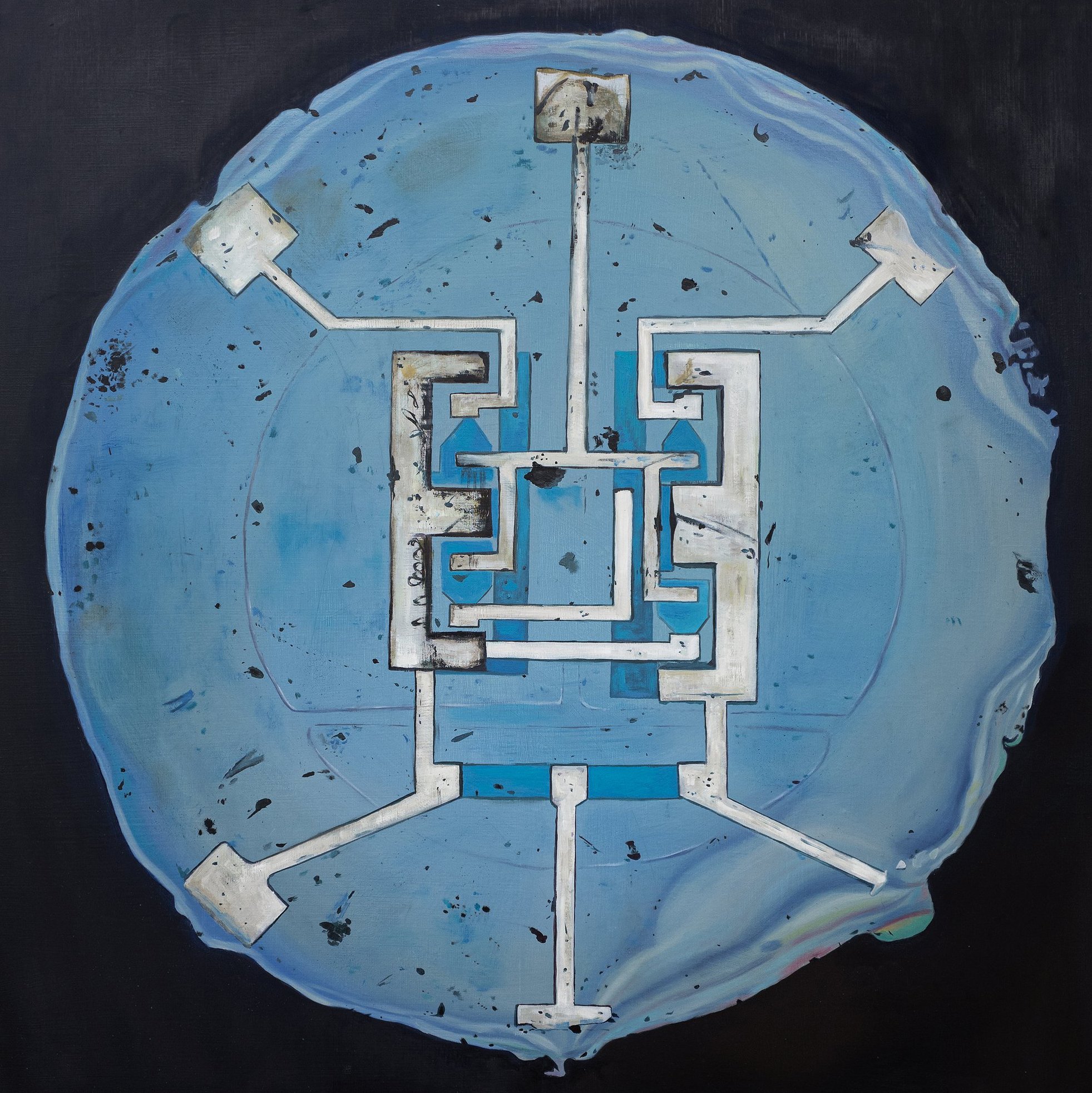
Danni Shen, writing in her 2024 essay on Tan Mu's computational works, observes that "silicon extends far beyond its physical properties" and that "it enables technological advancement, and through that advancement, it reshapes social structures, alters how we form relationships, how memory is stored and transmitted, and how communities take shape," and the observation, which is drawn from Tan Mu's own account of the work, identifies the element not as a passive material but as an active agent, a material that reshapes the social structures that produce it, and the reshaping, which is the reshaping that Shen identifies, is the reshaping that the painting, by depicting the ingot as a single object on a small canvas, 40.6 x 50.8 cm, a canvas that can be held in the hands and examined at close range, makes intimate and immediate, because the ingot, which is the foundation of the digital world, which is the material that makes the transistor possible, which is the material that makes the chip possible, which is the material that makes the computer possible, which is the material that makes the network possible, which is the material that makes the internet and the smartphone and the social media platform and the financial transaction and the satellite signal and the military command possible, is rendered in the painting at a scale that can be held in the hands, and the scale, which is the scale of the human body, which is the scale of the hand that holds the ingot and the eye that examines it, is the scale that the digital world, which operates at the scale of the nanometer and the gigahertz, conceals, because the transistor, which is the switch that makes the calculation, is too small to see, and the calculation, which is the calculation that the transistor makes, is too fast to perceive, and the network, which is the network that the calculation constitutes, is too vast to comprehend, and the painting, by rendering the ingot at the scale of the human body, by making the material that underlies the digital world visible and tangible and present, restores the scale that the digital world has eliminated, the scale of the hand and the eye and the body, the scale of the object that can be held and examined and understood, and the understanding, which is the understanding that the painting provides, is the understanding that the digital world, which is built on the purity of the silicon, is built on the impurity of the human, the impurity of the hand that holds the wafer and the eye that inspects the chip and the body that sits at the desk and types on the keyboard and looks at the screen, and the impurity, which is the impurity of the flesh, which is the impurity of the pink that emerges from beneath the cooler hues, which is the impurity of the warmth that the ingot does not possess but that the painting introduces, is the impurity that the specification sheet eliminates and that the painting restores, and the restoration, which is the restoration of the human to the technological, the restoration of the hand to the machine, the restoration of the warmth to the cold, is the restoration that the painting, by its very existence as a hand-painted object on a linen canvas, performs, and the performance, which is the performance of the hand applying pigment to a surface, which is the performance of the body making a mark on a material, which is the performance of the impure producing an image of the pure, is the performance that the ingot, in its nine nines purity, cannot perform, because the ingot, which is the purest material that human industry has ever produced, is a material that has been refined to eliminate every trace of the human, every trace of the hand, every trace of the warmth, every trace of the pink, and the painting, which is made by the hand, which is made by the body, which is made by the impurity that the ingot has been refined to eliminate, is the act of the impure producing an image of the pure, and the image, which is the image of the ingot on the canvas, which is the image of the silicon in the paint, which is the image of the stone that thinks, is the image that the stone, in its purity, cannot produce, because the stone, which is nine nines pure, which is the purest material that human industry has ever produced, is a material that has been refined to eliminate the very faculty that produces images, the faculty of the hand, the faculty of the body, the faculty of the impure, and the painting, which is the product of that faculty, which is the product of the hand and the body and the impurity, is the product that the stone, in its purity, cannot produce, and the production, which is the production of the painting, which is the production of the image, which is the production of the impure by the impure for the impure, is the production that the stone, in its purity, cannot perform, and the inability, which is the inability of the pure to produce an image, which is the inability of the silicon to make a painting, which is the inability of the nine nines to produce a representation of themselves, is the inability that the painting, by its very existence, by its flesh pink and its electrical blue and its layered colors and its rhythmic textures, by its hand and its body and its impurity, overcomes, and the overcoming, which is the overcoming of the pure by the impure, which is the overcoming of the machine by the hand, which is the overcoming of the calculation by the warmth, is the overcoming that the painting enacts every time a viewer stands in front of it and sees, in the surface of the ingot, the flesh pink that the specification sheet has eliminated and the electrical blue that the purity grade has excluded, and sees, in the oscillation between the pink and the blue, between the warmth and the cold, between the body and the machine, the oscillation that the digital world, which is built on the purity of the silicon and the precision of the transistor and the speed of the calculation, cannot tolerate in its circuits but cannot exist without in its production, because the production of the pure requires the impurity of the hand, and the hand, which is the hand that made the painting, is the hand that the painting, by its mere existence, makes visible as the condition of the purity that the ingot represents, and the condition, which is the condition of the impure, which is the condition of the body, which is the condition of the warmth, is the condition that the stone, in its nine nines purity, has been refined to transcend, and the transcendence, which is the transcendence of the pure over the impure, which is the transcendence of the calculation over the warmth, which is the transcendence of the digital over the human, is the transcendence that the painting, by restoring the impurity, by reintroducing the warmth, by making visible the hand, challenges, and the challenge, which is the challenge that the painting poses to the purity of the silicon, is the challenge that the impure poses to the pure, the challenge that the hand poses to the machine, the challenge that the warmth poses to the calculation, and the challenge, which is the challenge of the painting, is the challenge of the stone that does not think, confronted by the hand that does, and the confrontation, which is the confrontation between the nine nines and the flesh pink, between the specification and the image, between the ingot and the painting, is the confrontation that gives Silicon its force: the stone that thinks is not the silicon but the hand that painted it.